




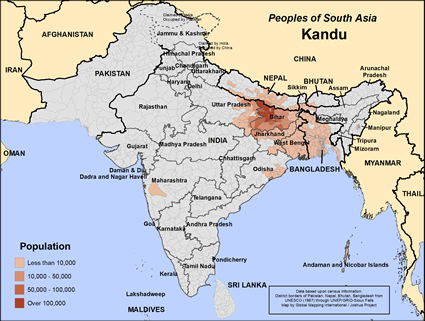
The Kandu are a traditional business and trading community found mainly in Bihar, eastern Uttar Pradesh, Jharkhand, and neighboring parts of northern India. They are also sometimes known as Halwai, especially in connection with confectionery and food-related trade occupations. The community primarily speaks Hindi, Bhojpuri, Maithili, Magahi, and related regional languages depending on location. Historically, the Kandu were associated with selling parched grain, sweets, grocery items, and small-scale trade within village and town markets.
The Kandu belong to the broader Vaishya trading tradition within Hindu society and developed strong internal community structures over generations. Many lineages exist within the community, and family identity remains important in marriage and social relationships. Community councils and caste associations have historically helped regulate social customs, welfare concerns, and dispute resolution. While many Kandu families still operate small businesses or shops, younger generations increasingly pursue education, government work, transportation, and urban employment opportunities.
Many Kandu families live in towns and densely populated rural communities where business, shopkeeping, food sales, and local trade continue to shape daily life. Some families own small grocery stores, sweet shops, grain businesses, or market stalls, while others work in transportation, farming, construction, or office employment. Economic conditions vary greatly between households, with some families achieving stability through trade while others struggle with rising costs and limited opportunities.
Family ties are usually strong, and extended families commonly remain involved in one another's lives. Marriages are generally arranged within the community, and respect for elders plays an important role in household structure. Community gatherings, weddings, religious festivals, and social events help maintain cultural identity and long-standing relationships.
The Kandu are traditionally known for strict vegetarian practices, and many abstain from alcohol as part of community custom. Meals commonly include rice, lentils, vegetables, flatbreads, milk products, and regional foods. Education is increasingly valued among younger generations, especially in urban areas where families hope to gain economic advancement through professional careers and business growth.
The Kandu primarily follow Hinduism and participate in both mainstream Hindu worship and local religious traditions. Worship commonly includes devotion to Hindu gods and goddesses through temple attendance, offerings, household rituals, festival observances, and family ceremonies. Religious life is often shaped by traditional Hindu beliefs regarding karma, rebirth, ritual purity, and the pursuit of blessing or protection from spiritual forces.
Major Hindu festivals such as Holi, Diwali, Navratri, and Rama Navami are widely celebrated within the community. In some households, local customs involving astrology, ancestral traditions, or regional deities may also influence religious practice. Spiritual identity is often closely connected to family heritage and community expectations.
Although there is some existing Christian presence among portions of the Kandu population, many still have little understanding of the biblical gospel. Jesus is often viewed simply as another respected religious teacher rather than the crucified and risen Son of God who alone provides forgiveness of sins and reconciliation with God through grace. Clear biblical teaching and discipleship remain limited in many Kandu communities.
The Kandu need continued access to education, vocational opportunity, healthcare, and economic stability, especially for poorer families working in small trade occupations or unstable wage labor. Urban migration and changing economic conditions have also created pressure on traditional family businesses and rural livelihoods.
Spiritually, the Kandu need faithful gospel witness in the languages they understand best. While some Christian believers already exist among them, many communities still need mature local churches, discipleship, Scripture access, and trained believers who can clearly explain salvation through Jesus Christ. Because the Kandu speak several regional languages, ministry efforts often require culturally sensitive outreach adapted to each language group. Existing Christian believers among the Kandu also need encouragement and spiritual maturity so they can effectively reach neighboring communities with the gospel.
Pray that the Kandu people will hear and understand the gospel clearly in their own languages and place their faith in Jesus Christ.
Pray that God will strengthen existing Christian believers among the Kandu so they can boldly share the gospel and disciple others within their communities.
Pray that Kandu families facing economic hardship, unstable employment, or educational barriers will experience practical provision, opportunity, and hope.
Pray that the Kandu people will be adopted through the People Group Adoption program so that ongoing prayer, evangelism, discipleship, and church planting efforts will continue among them.
Scripture Prayers for the Kandu in India.
https://en.wikipedia.org/wiki/Kandu
https://peoplegroups.org/explore/GroupDetails.aspx?peid=41091
https://en.wikipedia.org/wiki/Caste_system_in_India
https://pmc.ncbi.nlm.nih.gov/articles/PMC10764522/
| Profile Source: Joshua Project |




