


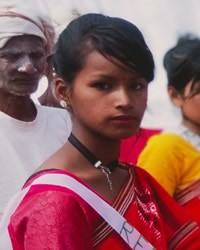

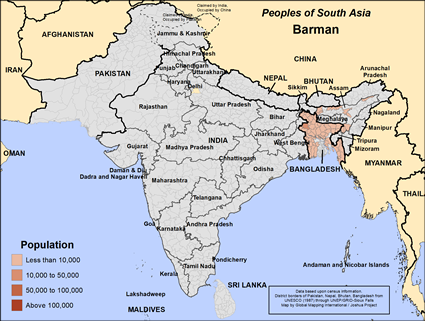
The Barman Kacharis (or Barman) are an indigenous community of Northeast India found in Brahmaputra Valley. They are mainly found in the districts of Lower Assam. Barman speak an endangered language called as Barman Thar. Since the 2002 Amendment act, many Barman in Assam are referred to as 'Barman'. They are sparsely found in Brahmaputra valley. Not to be confused with the Dimasa people of Cachar who converted to Hinduism, known as "Barmans of Cachar" in Government caste certificate. The Barman Kacharis are a completely different group from Dimasa Barmans. Barman Thar where "thar" means language, is a highly endangered language. It is a Tibeto-Burman language that belongs to the Boro–Garo sub-group. Only a small part of this population speaks the language. The rest speak Dimasa. The language of the Barman had never been documented until 2019 when M.A. students in Linguistics and Language Technology (Batch 2018-2020) of Tezpur University carried out field work for the first time on this language.
Barman are a peaceful people. Living among the people of various cultures for two and a half centuries, they have maintained their ethnic identity, although cultural assimilation and acculturation and Sanskritization has taken place. The impact of modernization has transformed Barman society but has not destroyed the core Barman Kachari culture. The Barman are one of the most colorful ethnic groups of Assam, maintaining their own culture and traditions. They recognize their place among the different indigenous Assamese ethnic groups of Assam Agriculture is the main occupation of Barman. Inhabitants of foothill areas sell firewood. Many farmers work as share-croppers. They cultivate rice, wheat, pulses, and mustard, among other crops. They grow vegetables such as potato, chili, and brinjal. Their produce also includes betel nut, mango, jackfruit and coconut. Barman use many tools made of bamboo. Every Barman Kachari house has a handmade grinder. Men prepare hukas for smoking.
The traditional village headman at the top of the village administration is the Chiga Matthaisa or matbar. He has executive and judiciary powers. No community function in the village can be performed without his approval. The traditional dance of Barman is called meshak, which is performed in fairs and festivals such as Bohag Bihu, Magh Bihu and in pujas Barman Kachari use musical instruments such as kherem, khambak, charinda and singaa.
Barman-Kacharis have little formal education, limiting their ability to work in government. Most of the males are carpenters or masons. Barman-Kachari women play an important role in the economic life of the house. They raise livestock, including cattle, goats, pig, hens-ducks and pigeons. Many Barman wives work as labourers in neighbouring communities. Some women weave cloth using traditional looms. Unlike other tribes, Barman Kachari women help in the paddy fields.
Beliefs Though Barmans follow Hindu rites and rituals, they have their own sacred beliefs. Their rituals include Buddai – Meddai (Buddai -Buschi)Basto Puja, Lakshmi Puja and Padma Puja. The place of worship is called thaowl. Barman Kacharis perform Magh Bihu, which they call 'pusura'. The influence of Vaisnavite Chaitanya dev's religion has enabled them to adopt some Bengali culture, rites and rituals.
Scripture Prayers for the Barman in India.
Culture Barman Kacharis are patrilineal. Marriage within a clan is prohibited among the Barman Kachari tribe. Barman Kacharis have their traditional dresses and attires. They wear a kind of long gamsa with langti. Elderly Barman Kacharis wear suria, while
| Profile Source: Joshua Project |




