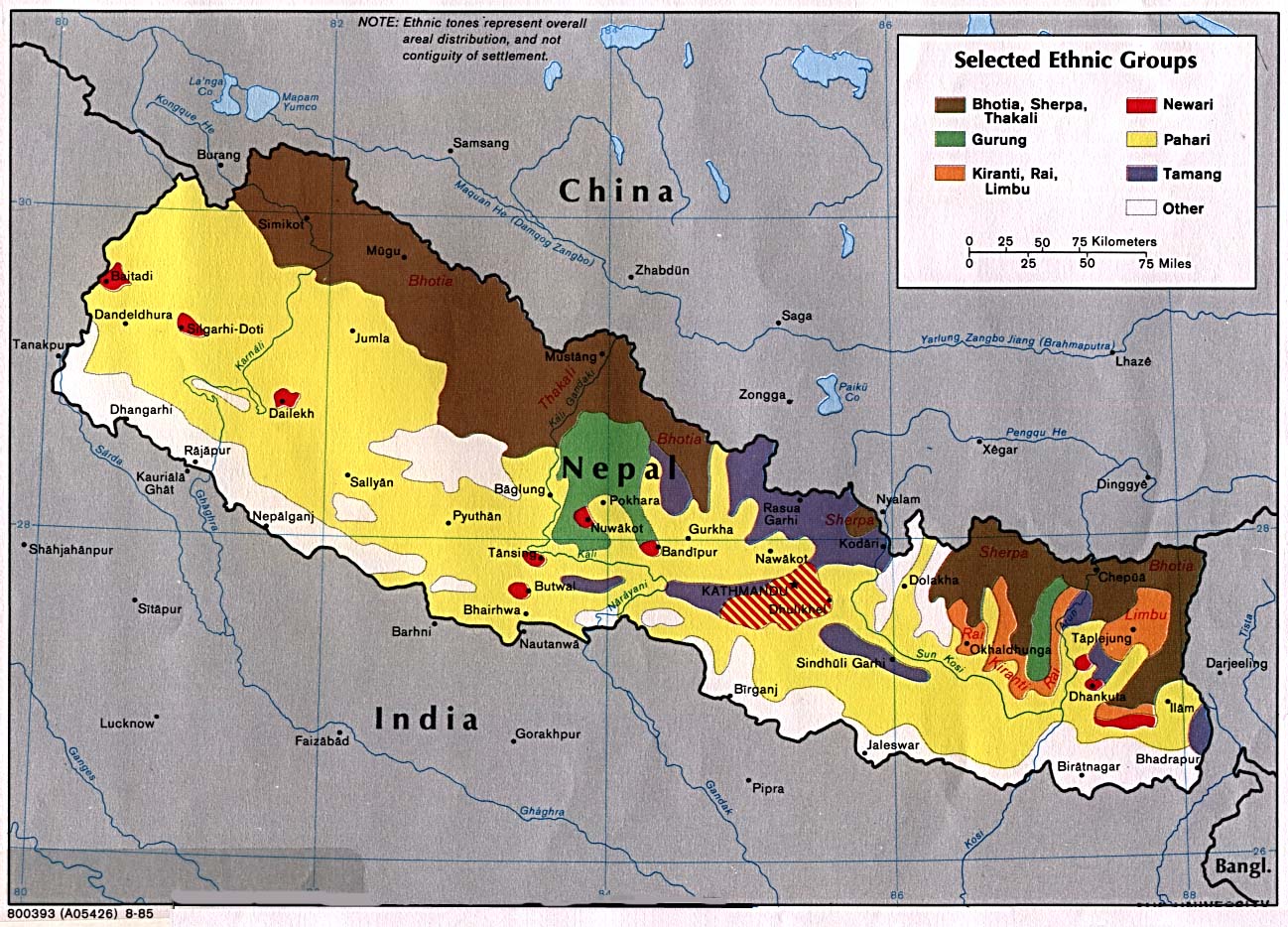

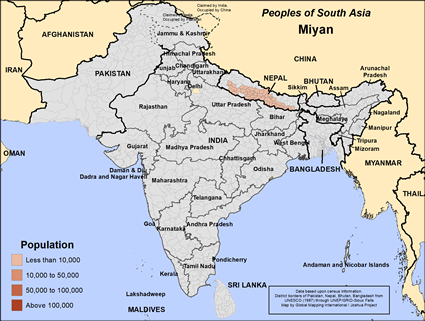
The Miyan, also called Miya in some areas of Nepal, are a Muslim community whose ancestors are believed to have migrated from northern India several centuries ago. Historical accounts indicate that some Miyan families settled in the hill regions of Nepal where they were involved in the production of military weapons and metalwork for local rulers. Over generations, they established communities in places such as Kathmandu, Gorkha, and other hill and urban regions of Nepal. They commonly speak Nepali and Urdu.
The Miyan developed within Nepal's broader Muslim minority population while also adapting to surrounding Nepali culture. Because they lived among Hindu-majority communities for centuries, elements of local customs and social patterns influenced aspects of their identity and daily life. Their history reflects the wider story of Muslim migration, trade, craftsmanship, and settlement within Nepal over many generations.
Many Miyan families live in towns, cities, and rural communities where they work in trade, skilled labor, transportation, agriculture, small business, or service occupations. Historically connected with metalwork and weapons manufacturing, later generations diversified into many forms of employment depending on local economic opportunities. In urban areas such as Kathmandu and Pokhara, some Muslim communities have become increasingly involved in business and commerce.
The Miyan share many social customs with surrounding Nepali peoples, especially groups such as the Chhetri and Bahun. Family relationships are central to community life, and respect for elders remains important. Extended families often stay closely connected through marriage arrangements, financial support, and religious observances.
Daily meals commonly include rice, lentils, vegetables, tea, flatbreads, and meat dishes influenced by both Nepali and North Indian Muslim cuisine. Religious festivals, weddings, and family gatherings are important social occasions that reinforce family and community ties.
Economic conditions vary considerably. Some Miyan families have found stability through business or skilled work, while others face difficulties related to limited education, healthcare access, or employment opportunities. In some areas, Muslim minorities in Nepal continue to experience social marginalization or limited representation.
The Miyan primarily identify with Islam, though historical accounts suggest their religious practices have been influenced by surrounding Hindu culture over many generations. They observe certain Islamic customs such as circumcision and burial of the dead while, in some cases, not fully practicing all traditional Islamic requirements.
Like many South Asian Muslim communities, religious identity is closely connected to family and community belonging. Some Miyan communities may blend Islamic practice with regional customs, folk traditions, or local cultural influences shaped by centuries of living among Hindu-majority populations. In parts of Nepal, Muslim communities may also be influenced by differing Islamic traditions ranging from more conservative religious leadership to culturally blended local expressions of Islam.
Most Miyan know Jesus only as a prophet mentioned within Islamic teaching and have never heard a clear biblical explanation of His death, resurrection, and role as Savior.
The Miyan need faithful access to the gospel through Scripture, discipleship, compassionate Christian witness, and long-term relationships built on humility and trust. Because religious identity is strongly connected to family and community loyalty, individuals who become interested in following Christ may face social pressure or rejection.
Practical needs may include improved educational opportunities, healthcare access, vocational development, and economic stability for struggling families. Ministries focused on literacy, medical care, and relational outreach can help open doors for meaningful gospel engagement.
There is also a need for spiritually mature Nepali- and Urdu-speaking believers who can establish biblically grounded churches and faithfully share the gospel among Muslim communities throughout Nepal.
Pray that the Miyan people will hear a clear and faithful presentation of the gospel in languages they understand.
Pray that God will raise up compassionate Christian workers who are willing to serve faithfully among the Miyan community in Nepal.
Pray that the Miyan people will be adopted through the People Group Adoption program so that ongoing prayer and future gospel engagement will continue among them.
Pray that believers in Nepal will grow strong in biblical faith and boldly share the truth of Jesus Christ with Muslim communities throughout the country.
Scripture Prayers for the Miyan in Nepal.
https://en.wikipedia.org/wiki/Islam_in_Nepal
https://compass.onlinelibrary.wiley.com/doi/10.1111/j.1749-8171.2011.00314.x
https://nepjol.info/index.php/VOH/article/view/53789/40371
https://www.researchgate.net/publication/370170814_The_Religious_Life_of_Muslims_of_Miya_Patan_Pokhara
| Profile Source: Joshua Project |