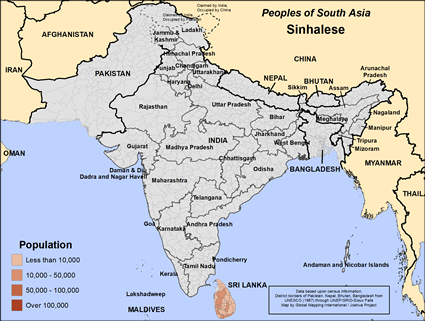

Ancestors of the Sinhalese people migrated from India (Bengal, Odisha, and Gujarat) to the island of Sri Lanka as early as the 6th century B.C. where they were known as Singhalese. The Singhalese King, court, and people converted to Indian Buddhism in the 2nd century B.C. The Sinhalese are now the dominant ethnic group in Sri Lanka. The majority of Sinhalese people remain in Sri Lanka, but others have moved to other countries to earn a living. They live in 20 countries, including South Korea and Japan.
The number of Sinhalese people in Japan has grown significantly in recent years. Most Sinhalese in Japan are migrants who have come for work, study, or family reasons. They are primarily found in urban areas such as Tokyo, Kanagawa, and Chiba. Many Sinhalese work in sectors like healthcare, information technology, education, and the service industry. Some are students pursuing higher education, while others are involved in small businesses, including restaurants and grocery stores that cater to both the Sri Lankan and Japanese populations.
Culturally, Sinhalese in Japan strive to maintain their traditions, language, and religious practices. They celebrate Sri Lankan festivals, organize community gatherings, and often attend Buddhist temples or Christian churches, depending on their faith background. Many Sinhalese families make efforts to teach their children Sinhala language and Sri Lankan customs at home.
Adapting to Japanese society presents challenges, including language barriers, cultural differences, and navigating Japan's immigration and legal systems. Despite these difficulties, the Sinhalese community is increasingly integrating into Japanese society, participating in local events, and building relationships with Japanese neighbors. There are also active efforts to support new arrivals and help them adjust to life in Japan, including community organizations and social media groups.
Most of the Sinhalese belong to the Theravada branch of the Buddhist religion. Although the Sinhalese adhere to basic Buddhist teachings, they follow many Hindu beliefs as well. For example, Buddhism is unconcerned with the Hindu pantheon of millions of gods, but the Sinhalese worship Hindu deities whom they believe control daily life. Over time, the people may come to see a formerly popular god as inadequate, and they may change their allegiance to another god. In addition to gods, the Sinhalese believe in demons, whom they must appease through rituals conducted by exorcists.
The Buddhist Sinhalese have great spiritual needs. Although a few converted to Christianity during the colonial period, most of them still have no real understanding of the gospel message. Fervent intercession, evangelistic materials, and increased missionary efforts are all greatly needed if the Sinhalese are to come to a saving knowledge of Jesus Christ.
Ask the Lord of the harvest to send missionaries to Japan who can witness to the Sinhalese people in culturally relevant ways.
Ask the Lord to soften the hearts of the Sinhalese so they will be receptive to the gospel.
Pray that God will use the few Sinhalese believers to share the love of Christ with their own people.
Pray for a strong church to emerge among the Sinhalese that will be defined by discipleship and obedience to the ways of Jesus.
Scripture Prayers for the Sinhalese, general in Japan.
http://www.sundaytimes.lk/091025/News/nws_12.html
http://www.sundaytimes.lk/081130/News/sundaytimesnews_16.html
https://en.wikipedia.org/wiki/Sri_Lankan_diaspora
| Profile Source: Joshua Project |