


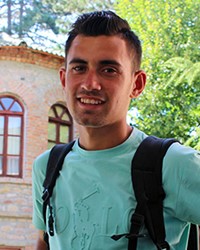

Ethnic Albanians are probably descendants of the Illyrians who were the original inhabitants of the western Balkan Peninsula. In the sixth century, migrating Slavs began to settle on Illyrian territory and pushed the Illyrians into what is present-day Albania. Since that time many have spilled over into nearby Kosovo, and these are now known as Kosovo Albanians. Both Kosovo and Albania were once part of the Turkish-based Ottoman Empire until it weakened in the early 20th century. After WWI ended, Kosovo was joined with small nearby countries to form Yugoslavia which became communist after WWII. Before the Communist Era, Albanians were a tribal people who lived in extended family units called fis. The fis had many old traditions, such as the vendettas, or "blood feuds," which often lasted for several generations. For protection during these feuds, families lived in fortified stone buildings called kulas. The ground floor of the kula was built with small slits rather than windows, while the upper floor had windows that could be closed. Because of a strong communist dictator, the ethnic groups in Yugoslavia remained at peace, but hostilities between the Serbs and the Albanians were always near the surface. It became violent in the 1990s as Yugoslavia dissolved into a number of smaller countries including Kosovo. The Albanians are divided into two major groups, the Gheg and the Tosk, according to which Albanian dialect they speak. Albanians in Kosovo are almost always Gheg. The Gheg are noted for their sternness and courage.
The collapse of Albania's communist regime in 1991 brought on numerous traumatic and rapid changes in Albania, leaving the people with an identity crisis. The people, who had been held in darkness about the outside world, were shocked to discover that they were among the poorest in Europe. Hurt, angry, and confused, they are working their way out of poverty. A large number have migrated to other countries; today they reside in 23 countries including Greece, where some have lived since the Middle Ages.
Albanians hope to make money in Greece then return to Albania. Returning with wealth is a sign they succeeded. Some have migrated to other European countries in hopes of getting better wages. Others have settled in Greece. There is a second generation of Albanians that is adapting to Greek ways.
Albanians are known for their hospitality. Outsiders find food, good company and protection when they enter an Albanian village. Albanian society is divided by many fis, or clans. These clans share not only the same ancestry but also culture. Clans provide protection from other clans.
Centuries ago, most Gheg Albanians were converted to Islam by the Ottoman Turks. However, they practiced a type of folk Islam which embraced occult practices such as praying to the dead, seeking cures for sickness, and praying for protection from spirits and curses. Though ethnic Albanians have leaned towards the Sunni Islam they inherited from the Ottomans, a minority adhere to the traditional Orthodox forms of Christianity.
Albanians in Greece need the spiritual hunger it takes to seek and find the only Savior. Religion is not enough.
Pray for the Lord to show Albanian decision makers the way to the cross.
Pray for the Holy Spirit to give them the faith to believe that only Jesus can bring us into a right relationship with the Father.
Pray for an unstoppable movement of Albanian believers discipling others who will disciple still others.
Scripture Prayers for the Albanian in Greece.
https://en.wikipedia.org/wiki/Albanians_in_Greece
| Profile Source: Joshua Project |



