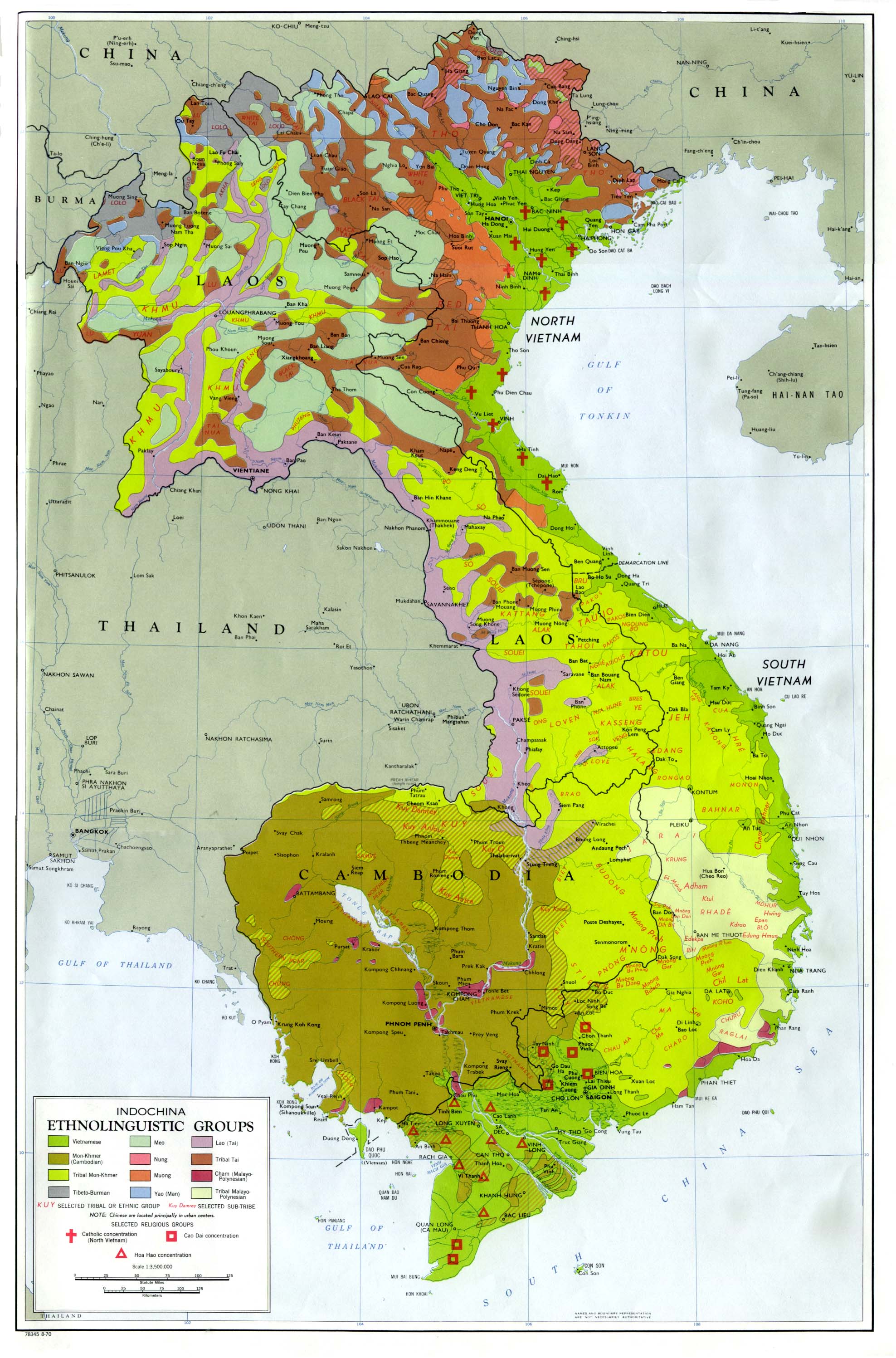

The Sok people are a small ethnic group living primarily in southern Laos, especially in remote and forested areas near the borders with Vietnam. They are often associated with the broader Mon-Khmer linguistic family, and their language reflects this heritage. In many cases, the Sok also speak Lao, the national language, particularly when interacting with government officials or neighboring groups.
Historically, the Sok have lived in relative isolation, which has helped preserve aspects of their distinct identity while also limiting access to broader social and economic development. Their communities have traditionally been in mountainous or forested regions, where mobility and adaptation to the natural environment have been essential. Oral tradition plays an important role in preserving their history, as written records are minimal. Over time, outside influences from government programs and neighboring populations have begun to affect their way of life, though many aspects of their identity remain intact.
Life among the Sok today is closely tied to the land. Most families depend on subsistence agriculture, often practicing shifting cultivation. They grow crops such as rice, maize, and root vegetables, which provide their daily food. Hunting, fishing, and gathering forest products also contribute to their diet, particularly in more remote areas.
Homes are typically simple structures made from locally available materials such as wood and bamboo. Villages are often small and located near water sources, with daily routines shaped by agricultural cycles. Work is shared among family members, and cooperation within the community is essential for survival.
Meals are usually modest, consisting of rice as a staple accompanied by vegetables, herbs, or small amounts of meat when available. Food is prepared over open fires, and meals are often eaten together, reinforcing family bonds.
Family and community relationships are central to Sok life. Elders are respected, and their guidance is valued in decision-making. Social life may include communal activities, storytelling, and traditional practices that mark important life events. While modernization is slowly reaching some areas, many Sok continue to live in ways that reflect long-standing patterns of rural life.
The Sok people primarily follow traditional ethnic religions that involve a deep trust in spiritual forces believed to inhabit the natural world. These beliefs are not symbolic; they shape how individuals understand health, misfortune, and success. Spirits associated with ancestors, forests, and other elements of the environment are often regarded as powerful beings who must be respected and appeased.
Rituals and offerings are commonly performed to seek protection or to restore harmony when something goes wrong. Spiritual specialists may be consulted to diagnose problems and prescribe ceremonies. This worldview reflects a strong dependence on unseen powers, with fear of offending spirits influencing many aspects of daily life.
Basic services such as healthcare, education, and clean water are often limited in Sok communities due to their remote locations. Improved infrastructure would greatly enhance their quality of life and open doors to new opportunities. Agricultural support and sustainable development initiatives could help strengthen food security and economic stability.
Linguistic barriers present an additional challenge, as many Sok people are more comfortable in their own language than in Lao. This creates a need for educational materials and communication efforts that are accessible in their heart language.
Spiritually, the Sok require greater access to the gospel in a form they can understand. There is a need for workers who are willing to live among them, learn their language, and communicate biblical truth with clarity and compassion. Discipleship resources will also be essential for any who come to faith, helping them grow in their understanding of Scripture and in their relationship with Christ.
Pray that the Sok would gain access to healthcare, education, and clean water in their remote communities.
Pray that the gospel would be translated and clearly communicated in the Sok language.
Pray for Christian workers who are willing to serve among the Sok with humility and perseverance.
Pray that the Sok would come to know Jesus Christ and be freed from fear of spiritual forces.
Scripture Prayers for the Sok in Laos.
https://www.peoplegroups.org
https://www.ethnologue.com
https://www.britannica.com/place/Laos
https://www.omf.org
| Profile Source: Joshua Project |