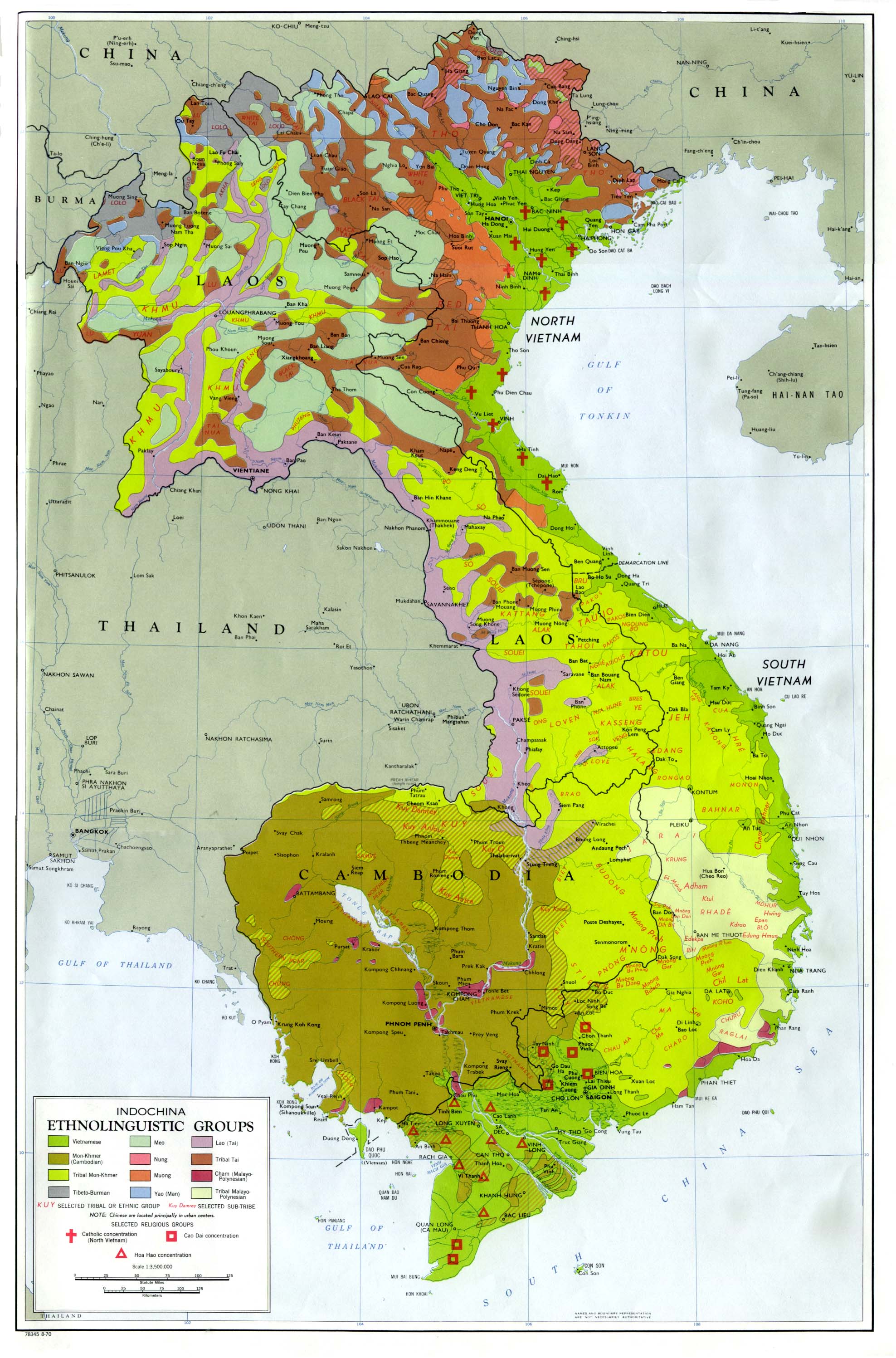

The Sida people are a small ethnic group living primarily in southern Laos, particularly in remote and forested areas not far from the Cambodian border. They are generally associated with the Mon-Khmer linguistic family, and their language reflects this heritage, though it is not widely written or standardized. Many Sida individuals also have some ability in Lao, especially when interacting with officials or neighboring groups, but their heart language remains central to their identity.
Historically, the Sida have lived in relative isolation, which has allowed them to preserve elements of their cultural identity while limiting access to outside development. Their communities are often small and dispersed, shaped by patterns of migration within forested regions over generations. Much of their history is preserved through oral tradition rather than written records, with stories passed down to explain origins, relationships, and customs. While modern influences have begun to reach some areas, many Sida communities still maintain a way of life closely tied to their environment.
The Sida people depend heavily on agriculture for their daily survival. Most families practice subsistence farming, growing rice as their primary crop along with maize, cassava, and various vegetables. Shifting cultivation is common, requiring families to clear new land periodically to maintain soil fertility. In addition to farming, hunting, fishing, and gathering forest products contribute to their food supply.
Villages are typically small, with homes built from natural materials such as bamboo, wood, and thatch. These homes are often simple in design but suited to the local climate. Life follows a seasonal rhythm, with planting and harvest times shaping daily routines and responsibilities.
Meals are centered on rice, accompanied by vegetables, herbs, and occasionally meat or fish when available. Food preparation is done over open fires, and eating together as a family reinforces social bonds. Resources can be limited, so careful use of what is available is essential.
Family relationships are a central part of Sida life. Extended families often live close to one another, and cooperation is necessary for both farming and daily living. Elders are respected and play an important role in guiding community decisions. Social gatherings may include storytelling, shared meals, and traditional practices that mark important stages of life. While outside influences are slowly increasing, many Sida communities continue to live in ways that reflect long-established patterns.
The Sida primarily follow traditional ethnic religions that involve a deep trust in spiritual forces believed to influence every aspect of life. These beliefs are active expressions of faith, not merely cultural customs. Many Sida look to spirits associated with ancestors, the forest, and the surrounding environment for protection, health, and success.
Rituals and offerings are commonly performed to maintain harmony with these spiritual forces. When illness or misfortune occurs, it is often understood as a sign that something is wrong in the spiritual realm. In such cases, spiritual specialists may be consulted to determine the cause and to prescribe ceremonies intended to restore balance.
There is little known presence of Christianity among the Sida, and many have not yet heard a clear explanation of the gospel. The Bible teaches that salvation and true peace come through Jesus Christ alone, not through attempts to appease spirits or perform rituals. Without access to this message, many Sida continue to live with uncertainty and fear regarding the unseen world.
Limited access to healthcare, education, and clean water presents ongoing challenges for Sida communities. Greater infrastructure and medical support would significantly improve their quality of life. Educational opportunities, particularly those that are accessible in their own language, could provide new possibilities for future generations.
Agricultural assistance could help increase food security and reduce the risks associated with shifting cultivation. Sustainable development efforts that respect their environment and culture would be especially beneficial.
Spiritually, the Sida need access to the gospel in a way that is clear and understandable in their own language. There is a need for workers who are willing to live among them, learn their language, and build relationships through which biblical truth can be shared. Discipleship resources and the training of local leaders would also be essential for long-term spiritual growth.
Pray that the Sida would gain improved access to healthcare, education, and clean water.
Pray that the gospel would be translated and clearly communicated in the Sida language.
Pray for workers who are willing to serve among the Sida with love, humility, and perseverance.
Pray that the Sida would come to know Jesus Christ and be freed from fear of spiritual forces.
Scripture Prayers for the Sida in Laos.
https://www.peoplegroups.org
https://www.ethnologue.com
https://www.britannica.com/place/Laos
https://www.omf.org
| Profile Source: Joshua Project |