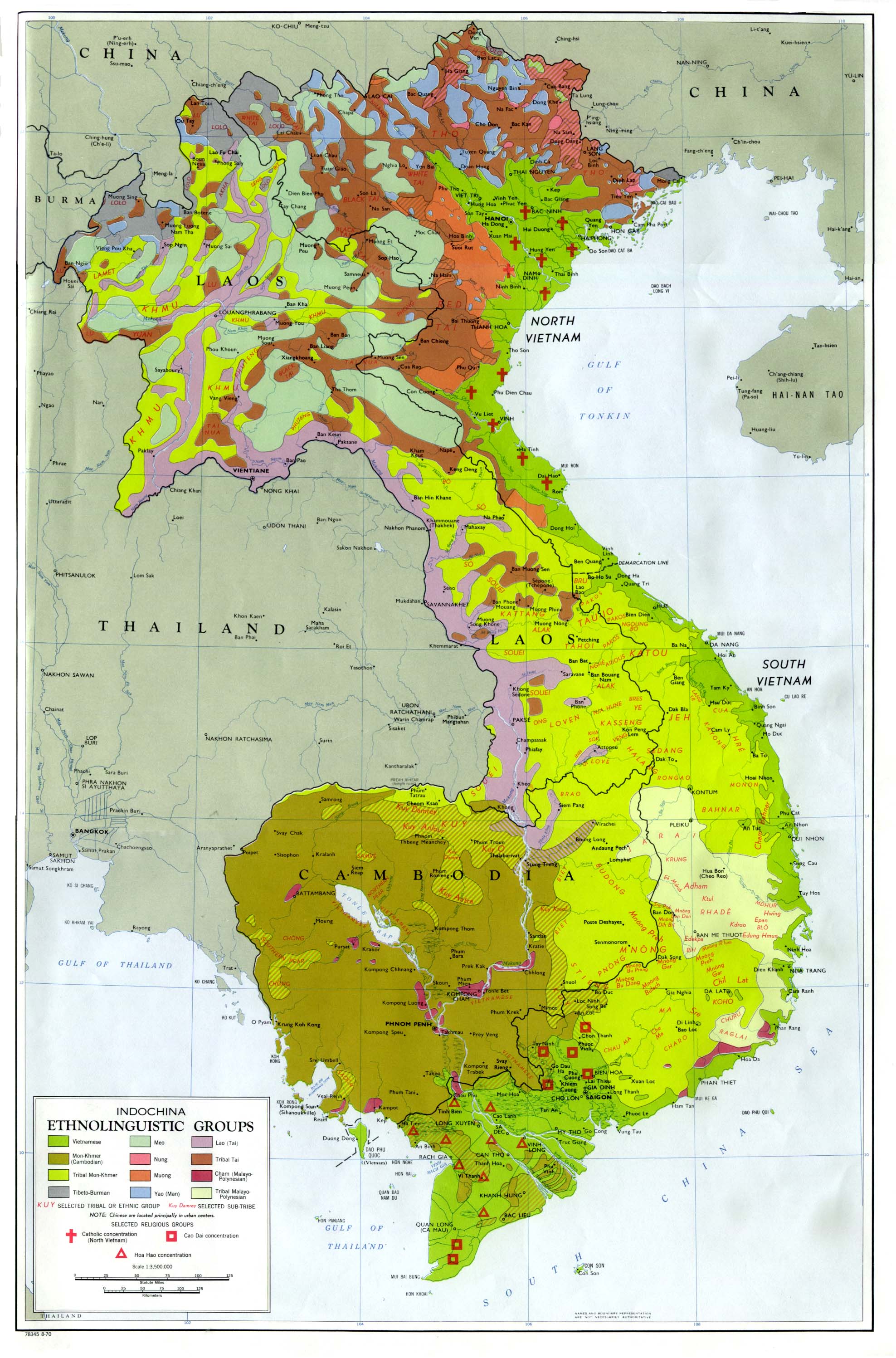

Pacoh Kanai in Laos are part of the wider Pacoh people, an upland Mon-Khmer minority living in the southern highlands of Laos near the border with Vietnam. They belong to the Katuic branch of the Austroasiatic language family and are related to other highland peoples of the Annamite mountain region. The Kanai are identified as one of the Pacoh subgroups in Laos. Their communities developed in remote mountain settings where oral tradition, clan relationships, and village life helped preserve their identity across generations. Pacoh communities in Laos are especially associated with the highland districts of Samuay in Salavan Province and Nong in Savannakhet Province, areas long marked by isolation, rugged terrain, and limited outside access.
Their language is Pacoh, a Katuic language spoken in Laos and Vietnam. In Laos, Pacoh is written with Lao script when written, though village life in remote areas has often been shaped more by oral use than by widespread written materials. Because of geographic isolation and the pull of national culture, many Pacoh Kanai likely move between their language and broader regional languages depending on schooling, trade, and government contact.
Pacoh Kanai in Laos generally live in mountainous villages where life has historically been tied to upland agriculture, forest resources, and strong village customs. Pacoh communities in Laos are known for remote settlement patterns in the southern highlands near the Vietnamese border, and the broader Pacoh people have long depended on shifting cultivation along with hunting, fishing, and gathering in forested areas. These patterns fit the wider Katuic highland way of life found across the region.
Reliable ethnographic descriptions of the Pacoh in Laos note that Pacoh villages are traditionally small and mountain-based, with homes raised on stilts. A public structure or shared gathering place has often served as an important center of village life. The Kanai subgroup in particular has been described as living in square-shaped houses built for a nuclear family, in contrast to some other Pacoh subgroup housing patterns. Family and village elders have historically played an important role in community order, and much of their heritage has been carried through oral tradition, songs, proverbs, and customary practices rather than written literature.
Pacoh Kanai in Laos traditionally follow animistic beliefs. Like the wider Pacoh people, they are known for belief in spiritual powers connected to ancestors, the village, the forest, and unseen beings that are thought to influence daily life. In many villages, spiritual protection and ritual observance have historically been tied to the wellbeing of the household, crops, and community. These beliefs can create a strong sense that life must remain in balance with spiritual forces, even while leaving people in fear and bondage rather than in the peace found in Christ. However, there is a Christian presence among them that has the potential to affect them as a community.
Pacoh Kanai in Laos need the clear and faithful proclamation of the gospel in ways they can understand within their own village and family setting. In remote mountain communities, physical distance, difficult travel, and limited access to services can make long-term discipleship, pastoral care, and consistent Christian fellowship more difficult. Believers who reach them will need patience, humility, and willingness to live simply and walk closely with people over time.
Because traditional animistic beliefs often shape community identity, those who turn to Christ may face pressure from relatives, elders, or neighbors who fear offending spirits or abandoning ancestral ways. New believers need careful teaching from Scripture so they can understand the lordship of Christ over fear, ritual obligations, and spiritual oppression. They also need strong local fellowship, godly family discipleship, and mature leaders who can help them stand firm without returning to old patterns.
In isolated highland settings, practical challenges may also affect spiritual growth. Access to education, medical care, transportation, and steady economic opportunity can be limited. Prayer for these needs is appropriate when it is joined to a desire that communities be opened to the love of Christ, strengthened in truth, and served with compassion.
Pray that Pacoh Kanai in Laos would hear a clear witness to Jesus Christ and come to trust him as Savior and Lord.
Pray that the fear of spirits, ancestral obligations, and traditional rituals would be broken by the power of Christ and replaced with true peace in Him.
Pray for households and village leaders to become open to the gospel, so that entire families and communities would be transformed by the truth of God's word.
Pray for those who believe in Christ to stand firm when pressured by family or local customs, and to grow in courage, holiness, and joy.
Pray for faithful church leaders and gospel workers who can patiently disciple believers in remote mountain communities and help establish strong local fellowships.
Pray for practical help where needed in areas such as travel, medical access, education, and daily provision, especially in villages that are difficult to reach.
Scripture Prayers for the Pacoh Kanai in Laos.
https://en.wikipedia.org/wiki/Pacoh_people
https://en.wikipedia.org/wiki/Pacoh_language
https://it.wikipedia.org/wiki/Pacoh
https://en.wikipedia.org/wiki/Katuic_peoples
| Profile Source: Joshua Project |