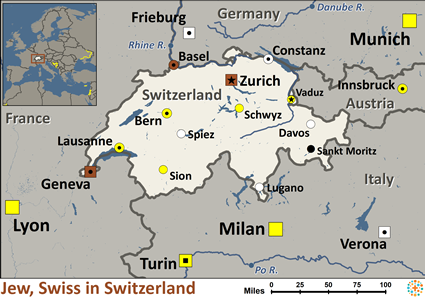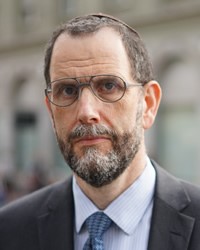
Jews have lived in Switzerland since the 13th century, frequently facing persecution. Today, most Swiss Jewish live in the large cities.
They are generally integrated into Swiss society and participate actively in the broader economic, educational, and cultural life of the country. Most Jewish individuals interact regularly with the wider population through their workplaces, schools, and public life, resulting in frequent social contact with other ethnic and national groups. At the same time, many maintain strong internal community networks centered on synagogues, schools, and cultural organizations, which help preserve religious identity and heritage.
Marriage patterns vary depending on levels of religious observance and personal background. Among more observant or Orthodox Jews, there is a strong preference for marriage within the Jewish community, often with careful attention to religious continuity and family tradition. In contrast, among secular or less observant Jews, intermarriage with non-Jews is more common, particularly in urban areas where daily interaction with the broader society is high. Despite this, many families continue to place value on maintaining Jewish identity, even in mixed marriages, often through cultural practices or raising children with some connection to Judaism.
In their leisure time, Jewish people in Switzerland participate in many of the same activities as the general population, including sports, travel, dining, and cultural events. At the same time, community-specific activities play an important role in social life. Many attend cultural programs, educational lectures, and community gatherings organized by Jewish institutions. Religious families often center their weekly rhythm around the Sabbath (Shabbat), which is observed with family meals, synagogue attendance, and rest.
The many Jewish organizations and communities in Switzerland, including ultra-Orthodox, Orthodox, Reform and Liberal Jews, are united by the Swiss Federation of Jewish Communities. Judaism is a non-evangelistic religion. A non-Jew or Gentile can become a Jew only through a time of prolonged study and commitment.
The two main holy days of the Jews are the Passover, and the Day of Atonement during which there is fasting, prayer and confession. The Jewish Shabbat runs from Friday evening until Saturday evening. Religious Jews use this time to attend synagogue and to spend time with their families.
There are very few Jewish background believers in Switzerland. Workers among them are few. By keeping themselves removed from Christians for fear of oppression, Jews have cut themselves off from hearing about the salvation that Jesus offers.
Pray that Swiss Jewish would be willing to investigate the claims of Jesus.
Pray that God would open their spiritual eyes as they read and study the Old Testament.
Ask the Lord to send believers to demonstrate God's love to the Jewish in Switzerland.
Pray for the Holy Spirit to abundantly bless the Jewish community in Switzerland and draw them nearer to the son.
References
Scripture Prayers for the Jewish, Swiss in Switzerland.
| Profile Source: Joshua Project |