




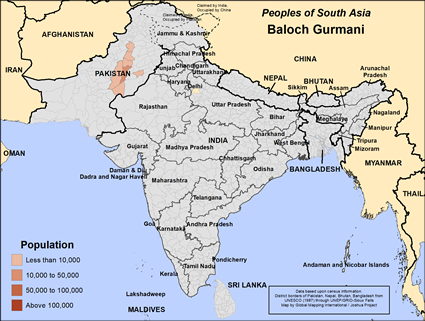
The Gurmani Baloch are a Baloch tribal community living primarily in Pakistan, especially in southern Punjab and parts of Balochistan and Sindh. They are part of the wider Baloch ethnic world that stretches across Pakistan, Iran, and Afghanistan. The Gurmani speak Balochi and Saraiki in many areas, reflecting the long interaction between Baloch tribal culture and the peoples of southern Punjab.
Like many Baloch tribes, the Gurmani preserve a strong tribal identity shaped by oral tradition, clan loyalty, and historical migration. Baloch traditions commonly trace tribal movements into present-day Pakistan centuries ago, particularly during periods of political upheaval and tribal conflict in the region. Some traditions connect sections of the Gurmani to the wider Rind Baloch heritage that spread into Punjab over generations.
The Gurmani tribe became especially influential in parts of southern Punjab, particularly around Muzaffargarh and Dera Ghazi Khan. Several prominent political and tribal leaders came from the Gurmani community, including Nawab Mushtaq Ahmed Gurmani, who played an important political role in early Pakistan after independence.
Historically, the Gurmani, like many Baloch tribes, maintained a semi-nomadic lifestyle centered on herding, agriculture, and tribal alliances. Although modernization has changed much of tribal life, many Gurmani families still retain a strong sense of tribal identity, honor, and connection to Baloch heritage. Christian witness among the Gurmani Baloch has remained extremely limited, and many have never heard a clear explanation of the gospel.
The Gurmani Baloch traditionally earn their living through a combination of farming and livestock herding. Sheep, goats, cattle, and other animals remain important for household survival and income, especially in rural areas. Wheat is one of the major crops grown where agriculture is possible despite the dry climate of many Baloch regions. Some families also raise chickens and gather wild fruits and vegetables to supplement their diet.
Family, tribe, and clan relationships remain central within Gurmani society. Tribal loyalty and protection of family honor are highly valued cultural traits throughout Baloch communities. Elders and tribal leaders traditionally help resolve disputes, guide community affairs, and preserve oral history and customary law.
Hospitality is deeply respected among the Gurmani Baloch. Guests are commonly welcomed with tea, bread, rice, meat dishes, yogurt, and other local foods. Weddings, tribal gatherings, poetry recitations, and storytelling continue to strengthen social bonds and preserve Baloch identity across generations. Baloch poetry and oral tradition remain especially important in communicating tribal history, honor, and heroism.
Life can be difficult in many Gurmani communities because of drought, poverty, limited educational opportunity, and inadequate healthcare access. Younger generations increasingly migrate to towns and cities seeking employment, creating tension between preserving tribal traditions and adapting to modern Pakistani society.
The Gurmani Baloch are primarily Sunni Muslims. Islamic belief shapes family life, moral expectations, festivals, and daily customs. Mosque attendance, fasting during Ramadan, prayer, and participation in Islamic celebrations are important aspects of community life.
Alongside formal Islamic belief, folk religious practices and tribal traditions may also influence spiritual life. Some families may seek protection through charms, shrine visitation, spiritual healers, or beliefs concerning curses and unseen powers. As in many tribal societies, religion and ethnic identity are closely connected, making conversion to Christianity socially difficult.
Very few known believers exist among the Gurmani Baloch. Many have never encountered a follower of Jesus Christ who could clearly explain the gospel in their own language and cultural setting. Access to biblical teaching, discipleship, and Christian fellowship remains extremely limited.
The Gurmani Baloch need greater access to the gospel through culturally understandable evangelism, Scripture resources, and long-term discipleship. Many have little understanding of biblical Christianity or salvation through Jesus Christ alone.
Practical needs are also significant in many Gurmani communities. Rural families may face poverty, limited healthcare, weak infrastructure, water shortages, and restricted educational opportunity. Economic instability and migration pressures continue to affect traditional tribal life throughout southern Punjab and Baloch regions.
The Gurmani would benefit from audio Scripture resources, oral Bible teaching, medical outreach, literacy efforts, vocational assistance, and mature believers willing to learn Balochi language and culture. Relationship-based ministry rooted in humility and long-term commitment is greatly needed among them.
Pray that the Gurmani Baloch people would hear the gospel clearly and come to trust in Jesus Christ alone for salvation.
Pray that God would raise up faithful Christian workers who are willing to serve among the Gurmani Baloch with wisdom, humility, and perseverance.
Pray that the Gurmani Baloch would be adopted through the People Group Adoption program so they receive sustained prayer, ongoing gospel engagement, and future discipleship efforts.
Pray that any believers among the Baloch peoples would grow strong in biblical faith and boldly share the truth of Christ with neighboring tribes throughout Pakistan.
Scripture Prayers for the Baloch Gurmani in Pakistan.
https://en.wikipedia.org/wiki/Baloch_people
https://en.wikipedia.org/wiki/Balochi_language
https://en.wikipedia.org/wiki/List_of_Baloch_tribes
https://en.wikipedia.org/wiki/Mushtaq_Ahmed_Gurmani
https://balochilinguist.wordpress.com/2011/07/19/history-of-the-balochs-in-punjab-pakistan/
https://voiceofbalochistan.pk/tribes/
https://www.researchgate.net/publication/381238016_The_Socio-Political_Contribution_of_Nawab_Mushtaq_Ahmad_Gurmani_in_District_Muzaffargarh
https://ismailmazari.wordpress.com/baloch-dera-ghazi-khan-and-where-there/
| Profile Source: Joshua Project |




