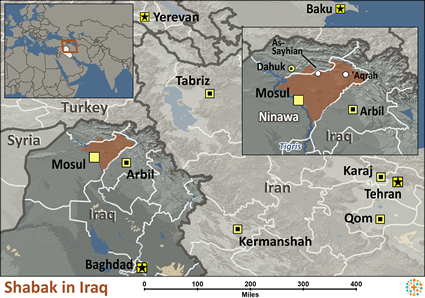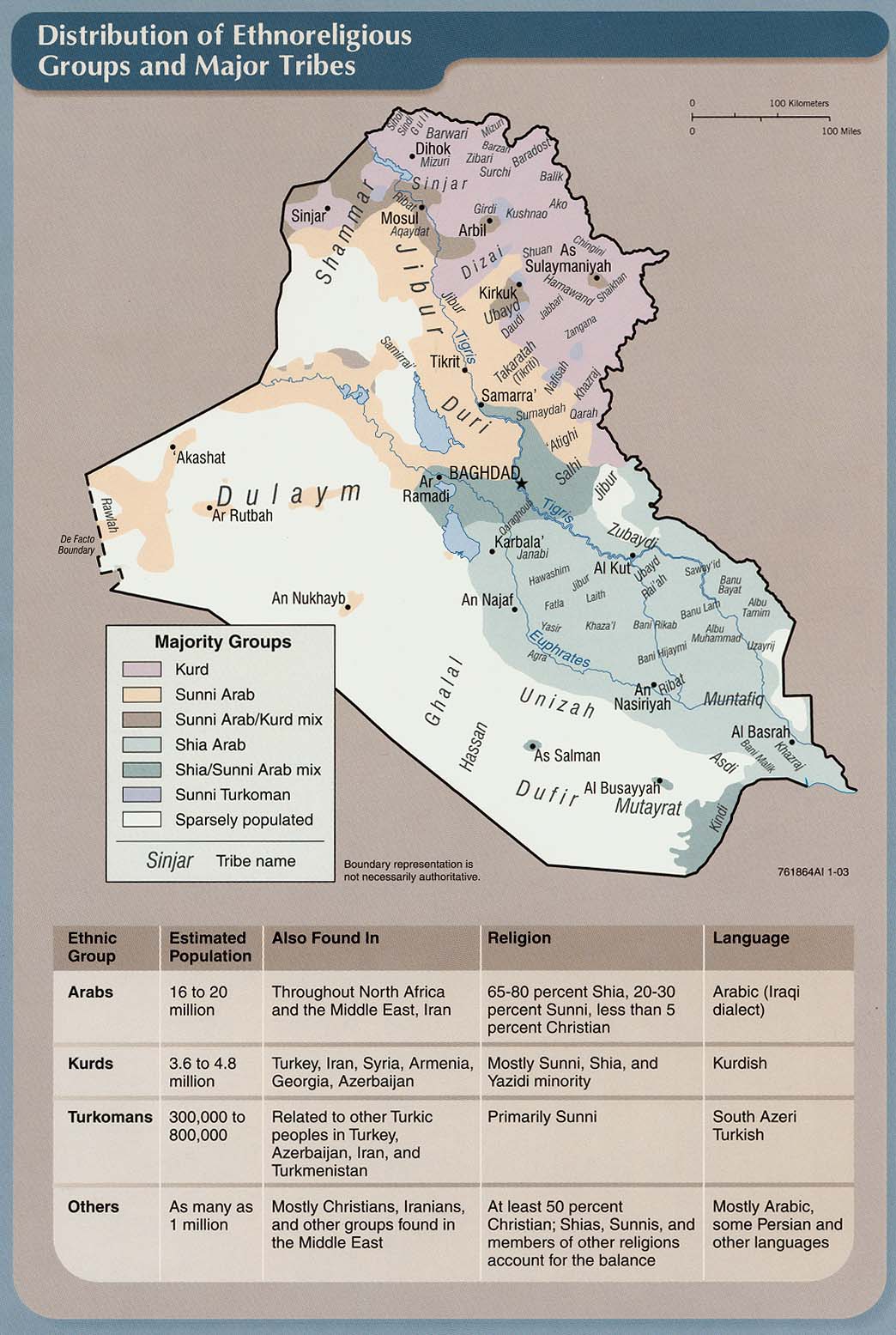

The Shabak are an ethnic and linguistic minority native to the Nineveh Plains of northern Iraq, particularly in villages east of Mosul. They possess a distinct identity that has often placed them between larger Arab and Kurdish populations. Their origins have long been debated, with various scholars and community leaders linking them to Kurdish, Turkoman, or mixed tribal roots. The name "Shabak" is sometimes associated with the Arabic word meaning "intertwined," reflecting the belief that the community developed from the blending of several tribes and cultural influences.
The Shabak speak Shabaki, a language belonging to the Zaza-Gorani branch of the Northwestern Iranian language family. Many are also fluent in Arabic or Kurdish because of their interaction with neighboring peoples. Historically, the Shabak have lived as farmers in the fertile Nineveh Plains, but their location in a contested region has exposed them to political pressure, discrimination, and violence. The rise of ISIS in 2014 brought devastating consequences, forcing many Shabak families to flee their homes. Although many have returned since the defeat of ISIS, the community continues to face uncertainty regarding security, political representation, and cultural preservation.
Agriculture has traditionally been the foundation of Shabak life. Many families cultivate wheat, barley, vegetables, and other crops on the Nineveh Plains. Others are involved in trade, government employment, education, transportation, and small businesses. Rural villages remain important centers of community life, although displacement and migration have altered traditional settlement patterns in recent decades.
They highly value family relationships, and extended families often provide significant social and economic support. Respect for elders and loyalty to family networks play important roles in community life. Weddings, religious celebrations, and village gatherings help preserve cultural identity and strengthen relationships. Traditional foods reflect the broader cuisine of northern Iraq and commonly include bread, rice, lamb, vegetables, dairy products, and regional specialties.
Many Shabak communities continue to recover from the destruction caused by war and displacement. Rebuilding homes, restoring farmland, and creating opportunities for younger generations remain ongoing concerns. Despite these challenges, many Shabak demonstrate resilience and a strong attachment to their ancestral homeland.
The vast majority of Shabak are Muslims. Most identify as Shia Muslims, while a smaller portion follow Sunni Islam. Historically, the community practiced a distinct form of religion often called Shabakism, which blended elements of Shia Islam, Sufi traditions, and various local religious influences. Although many Shabak today identify more closely with mainstream Islam, traces of these older traditions remain part of the community's heritage.
Religious life may include devotion at Islamic shrines, respect for spiritual leaders, and practices influenced by centuries of local tradition. Some forms of religious observance have incorporated elements from neighboring religious communities, creating a degree of syncretism within portions of the population. This blending of beliefs has contributed to the Shabak's unique identity within Iraq's religious landscape.
Most Shabak have had little opportunity to hear a clear presentation of the gospel. Many know Jesus as a prophet within Islamic teaching but have not encountered the biblical message that salvation comes through his death and resurrection and is received by faith in him alone.
The Shabak need greater access to the gospel through trusted relationships, Scripture in languages they understand, and faithful Christian witnesses who can communicate biblical truth with wisdom and compassion. Years of conflict, displacement, and political uncertainty have made many communities cautious toward outsiders, making long-term relationship building especially important.
Practical needs include stable security, economic opportunity, educational development, and continued rebuilding of communities affected by war. Many families continue to face challenges related to employment, infrastructure, and confidence in the future. Efforts that strengthen families, support education, and encourage community development can help address tangible needs while creating opportunities for meaningful relationships.
Pray that soon Shabak disciples of Jesus Christ would make other disciples.
Pray that God would raise up faithful workers who will build genuine relationships among the Shabak and share biblical truth with wisdom, humility, and perseverance.
Pray that the Shabak would be adopted through the People Group Adoption program so that churches and believers will commit to ongoing prayer, outreach, and future gospel engagement among them.
Pray that any existing believers in northern Iraq would be strengthened in their faith and equipped to share the gospel with the Shabak and other neighboring peoples.
Scripture Prayers for the Shabak in Iraq.
https://en.wikipedia.org/wiki/Shabaks
https://minorityrights.org/communities/shabak/
https://en.wikipedia.org/wiki/Shabaki_language
https://en.wikipedia.org/wiki/Shabakism
https://www.usip.org/sites/default/files/The-Shabaks-Perceptions-of-Reconciliation-and-Conflict-Report.pdf
| Profile Source: Joshua Project |