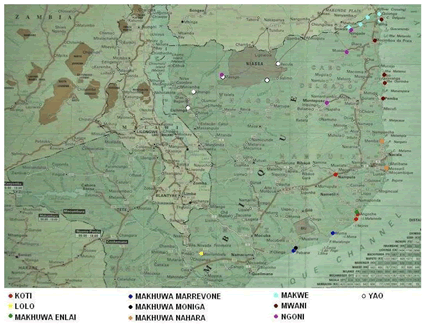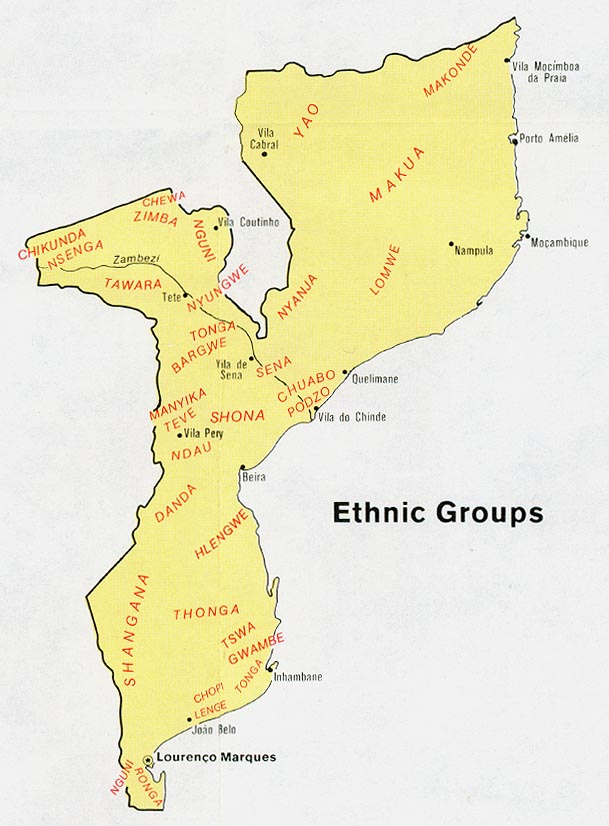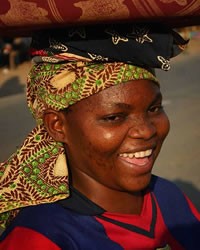

The Makhuwa-Makhuwana are one of the many Makhuwa-speaking peoples of northern Mozambique. They share a common heritage, language, and social organization with other Makhuwa groups, although they maintain their own local identity. They are concentrated primarily in the provinces of Nampula, Zambézia, Cabo Delgado, and neighboring areas.
For centuries, the Makhuwa peoples have participated in regional trade networks that connected the interior of Mozambique with the Indian Ocean coast. They mined, processed, and produced iron goods and traded ivory. Their history has been shaped by interaction with African kingdoms, Arab-Swahili traders, Portuguese colonial rule, and, more recently, the development of independent Mozambique.
Today, most Makhuwa-Makhuwana live in rural communities where agriculture is the foundation of daily life. Families commonly grow staple crops such as cassava, maize, millet, beans, peanuts, and cashews. Fishing and small-scale trading also contribute to household income, especially in communities located near rivers or the coast.
Family relationships are central to Makhuwa society. Extended families often live near one another, and elders are respected for providing leadership and preserving cultural traditions. Oral storytelling, music, dancing, and traditional ceremonies continue to play an important role in community life. Portuguese is used in education and government, but Makhuwa remains the primary language of everyday conversation for most people. Although schools have expanded in many areas, rural communities may still face challenges in accessing quality education, healthcare, transportation, and employment opportunities.
Traditional African religious beliefs remain influential among many Makhuwa-Makhuwana. Belief in ancestral spirits, spiritual forces, and traditional healers continues to shape many aspects of daily life. At the same time, Islam has had a long history in northern Mozambique through centuries of contact with coastal Muslim traders. In some communities, Christian churches are also present.
Religious practice is often characterized by syncretism, with elements of Islam or Christianity blended with traditional religious customs. This mixture can include the continued use of ancestral rituals, protective charms, or traditional ceremonies alongside formal religious observance. Continued biblical teaching and discipleship are important for believers seeking to build their faith on Scripture.
Many Makhuwa-Makhuwana communities would benefit from improved healthcare, education, clean water, agricultural development, and economic opportunities. Rural infrastructure can make travel and access to public services difficult.
The Makhuwa language is well served with a complete Bible, but there remains a continuing need for biblical discipleship materials, leadership training, and resources that help believers understand and apply God's Word in their daily lives. Local churches would benefit from well-equipped Christian leaders who can disciple new believers and strengthen existing congregations.
Pray that the Holy Spirit would draw many Makhuwa-Makhuwana to faith in Jesus Christ.
Pray that Christians would grow in their understanding of Scripture and build their lives on biblical truth.
Pray for pastors, evangelists, and church leaders to have wisdom, courage, and faithful ministries.
Pray that believers would lovingly share the gospel with their families and neighbors.
Pray for improved healthcare, education, and sustainable economic opportunities throughout Makhuwa communities.
Pray that God would strengthen local churches, so they become effective witnesses throughout northern Mozambique.
Scripture Prayers for the Makhuwa-Makhuwana in Mozambique.
https://en.wikipedia.org/wiki/Makua_people
Ethnologue – Makhuwa language
SIL Global
PeopleGroups.org
Encyclopaedia Britannica – Makua people
CIA World Factbook – Mozambique
| Profile Source: Joshua Project |