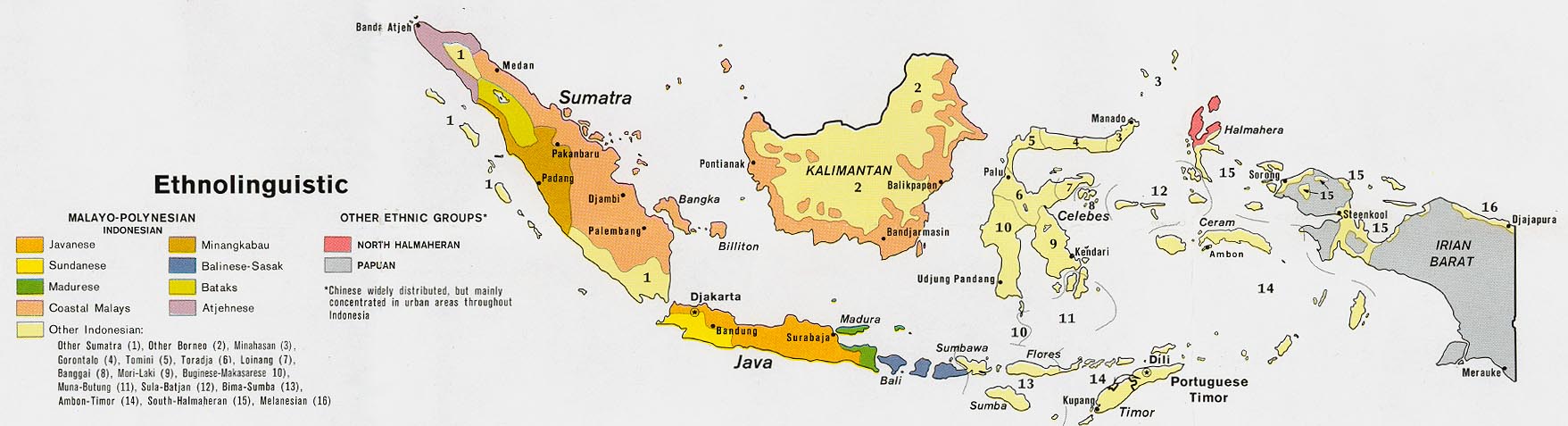

The Indonesian people, often referred to as "Orang Indonesia," represent the largest ethnic group in Indonesia, primarily associated with the national identity that has emerged from centuries of cultural blending. Indonesia is an archipelago with hundreds of ethnic groups, but the term "Indonesian" typically refers to those who identify with the national culture, language (Bahasa Indonesia), and shared history. The formation of Indonesia as a nation began with the unification of diverse kingdoms and colonial territories, culminating in independence from Dutch rule in 1945. Since then, the Indonesian identity has been shaped by a commitment to unity in diversity, as reflected in the national motto, "Bhinneka Tunggal Ika."
Indonesian people live in both urban and rural settings, with many residing in bustling cities like Jakarta, Surabaya, and Bandung, as well as in villages across the islands. Work varies widely, including roles in agriculture, fishing, manufacturing, education, government, and business. In rural areas, rice farming, fishing, and small-scale trading are common, while urban dwellers may work in offices, factories, or service industries.
Food is a central part of Indonesian culture, with rice as the staple of most meals. Popular dishes include nasi goreng (fried rice), satay (grilled skewered meat), and gado-gado (vegetable salad with peanut sauce). Meals are often shared with family and friends, especially during special occasions and religious festivals.
Family life is highly valued, with extended families often living close together or maintaining strong ties. Respect for elders and communal decision-making are important aspects of daily life. Celebrations such as weddings, religious holidays, and national events are marked by gatherings, music, dance, and traditional performances, reflecting the rich cultural heritage of the Indonesian people.
The majority of Indonesians adhere to Islam, which plays a significant role in shaping daily life, values, and community practices. Islamic traditions are observed in prayer, fasting during Ramadan, and the celebration of religious festivals such as Eid al-Fitr. There are also significant communities of Christians, Hindus, Buddhists, and followers of traditional beliefs, especially in certain regions.
While the gospel has a presence among some Indonesians, many areas remain less reached. There is a need for continued witness and discipleship, and for Indonesian believers to be equipped to share the love of Christ with their neighbors and among the many diverse ethnic groups within the country.
Indonesians face physical challenges such as poverty, limited access to quality healthcare and education, and vulnerability to natural disasters. In rural areas, infrastructure and economic opportunities can be limited, affecting overall well-being.
Resources such as Bibles and Christian literature in the Indonesian language are important for spiritual growth and outreach. There is also a need for courage and wisdom for believers who may face social or legal challenges because of their faith. They need relief from resentment against the Chinese in their midst.
Pray for improved access to education, healthcare, and economic opportunities for Indonesian families, especially in rural areas.
Ask God to strengthen and unite Indonesian believers, equipping them to share the gospel with their communities and beyond.
Pray for peace, understanding, and respect among Indonesia's diverse religious and ethnic groups.
Pray for God to give dreams and visions of the victorious Christ to Indonesian Muslims.
Scripture Prayers for the Indonesian in Indonesia.
https://en.wikipedia.org/wiki/Indonesians
https://www.britannica.com/place/Indonesia
| Profile Source: Joshua Project |