




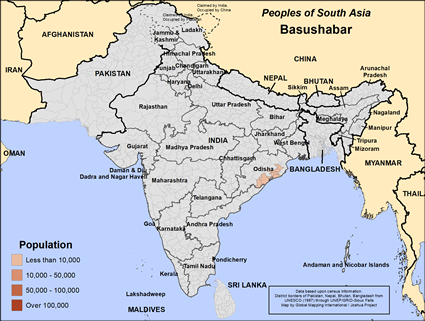
The Basushabar are a small tribal community living primarily in the Indian states of Odisha and West Bengal. They are connected to the wider Shabar or Sabar tribal heritage found across eastern and central India. Historically, the Shabar peoples were forest-dwelling communities known for hunting, gathering, craftsmanship, and close ties to woodland environments. Over generations, many groups gradually settled into village life while preserving elements of their older tribal identity and oral traditions.
The Basushabar speak Odia and live within the broader social environment of eastern India where tribal groups have often faced social marginalization and economic hardship. Like many Scheduled Tribe communities in India, they have historically had limited political influence and reduced access to education and economic opportunity.
Their history has largely been preserved through oral tradition, songs, folk performances, and community storytelling rather than written records. Cultural memory remains important among tribal peoples of eastern India, and older traditions continue to shape identity even as modernization and migration influence younger generations. Christian witness among the Basushabar has remained extremely limited, and many have never heard a clear explanation of the gospel in a culturally understandable way.
The Basushabar are traditionally known for basket weaving and related bamboo crafts. Handmade baskets and woven goods have long provided both household tools and a source of income. Craftsmanship remains an important part of community identity, although industrial goods and economic change have reduced demand for some traditional products.
Music, dance, and oral storytelling continue to play an important role in Basushabar culture. Folk songs and performances are often connected to seasonal celebrations, local festivals, and community gatherings. Tribal performance traditions in eastern India commonly serve both as entertainment and as a means of preserving history, values, and spiritual beliefs across generations.
Many Basushabar families live in rural villages where agriculture, manual labor, forest-related work, and seasonal employment supplement income from craft production. Economic insecurity is common in poorer tribal regions, and many communities face challenges related to land access, unstable employment, healthcare, and education.
Food commonly includes rice, lentils, vegetables, forest products, and locally available grains. Extended family and clan relationships remain important, and elders are often respected as keepers of tradition and oral history. Younger generations increasingly face pressure to leave rural communities in search of work, contributing to gradual cultural change and language shift.
The Basushabar primarily practice Hinduism mixed with tribal and animistic beliefs. Their spiritual life often includes reverence for local deities, ancestral spirits, sacred places, and unseen supernatural powers believed to influence health, harvests, protection, and daily life.
Like many tribal communities in eastern India, religious practice may include offerings, seasonal rituals, spirit appeasement, folk ceremonies, and participation in major Hindu festivals such as Holi and Diwali. Traditional beliefs concerning spirits, blessings, curses, and ritual purity continue to influence many aspects of community life.
Religion is closely tied to family identity and tribal heritage, making conversion to Christianity socially unacceptable. Very few known believers live among the Basushabar, and access to biblical teaching, discipleship, and Christian fellowship remains extremely limited.
The Basushabar need greater access to the gospel through faithful local-language evangelism, oral Bible teaching, and long-term discipleship. Many have little understanding of Jesus Christ or the biblical message of salvation by grace through faith. Christian workers willing to build relationships patiently within tribal communities are greatly needed.
Practical needs are also significant. Many Basushabar communities face poverty, land displacement, unstable employment, educational barriers, and limited healthcare access. The decline of traditional crafts and economic pressures have also contributed to the erosion of aspects of their cultural identity.
The Basushabar would benefit from literacy programs, medical outreach, vocational assistance, Scripture resources, and compassionate ministry rooted in humility and long-term commitment. There is also a need for believers from nearby regions to faithfully share the gospel among tribal communities throughout eastern India.
Pray that the Basushabar people would hear the gospel clearly and come to trust in Jesus Christ alone for salvation.
Pray that God would raise up faithful Christian workers who are willing to serve among the Basushabar with wisdom, humility, and perseverance.
Pray that the Basushabar would be adopted through the People Group Adoption program, so they receive sustained prayer, ongoing gospel engagement, and future discipleship efforts.
Pray that believers in eastern India would grow bold in sharing the truth of Christ with tribal peoples such as the Basushabar and surrounding communities.
Scripture Prayers for the Basushabar in India.
https://peoplegroups.org/people_groups/pg006674/
https://vuenglishdrs.in/archive/items/show/13
https://en.wikipedia.org/wiki/Caste_system_in_India
https://www.scribd.com/doc/7136880/People-Groups-of-India
https://indiaich-sna.in/sites/default/files/2023-10/tarun%20singh%20west%20bengal%20report.pdf
| Profile Source: Joshua Project |




