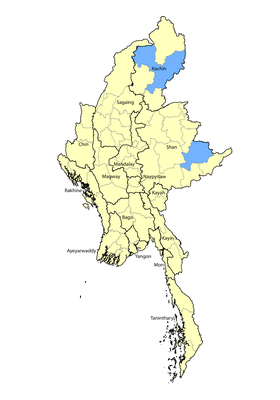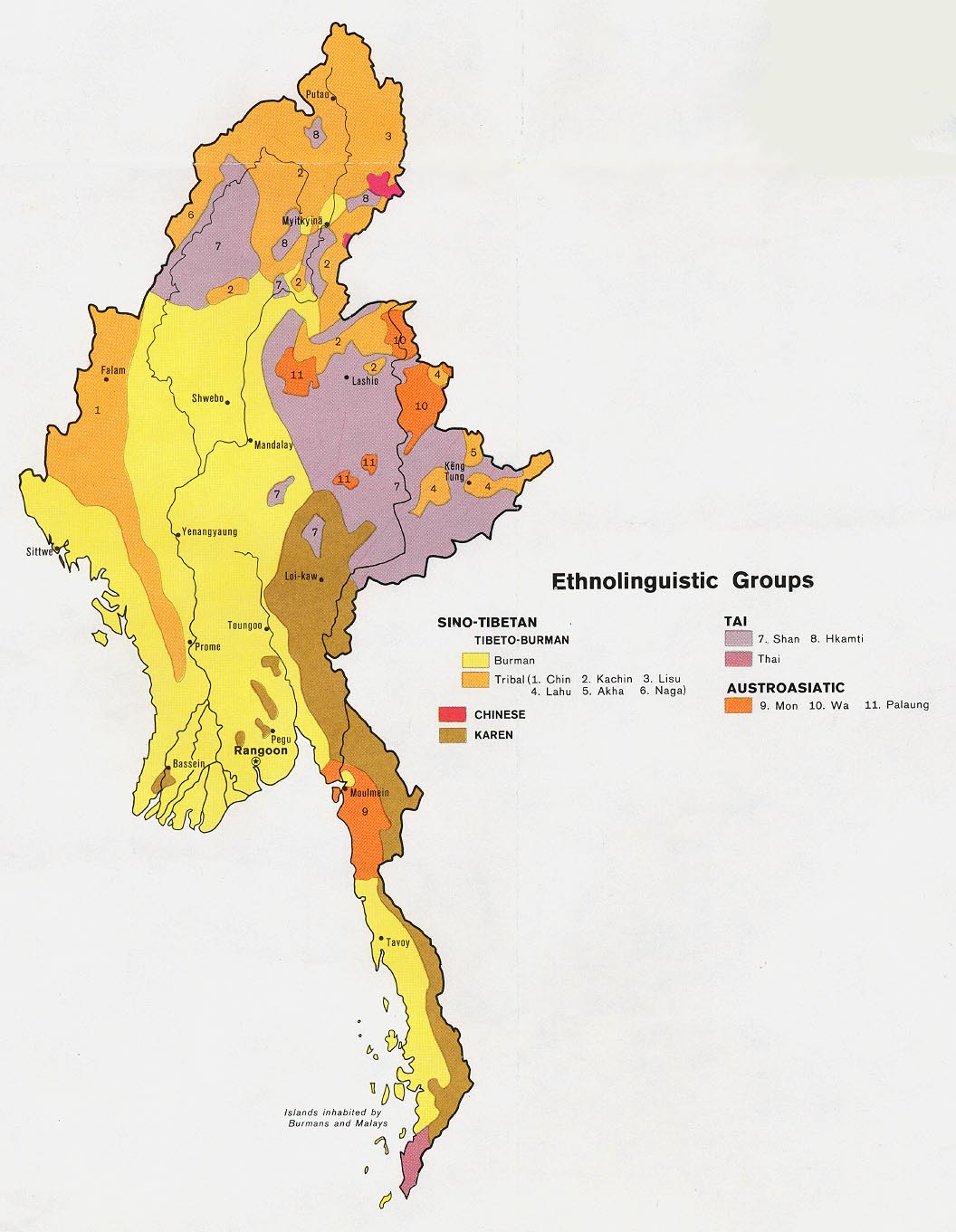

The Zawia live in northern Myanmar, primarily in the Waimaw (Waingmaw) area of Kachin State and in parts of Shan State, and larger Zaiwa communities live across the border in Dehong Prefecture, Yunnan Province, China. Zaiwa is a Jingpo related language with a distinct classification and a history of cross border social and cultural ties. Missionary and linguistic work introduced writing to Zaiwa: early texts appeared in a Fraser style script, and later a Roman based orthography became widely used for literacy and religious publications. Contemporary linguistic research documents Zaiwa phonology, tone interactions, and syllable structure and notes concern about language maintenance as younger generations increasingly use languages of wider communication in education and media.
Zaiwa communities live in village clusters where agriculture, local crafts, and seasonal livelihoods shape daily life. Festivals, music, and dance are important public expressions of identity; wind instruments and communal dances feature in celebrations. Social organization is shaped by clan identities and customary leadership traditions that have long structured local governance. Cross border ties with Yunnan influence trade, family networks, and cultural exchange. The borderland context and regional security dynamics have at times affected movement and access to services for some communities.
Religious life among Zaiwa speakers is mixed. Traditional ritual specialists and customary practices continue to play a role in many villages, while missionary activity and local Christian movements have established congregations and produced Scripture and audio resources in Zaiwa. Responses to the gospel vary across localities, and conversion has sometimes been accompanied by social tensions in mixed communities. Patterns of religious change differ between Zaiwa communities in Myanmar and those in China.
Language maintenance and literacy support are priorities: continued use and teaching of the Zaiwa orthography, production of mother tongue literacy materials, and documentation of dialectal variation to support intergenerational transmission. Access to health services, education, and sustainable livelihood options that build on local ecological knowledge are important development needs. Given the borderland setting and episodes of conflict and displacement reported in the region, communities also need reliable humanitarian access, safe movement for families, and locally led development planning that respects customary institutions.
Pray for the Holy Spirit to woo the Zaiwa people, both in China and Myanmar, to the Throne of Grace.
Pray for loving and dedicated workers to take Christ to every Zaiwa village.
Pray for improved access to healthcare and for practical support for families facing medical and well-being challenges.
Pray for expanded educational and vocational opportunities for children and youth and for local and regional leaders to make wise and just decisions that benefit the community.
Scripture Prayers for the Zaiwa in Myanmar (Burma).
Asia Harvest
U Min Naing, National Ethnic Groups of Myanmar, Thein Myint Win Press, 2000 Richard K. Diran, The Vanishing Tribes of Burma, Amphoto Art, 1997 Mark Wannemacher, "The Interaction of Tone, Phonation Type and Glottal Features in Zaiwa," Foc
| Profile Source: Joshua Project |
| Other PDF Profile |