


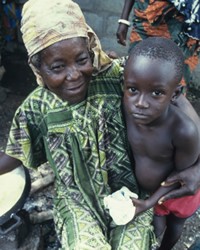

The Manyang people of Cameroon live primarily in the forested areas of the Southwest Region, near the border with Nigeria. Their language, Manyang, belongs to the Niger-Congo language family and is closely related to other languages of the Cross River region. Oral traditions recount long settlement in this borderland area, shaped by migration, trade, and interaction with neighboring ethnic groups. The dense forest environment influenced both their economic patterns and social organization, fostering communities that value cooperation and shared responsibility. Colonial rule and later national integration brought new political structures, education, and Christianity, all of which have contributed to ongoing cultural change while older traditions continue to shape identity.
Most Manyang families depend on farming as the foundation of daily life, growing crops such as cassava, plantains, maize, and vegetables for household use and local markets. Hunting, fishing, and the gathering of forest products supplement farming and remain important sources of food and income. Villages are typically organized around extended families, with elders playing a key role in resolving disputes and preserving customs. Access to roads, schools, and medical facilities can be limited, especially during the rainy season, making daily life physically demanding. Recent instability in parts of the region has disrupted normal economic activity and placed additional strain on households, yet community ties continue to provide resilience and mutual support.
Manyang communities largely identify as Christian, and churches are present in numerous villages, offering worship, teaching, and social connection. The message of Jesus Christ is known, and the Bible is available, often alongside the use of local languages in preaching and song. At the same time, traditional beliefs connected to ancestral spirits, protective rituals, and fear of spiritual forces remain influential in some families. These beliefs can coexist with Christian confession, leading to divided trust during times of sickness, conflict, or misfortune. The presence of the gospel among the Manyang people is a gift from God and an opportunity for growth. As believers deepen their understanding of Scripture and the sufficiency of Christ, there is potential for the Manyang church to take an active role in reaching neighboring peoples who have little or no access to the good news.
Economic vulnerability affects many households, as subsistence farming and limited market access make it difficult to respond to crop failure or rising costs. Better access to education would help equip children and young adults for leadership and service within their communities and beyond. Healthcare challenges persist due to distance from clinics, shortages of trained personnel, and limited resources for maternal and child health. Spiritually, ongoing discipleship is essential so that believers can grow in confidence in Christ alone and address lingering fears rooted in traditional spiritual practices. Strong, biblically grounded leadership would help local churches respond to social needs while remaining faithful witnesses to the gospel.
Pray for God's provision for the Manyang people through stable livelihoods, peace, and improved access to education and medical care.
Ask the Lord to protect families from disease and insecurity and to strengthen community leaders with wisdom and compassion.
Pray that Christians among the Manyang will grow in a clear understanding of the gospel, trusting fully in the mercy and power of Jesus Christ in every area of life.
Pray that the Manyang church will look outward, embracing its role in God's mission by praying for, supporting, and sending workers to less reached ethnic groups in Cameroon and surrounding regions.
May the love of Christ be seen through both word and deed among the Manyang people.
Scripture Prayers for the Nyang, Manyang in Cameroon.
https://www.ethnologue.com
https://www.britannica.com/place/Cameroon
https://www.sil.org
| Profile Source: Joshua Project |



