


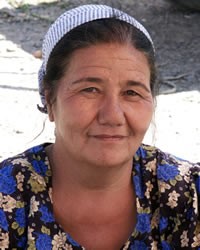

The earliest ancestors of the Uzbeks, the Central Asian Turks, aided Genghis Khan in his conquest of Eastern Europe in the 1300s. Eventually, as unity between the Turks and Mongols faded, there were numerous warring kingdoms that emerged. It was from several of these kingdoms that the Uzbeks descended. As time progressed, they developed their own language and culture, though it is like the others in Central Asia. By the mid-1800s, the Russians had conquered most of the Uzbeks. The Russians controlled much of Central Asia including what is now Uzbekistan, Tajikistan, Turkmenistan, and Azerbaijan.
They lived under czarist rule until the Bolshevik Revolution brought the communists to power in 1917. The new socialist government forced many of the Uzbek nomads and farmers to live on collective farms.
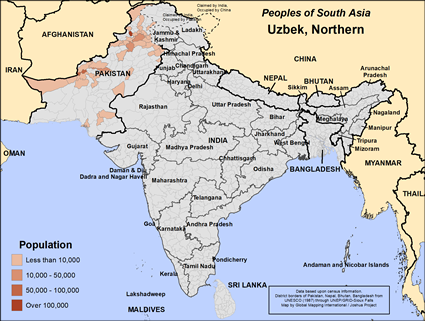
When the Soviet Union broke up in 1991, the Central Asians controlled by Moscow became independent of Russian rule. There are two basic Uzbek dialects, southern and northern Uzbek. They are mutually intelligible. The main differences are about the grammar and certain loan words from other languages. Those who speak Northern Uzbek are more likely to live in places like Georgia, Lithuania, Ukraine, and Russia that do not have a Muslim heritage. Those who speak Northern Uzbek also live in Muslim dominated Central Asian countries like Turkmenistan and Kyrgyzstan. Smaller numbers live in Germany.
Germany is recruiting skilled workers in the area of transportation and medical professions. Uzbekistan is one of the countries where they are searching.
Most Uzbeks are Sunni Muslims of the conservative Hanafite branch. Like other Muslims, the Uzbeks believe that there is one God, Allah, whose will was revealed through the prophet Mohammed and then recorded in the Koran. They are generally not Orthodox Muslims. Many of the younger generation are either atheists or non-religious especially in non-Muslim places like Germany. The Uzbeks are not open to outside spiritual input.
The New Testament, Genesis, Psalms, Proverbs, and Job, as well as the JESUS Film have already been made available to the Northern Uzbeks. They need Scriptures to become easily available to them. More than that, they need spiritual hunger.
Pray for the Holy Spirit to give the Uzbek people in Germany teachable and understanding hearts.
Pray that a strong movement of the Holy Spirit will bring entire Uzbek families into a rich experience of God's blessing.
Pray for Uzbek families to be drawn by the Holy Spirit to seek forgiveness, and to understand the adequacy of Christ's work on the cross.
Pray for German Christians to actively share their faith and disciple Uzbeks.
Scripture Prayers for the Uzbek, Northern in Germany.
References
| Profile Source: Joshua Project |





.jpg)