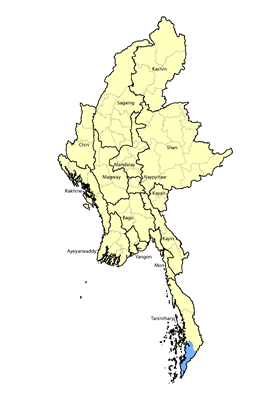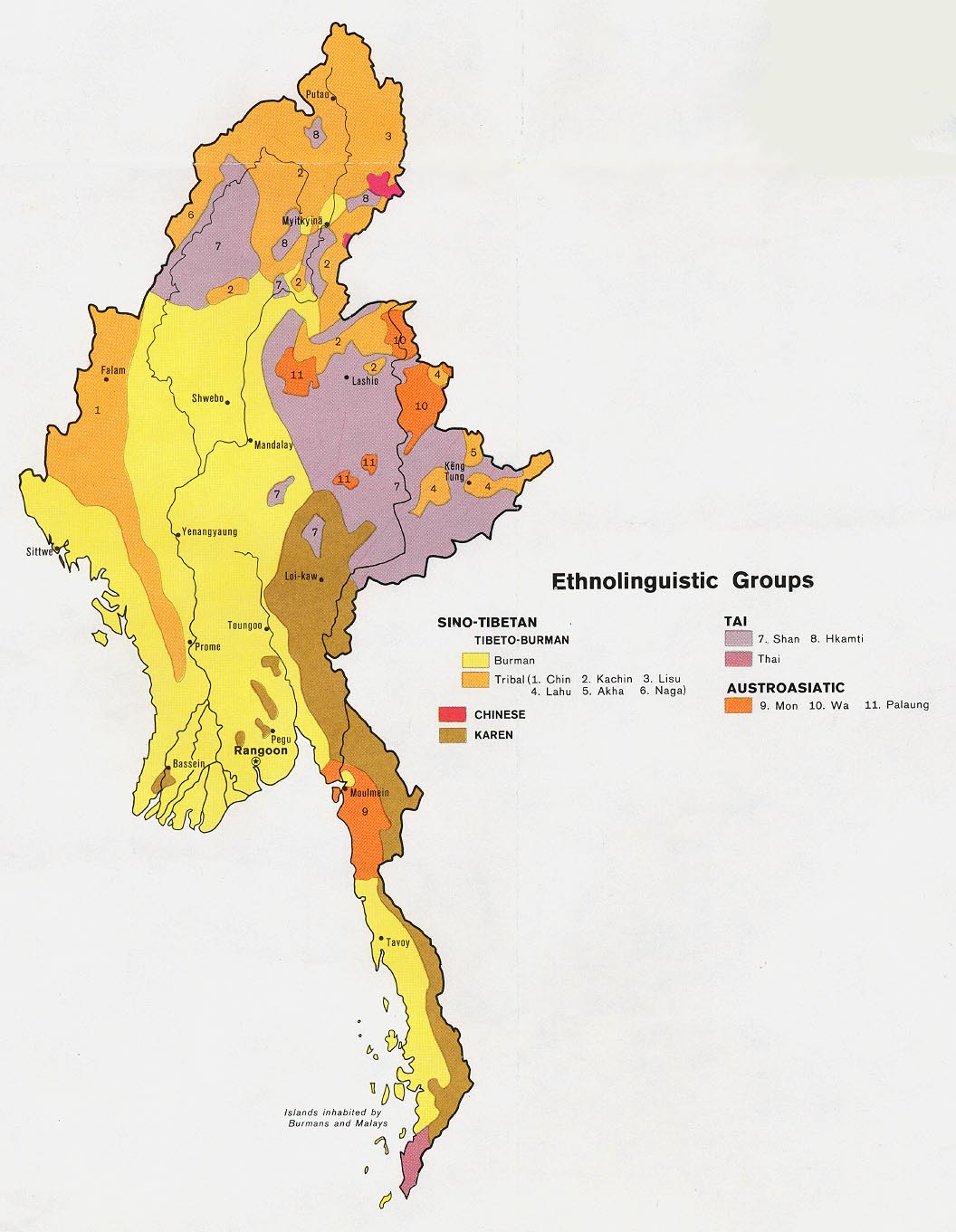

Although they have been in Myanmar for generations, many people are completely unaware of the presence of the Malay community, as their area is off the beaten track in one of the most remote and inaccessible parts of the country. They have long been recognized by the government, however, with 6,393 Malay people in Myanmar at the time of the 1931 census. Some confusion exists because the Solon people in the same area also speak an Austronesian language but are a distinct group with a very different culture from the Malay Muslims.
The Malays in Myanmar speak the Kedah vernacular, which linguists have classified a distinct language from standard Malay and for which they have been assigned a unique language code. Kedah Malay "is related to other varieties of Malay spoken on the peninsula but has its own unique pronunciation and vocabulary, which makes it unintelligible to other Malays in the region."
They also speak Burmese as a second language. Of more than 230 tribes and ethnic groups profiled in Operation Myanmar, just two speak a language from the Austronesian linguistic family: the Malays and the Solon. Austronesian languages are spoken by about 330 million people spanning half the globe, from Taiwan and Mainland China in the north, to parts of India, throughout Southeast Asia, the Pacific Islands as far south as New Zealand, and as far west as Madagascar in Africa.
According to one source, "In 1865, an Arab-Malay group, collecting sea products around the Mergui Archipelago, settled down in modern-day Kawthoung, which commenced the first wave of migration from Kedah." Due to civil unrest and hardship, since the 1980s many Malays have left Myanmar and migrated back to their original homelands in southern Thailand and northern Malaysia, with at least 10,000 now living in those two countries.?
The Kedah Malays are a distinct cultural and dialect subgroup of the larger Malay race. They possess many unique customs, including traditional dance and art, and their cuisine differs from that of other Malay peoples. The Malays in Myanmar "are native to the historical area of Kedah?(now divided into Malaysia, Thailand and Myanmar). They are among the oldest ethnic groups on the Malay Peninsula, with a history dating back 2,800 years."
The Malays in Myanmar are strong Muslims who adhere to the Shafi'i school of Sunni Islam. Islam permeates every area of their lives, and "due to the prevalence of Islamic religious schooling among the community, many of these Malays can also read the Jawi script, which was the old Arabic-derived script used on the Malay Peninsula."
There are no known Christians among the Malays in Myanmar, with the entire group identifying as staunch Muslims. Islam makes up a large part of their identity, and to change their religion is seen as tantamount to rejecting their cultural and ethnic identity. The Malay Bible is not available in Myanmar.
Pray for workers to go to the Malay people in Myanmar, and for their hearts to be ready to receive their savior.
Pray for networks of believing families and fellowships that will throw the doors open for others to follow Jesus.
Pray for the Lord to bless the families among the Malay people with his presence and mercy.
Pray for believers among this people group to disciple others who will disciple still others.
Pray for Bible-believing fellowships and churches among the Malay people.
Scripture Prayers for the Malay in Myanmar (Burma).
Asia Harvest, Copyrighted 2026 © Used with permission
| Profile Source: Joshua Project |
| Other PDF Profile |