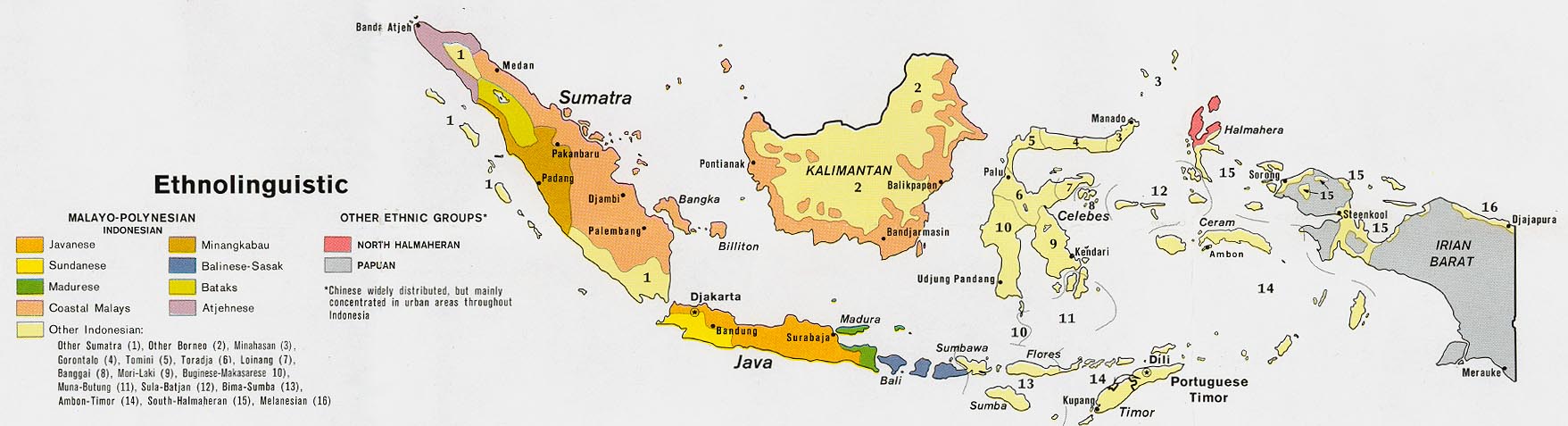
Tucked into the easternmost tip of the Sulawesi island's central peninsula, the Balantak call Banggai Regency in Central Sulawesi home. Their name itself carries meaning: bala means fence or fortress, and tak means us — together, "our defense" — a title that hints at the protective, community-first spirit that has long defined this people. They are divided into two sub-ethnic groups, the Tanoturan and the Dale-Dale, and their language, Balantak, belongs to the Austronesian family and is related to neighboring Sulawesi tongues such as Saluan and Andio.
The Balantak trace their origins through a striking founding narrative: ancestral waters receded from their land after their people violated sacred law, and a great destruction called Bokol Balu swept away many, leaving only survivors who became the nucleus of the tribe. This story of loss, survival, and identity has been passed down orally across generations.
For much of their history, the Balantak lived under the authority of local chiefs and were drawn into the broader political orbit of the powerful Ternate Sultanate. During this era, some Balantak were taken captive to Ternate, where they intermarried with local populations and never returned. When Dutch colonial influence and Islamic trade networks expanded through the region, Balantak society was further shaped by outside forces. Christian missionaries — including Dutch workers and Ambonese and Manadonese church leaders — arrived in the early twentieth century, establishing Protestant congregations in both coastal towns and inland villages. SIL linguists Robert and Marilyn Busenitz moved into the inland village of Dolom in 1981 and spent decades documenting the language and producing Scripture portions, giving the Balantak access to God's word in their heart language.
Life among the Balantak is governed by the rhythms of the land. Agriculture is the foundation of their economy, practiced through swidden — the slash-and-burn method of shifting cultivation suited to Sulawesi's forested terrain. Rice is the central crop, supplemented by yams, taro, millet, and coconut. Families also gather forest products and hunt or fish as the seasons and geography allow. Chickens and goats are kept for meat, and the forest and sea each contribute to a varied, locally sustained diet.
Traditional Balantak homes are rectangular, raised on stilts, and often built directly among the swidden fields so that families can tend their crops without straying far from home. Smaller groupings of houses cluster around a community leader's residence, reinforcing the social structure of the bosano — a settlement unit headed by a village leader of the same name.
Kinship is a cornerstone of Balantak life. Family units called bense form the basic social building block, with two or three such units typically sharing a village. Family ties are traced bilaterally — through both parents — which shapes inheritance, obligations, and social bonds. Marriage is treated with great care. The tradition of Monsara no Ana Wiwin Nono, meaning "secret investigation," allows the groom's family to observe a prospective bride closely before formally proposing, honoring the weight of joining two families together. Community solidarity — expressed through mutual labor, shared celebrations, and collective responsibility — remains one of the Balantak's most valued social qualities.
Before the arrival of Islam and Christianity, the Balantak placed their trust in an animistic religious system centered on the spirit world. They looked to Mola, a solar deity, and Kere, an earth deity, as sources of power over life and the natural order. Ancestor spirits were believed to remain active forces in the world of the living, requiring veneration and appeasement. Various other supernatural entities — spirits connected to places, events, and forces in the natural world — shaped daily decisions and ritual life. These were not abstract beliefs held at arm's length; they structured how people understood illness, protection, harvest, and death.
Islam entered the Balantak world through trade networks along the coast, taking root primarily in coastal towns and spreading gradually inland. Christianity came later, through Dutch missionaries and regional church workers, establishing Protestant congregations that persist today. The majority of Balantak now identify with Islam or Christianity, yet remnants of the older animistic worldview continue to surface alongside these newer affiliations — particularly in how people understand the spirit world, illness, and unseen forces. Salvation and eternal life, however, are found only in Jesus Christ. While there is a Christian presence among the Balantak, the depth and evangelical clarity of that witness remain limited, and many are still searching for truth.
The Balantak live in a remote and rugged part of Indonesia where access to healthcare, education, and economic infrastructure can be severely limited. Subsistence farming leaves families vulnerable to crop failures, and the peninsula's geographic isolation makes outside support difficult to reach. Clean water, consistent medical care, and opportunities for sustainable livelihoods are genuine physical needs in many communities.
Spiritually, the Balantak need clear and bold gospel witness. While Protestant churches exist among them, the evangelical presence is very small, and much of the community remains either without saving faith or drawn toward syncretism that blends Christian profession with older animistic practices. Those Balantak who do know Christ are needed as witnesses to their Muslim neighbors and to those still bound by traditional spiritual practices.
Pray for Balantak believers to grow in genuine, evangelical faith and bold witness to their own communities and their Muslim neighbors.
Pray for spiritual hunger to stir across Balantak villages, drawing people to seek the truth found only in Jesus Christ.
Pray for improved healthcare, clean water, and economic stability in the remote communities of the Banggai Peninsula.
Pray for the Balantak language scriptures to be read, heard, and received as the living word of God.
Scripture Prayers for the Balantak in Indonesia.
https://en.wikipedia.org/wiki/Balantak_people
https://en.wikipedia.org/wiki/Balantak,_Sulawesi
https://www.encyclopedia.com/humanities/encyclopedias-almanacs-transcripts-and-maps/balantak
https://www.everyculture.com/East-Southeast-Asia/Balantak.html
https://www.researchgate.net/publication/278965135_A_Grammar_of_Balantak_a_Language_of_Eastern_Sulawesi
https://www.webonary.org/balantak/overview/introduction/
| Profile Source: Joshua Project |