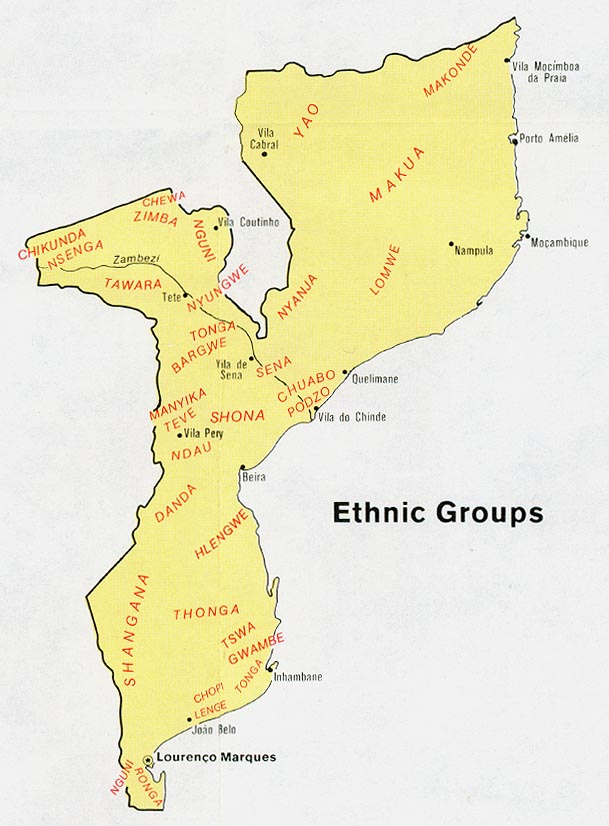
The Xingoni people are an ethnolinguistic group in northern Mozambique, primarily residing in the Cabo Delgado and Niassa provinces. The Xingoni (or Ngoni) in Mozambique trace their roots to the great Nguni migrations of the 1820s, when refugees fled the Mfecane wars in Zululand. Their history is characterized by the militaristic expansion of Zulu-speaking clans, eventual assimilation into indigenous northern Mozambican cultures, and the evolution of a distinct local language and identity. Fleeing the expanding Zulu Empire under King Shaka, groups of Nguni-speaking people pushed northward.
Under the leadership of Chief Zwangendaba, the Ngoni crossed the Zambezi River in the 1830s, eventually moving through parts of present-day Zambia, Malawi, and Tanzania before some settled in Mozambique. The Xingoni organized themselves into small, highly militarized, independent states. They utilized age-set regiments akin to the Zulu military system. Rather than a massive migration of pure descendants, the Xingoni functioned as a ruling, warrior elite. They raided neighboring tribes and assimilated captives into their fighting forces and society. In Mozambique, these populations settled primarily in the northern regions, establishing communities concentrated in the Cabo Delgado (e.g., Mueda, Montepuez) and Niassa provinces. While the ancestors of the Xingoni spoke an Nguni language, generations of living alongside other indigenous populations led to the adoption of local vocabulary and grammar. Today, Xingoni (or Mozambican Ngoni) is classified as a distinct Bantu language related to the Manda cluster.
The Ngoni of northern Mozambique are primarily subsistence farmers and ironworkers, residing in close-knit, rural villages. Their daily routines—combining subsistence farming, traditional culture, and Islamic faith—are supported by an extended family structure where men clear the land, and women manage crops, the harvest, and household chores. Villages consist of traditional mud and thatched-grass homes where residents share responsibilities like child and elder care. Their diet relies heavily on traditional crops like maize, cassava, and peanuts. Staples include massa (thick cornmeal porridge) or pounded cassava served with flavorful sauces. A popular regional favorite is matapa, a dish made from cassava leaves, ground peanuts, and coconut milk, often cooked with shrimp.
The Xingoni people in northern Mozambique primarily practice Folk Islam, which blends orthodox Islamic beliefs with traditional African animism. While they identify as Muslim, their daily spiritual practices heavily rely on traditional healers and ancestral spirits to navigate personal crises and illness. Understanding the spiritual framework of the Xingoni involves examining these key aspects of their belief system. But they identify as Muslims.
Like many Bantu groups, the Xingoni hold a profound reverence for their ancestors. They believe that the spirits of the dead continue to influence the destiny and prosperity of the living, and ancestors are often honored during major life milestones. When facing sickness, bad luck, or community issues, Xingoni individuals often consult local traditional healers or spiritual leaders. These healers act as intermediaries to the spiritual realm and use local remedies alongside spiritual rituals.
The Xingoni people primarily require access to health services, educational development, and social upliftment. Like many rural communities in the country, they face challenges with extreme poverty and disparities in basic infrastructure. The most pressing needs for the Xingoni and similar communities in Mozambique span several core areas. There is a critical need for accessible medical facilities, as rural residents often have to travel over an hour to reach a healthcare center. Primary health priorities include combating malaria and cholera, improving maternal and reproductive health, and addressing childhood malnutrition. Expanded formal education and vocational training are essential, as many individuals in these suburban and rural communities have low levels of formal education.
With a large percentage of the population living in absolute poverty, they need sustainable income-generating opportunities, as they are often excluded from formal urban labor markets. There are needs for targeted social development and holistic community support, especially since traditional and syncretic belief systems heavily influence these communities.
There is little willingness to reach out to Muslim areas, and the number of missionaries is very small. Mission organizations will likely be more willing to reach out to them than nationals at the moment. Their physical needs are in the areas of health, education/sports, and social development.
Pray for the Holy Spirit to break through to Xingonis by showing himself powerful and loving.
Pray for the Lord to send dreams and visions to the Xingoni family and religious leaders.
Pray for the Lord to thrust out workers to this Muslim community.
Scripture Prayers for the Xingoni in Mozambique.
Scripture Prayers for the Xingoni in Mozambique.
https://www.wvi.org/stories/world-where-we-live-mozambique
https://www.ethnologue.com/language/xnq/
https://notesfromafrica.wordpress.com/2011/05/17/daily-life-in-mozambique-hardship-and-happiness/
https://www.britannica.com/topic/NgoniPRGR
| Profile Source: Joshua Project |