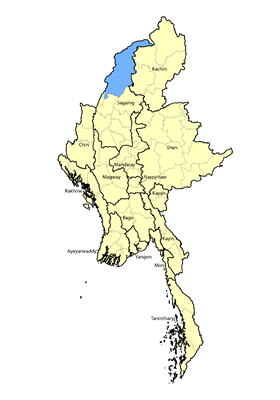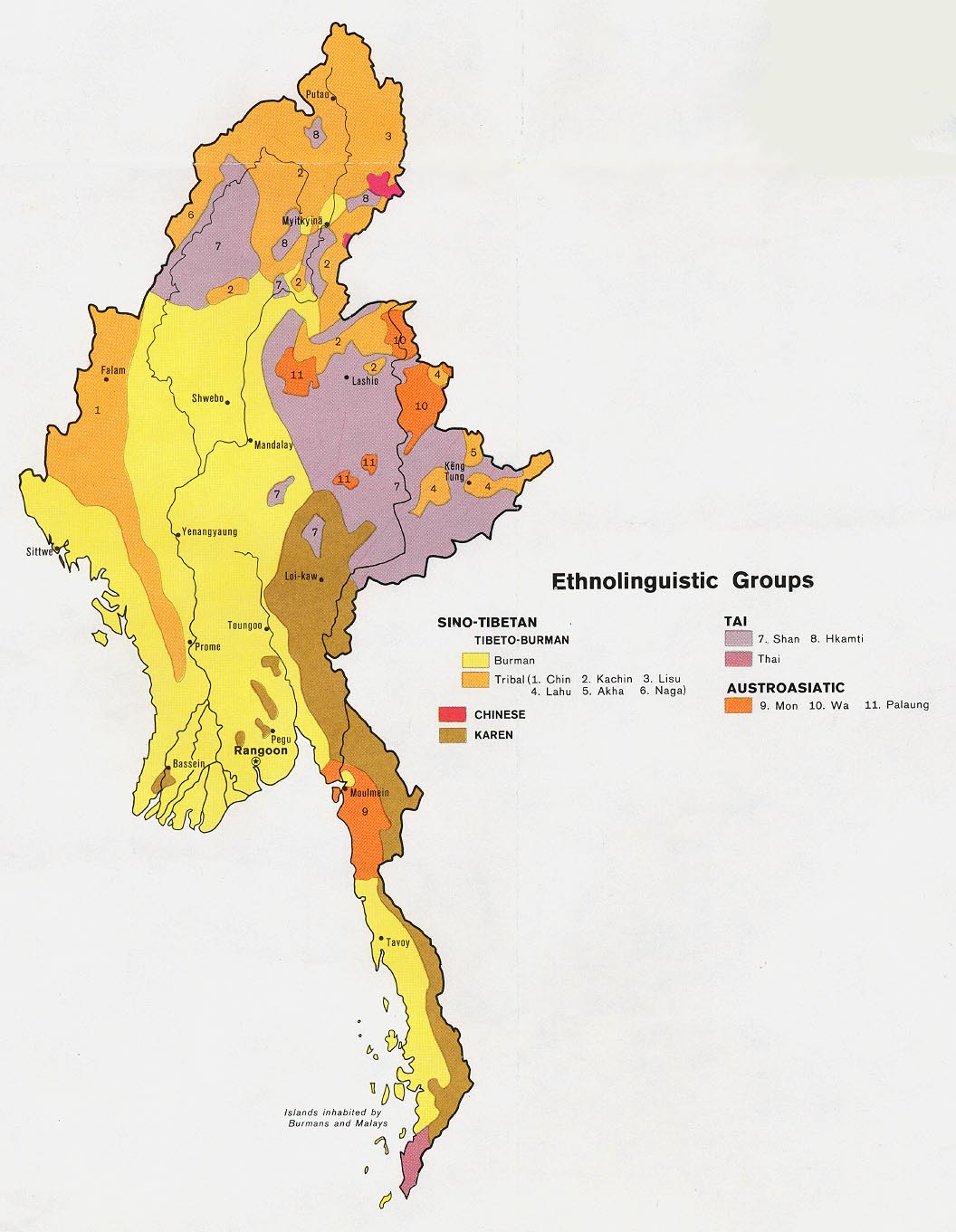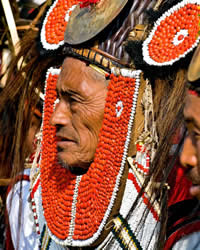

Konyak is the largest Naga tribe in India. Just a few thousand Konyak are found across the border in Myanmar's Lahe Township, where many other Naga and Tangshang groups reside. Because of centuries of inter-tribal warfare and headhunting raids, most Konyak villages are fortified and built atop hills and along ridges, affording them the best chance of repelling a surprise enemy attack.
According to an anthropologist who lived among them for an extended period, the name Konyak "comes from two root words: khou ("head") and nyak ("black"), referring to their customs of tattooing their faces and blackening their teeth with soot."
The Konyak Nagas are not a single ethno-linguistic group but rather a collection of related tribes. While in Myanmar the Konyak are recognized as only one part of the Naga ethnicity, in India they have been granted status as a Scheduled Tribe in their own right.
Linguists have identified 30 dialect subgroups among the Konyak Naga in India, indicating their variety and their remote locations, which divided communities and caused them to develop separately. Konyak is one of 13 languages that make up the Northern Naga branch of the Tibeto-Burman family. In Myanmar, many younger Konyak speak Burmese when communicating with the outside world, but their mother tongue continues to be used in the villages.
Historically, the Konyak Nagas were one of the most feared headhunting tribes, with the practice known to have still occurred in Myanmar until the 1990s. During World War Two, as the sun was setting on the British Empire, the tribe spurned orders from the colonial government to stop headhunting. Konyak chiefs reasoned that if it was good enough for British and Japanese soldiers to kill each other, then they should be allowed to do the same to their enemies. In 1948, three tribes "combined from the Indian side of the border to destroy the Konyak village of Choknyu in a raid in which at least 400 heads were taken."
Konyak communities have long been ruled by angs, who are "chiefs holding king-like positions in society. They are entitled to have numerous wives as well as to levy taxes from allied villages, but they only take wives from their own clan to perpetuate the royal line." Despite their ferocious reputation as bloodthirsty fighters, in the last few generations, the Konyak have been conquered by the love of Christ and have forsaken head-hunting. The warrior spirit remains in them, however, and many Konyak are part of armed militias on both sides of the Myanmar-India border.
For countless centuries, Animism and servitude of spirits dominated the Konyak. The valor and respect earned from warfare and headhunting was so ingrained in Konyak society that when a man died, he was buried with his weapons, as "the dead needed to carry their weapons on their trip to their future home since they might meet and fight again all of the warriors they have killed in battle during life."
Although the first Naga believer in India was a Konyak man named Hube who was baptized on September 12, 1847,5 almost a century passed before the gospel took hold and began to flourish. In 1940 there were only 145 Konyak believers in India, but by 1964 the number had risen to 10,733 and to 42,000 by 1981. Revival burned strongly after 1976, with thousands of Konyak repenting of their sins each year. By 1997, Konyak churches in Nagaland contained 114,185 members.6 The most recent Indian census in 2011 found an astonishing 97.9% of Konyak Naga people were Christians, a remarkable change for a "tribe that was once feared as vicious headhunters. They have responded to the love and grace of God, and entire communities have been transformed from the inside out." Although the Konyak Naga Bible has been available in India since 1992, believers in Myanmar struggle to source any copies due to import restrictions and border tensions.
Ask God to raise up faithful Konyak Naga leaders who will teach and model biblical truth.
Intercede for hearts to be fully committed to Jesus and for the Holy Spirit to bring renewal and transformation.
Pray for the Konyak Naga people to become an example of what blessings come to communities that submit to the loving Savior.
Pray that Konyak Naga believers will grow strong in their faith and become bold witnesses to their neighbors.
Scripture Prayers for the Naga, Kokak in Myanmar (Burma).
Asia Harvest, Copyrighted 2026 © Used with permission
| Profile Source: Joshua Project |
| Other PDF Profile |