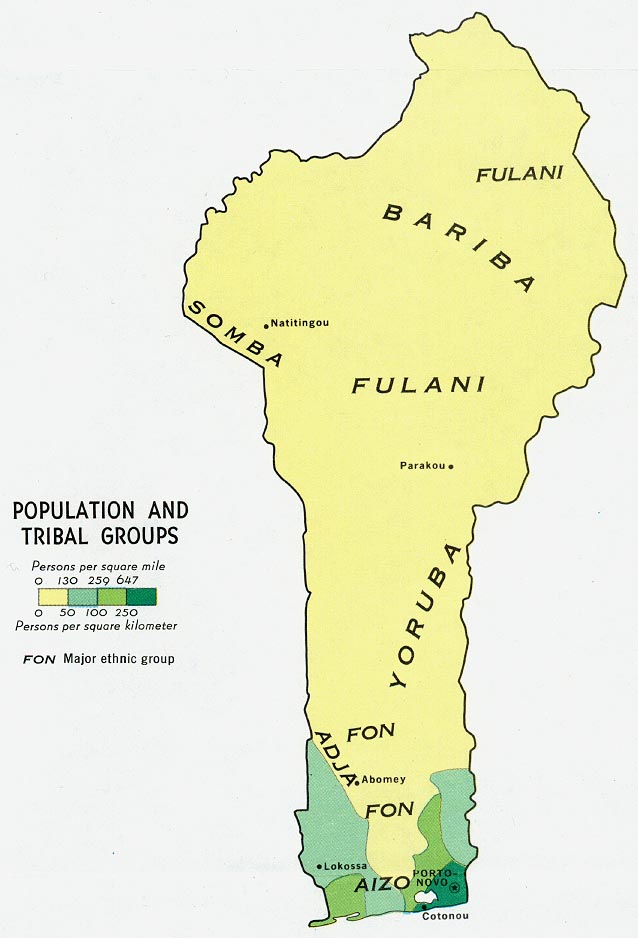
Nestled in the southeastern corner of Benin, the Defi Gbe are a small but distinct people group. They are found exclusively in Benin, primarily in the Seme-Kpodji commune of the Ouémé department — a coastal zone bounded by the Ouémé River to the north, the Gulf of Guinea to the south, and the Cotonou-Porto-Novo railroad to the west, extending east toward Nigeria.
The Defi Gbe speak Gbe, Defi, a language belonging to the larger Gbe language cluster of the Kwa branch of the Niger-Congo family. Gbe languages are spoken across a wide coastal belt of West Africa, from Ghana to Nigeria, and include well-known relatives such as Fon and Ewe. The Defi Gbe are part of the Guinean people cluster within the Sub-Saharan African affinity bloc.
Like much of coastal Benin, this region carries the weight of a painful past. During the height of the transatlantic slave trade, the coast of present-day Benin became notorious as the "Slave Coast," with thousands of people captured and sold each year to European traders. The legacy of that era — cultural disruption, demographic imbalance, and deep spiritual wounds — continues to shape the social fabric of communities throughout the region.
The Defi Gbe live in a densely populated coastal zone, where their livelihoods depend on fishing, subsistence farming, and local trade. The proximity to the Gulf of Guinea and the Ouémé River means that fishing plays a significant role in daily life for many families. Staple foods include cassava, maize, yams, and plantains, often prepared in stews, porridges, and fried snacks sold at local markets. Palm oil is a common cooking ingredient and an important commodity in regional commerce.
Family life is structured around extended kinship networks. Multiple generations often share a household or live in close proximity, with elders commanding great respect and playing an active role in decision-making. Women bear significant responsibility for the household — cooking, childcare, hauling water, and maintaining the home — while men tend to lead in agricultural labor, fishing, and trade.
Celebrations and communal gatherings mark the rhythms of life, with music, drumming, and dance woven into weddings, harvests, and seasonal festivals. Like other Gbe-speaking peoples of the region, the Defi Gbe have a rich oral tradition in which proverbs, stories, and songs transmit cultural values and history from one generation to the next.
Housing in the area typically consists of modest structures built from mud brick or concrete block, with metal roofing increasingly common in areas with greater economic access.
Christianity is the primary religion among the Defi Gbe, and they are considered a mostly reached people group. A significant portion of the population identifies as Christian, with Protestant Christianity representing the largest expression of faith. However, Evangelical Christianity — characterized by a personal commitment to Christ, biblical authority, and active witness — has only a modest presence among them.
As is common throughout Benin, religious practice among the Defi Gbe is often blended with traditional ethnic religion. Vodoun (Voodoo), deeply embedded in the spiritual history of southern Benin, continues to influence worldview, ritual, and daily life even among those who claim Christian identity. Many people hold beliefs about ancestral spirits, the power of charms, and the need to appease unseen forces. This syncretism means that, while church attendance and Christian identification are not uncommon, a thoroughgoing, biblically grounded faith is far from widespread.
Islam also has a presence in the community. The co-existence of Christianity, Islam, and traditional religion within the same community creates a complex spiritual landscape that gospel workers must navigate with cultural wisdom and deep prayer.
The Defi Gbe do not yet have a complete Bible in their language. While portions of Scripture are available and Faith Comes By Hearing offers audio access to some biblical content in Gbe, Defi, a full New Testament or complete Bible has not been translated. This is a significant barrier to deep discipleship and spiritual maturity. The JESUS Film is also not available in their language, limiting a widely effective tool for gospel outreach.
Physically, the Defi Gbe face the challenges common to many communities in Benin, one of the world's poorer nations. Access to quality healthcare, clean water, and educational resources remains limited for many families. Women in particular carry heavy burdens with little economic support or relief. Literacy programs in the Defi Gbe language would benefit both Bible engagement and community development.
The greatest need, though, is for a growing, biblically sound church that can stand firm against syncretism, reach neighboring unreached communities, and disciple the next generation in authentic Christian faith. Pray that the Evangelical believers among the Defi Gbe will grow in number and spiritual depth, becoming a gospel force in their community and beyond.
Pray that God will raise up Defi Gbe believers who are grounded in scripture and empowered by the Holy Spirit to disciple their community and resist syncretism with traditional religion.
Pray for the completion of a full Bible translation in the Gbe, Defi language so that the word of God can be deeply planted in hearts and homes.
Pray for Great Commission organizations to engage the Defi Gbe with contextualized church planting and leadership development efforts that they can use to extend Christ's Kingdom to other parts of Africa.
Pray that the physical needs of Defi Gbe families — for clean water, healthcare, and economic opportunity — would be met.
Pray that Christ's love would be made visible through believers who serve their neighbors.
Scripture Prayers for the Gbe, Defi in Benin.
https://peoplegroups.org/Explore/GroupDetails.aspx-peid=22415
https://globalrecordings.net/en/language/gbh
https://live.bible.is/bible/GBHWYB
https://en.wikipedia.org/wiki/Gbe_languages
https://en.wikipedia.org/wiki/Benin
https://www.britannica.com/place/Benin
| Profile Source: Joshua Project |