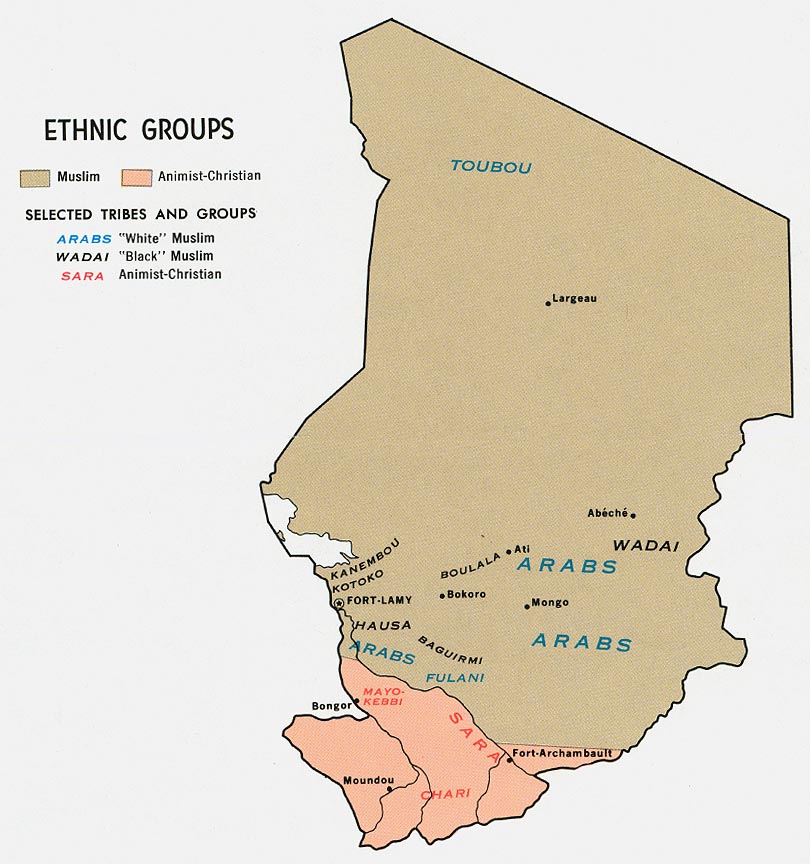
The Taram are a distinct ethnic group residing in the southern regions of Chad. Their communities are typically found in rural villages scattered across the savanna, where they have maintained a unique cultural identity despite the influence of neighboring peoples. The Taram speak their own Tamki language, which is part of the larger Chadic language family. Oral tradition and local history suggest that the Taram have lived in this region for generations, adapting to the rhythms of the land and the challenges of a semi-arid climate. Their language and customs set them apart from other groups in the area, and they are known for their strong sense of community and heritage.
Family is the cornerstone of Taram society, with extended families often living together or in close proximity. Daily life revolves around subsistence farming and animal husbandry, with millet, sorghum, and maize forming the staple diet. Men typically tend to livestock and fields, while women manage household duties, food preparation, and care for children. Meals are simple, often shared communally, and local markets provide opportunities for trade and social interaction. The Taram observe traditional festivals and rites of passage, which are marked by music, dance, and storytelling. Recreational activities are woven into daily routines, with children playing traditional games and adults gathering in the evenings to share news and oral histories.
The Taram are entirely Muslim, and Islam shapes every aspect of their spiritual and communal life. Daily prayers, fasting during Ramadan, and participation in Islamic festivals are central to their religious practice. The mosque is a focal point in each village, serving as a place of worship and community gathering. There are no known followers of Christ among the Taram, and the message of Jesus has not taken root in their community. Traditional beliefs and practices may be present, but these are generally interpreted through an Islamic lens. The Taram place their hope and trust in the teachings of Islam, and there is no known Christian witness or resource available in their language.
The Taram face significant challenges related to healthcare, with limited access to medical facilities and trained professionals. Clean water is often scarce, and waterborne diseases are a persistent threat. Educational opportunities are minimal, especially for girls, and many children do not complete primary school. Infrastructure such as roads and electricity is lacking in most villages, making transportation and communication difficult. The absence of Christian resources in their language further isolates them from the gospel and limits opportunities for spiritual growth or exploration.
Pray for God to open doors for the gospel among the Taram and to prepare hearts to receive the message of Christ.
Ask the Lord to send workers who can learn the Tamki language and share the good news in culturally sensitive ways.
Pray for improved access to clean water, healthcare, and education for Taram families.
Pray that God would raise up local believers from neighboring groups to reach out with compassion and truth to the Taram.
Scripture Prayers for the Taram, Temki in Chad.
https://www.ethnologue.com/language/tdk/
https://www.unicef.org/chad/
https://www.sil.org/resources/publications/entry/9226
| Profile Source: Joshua Project |