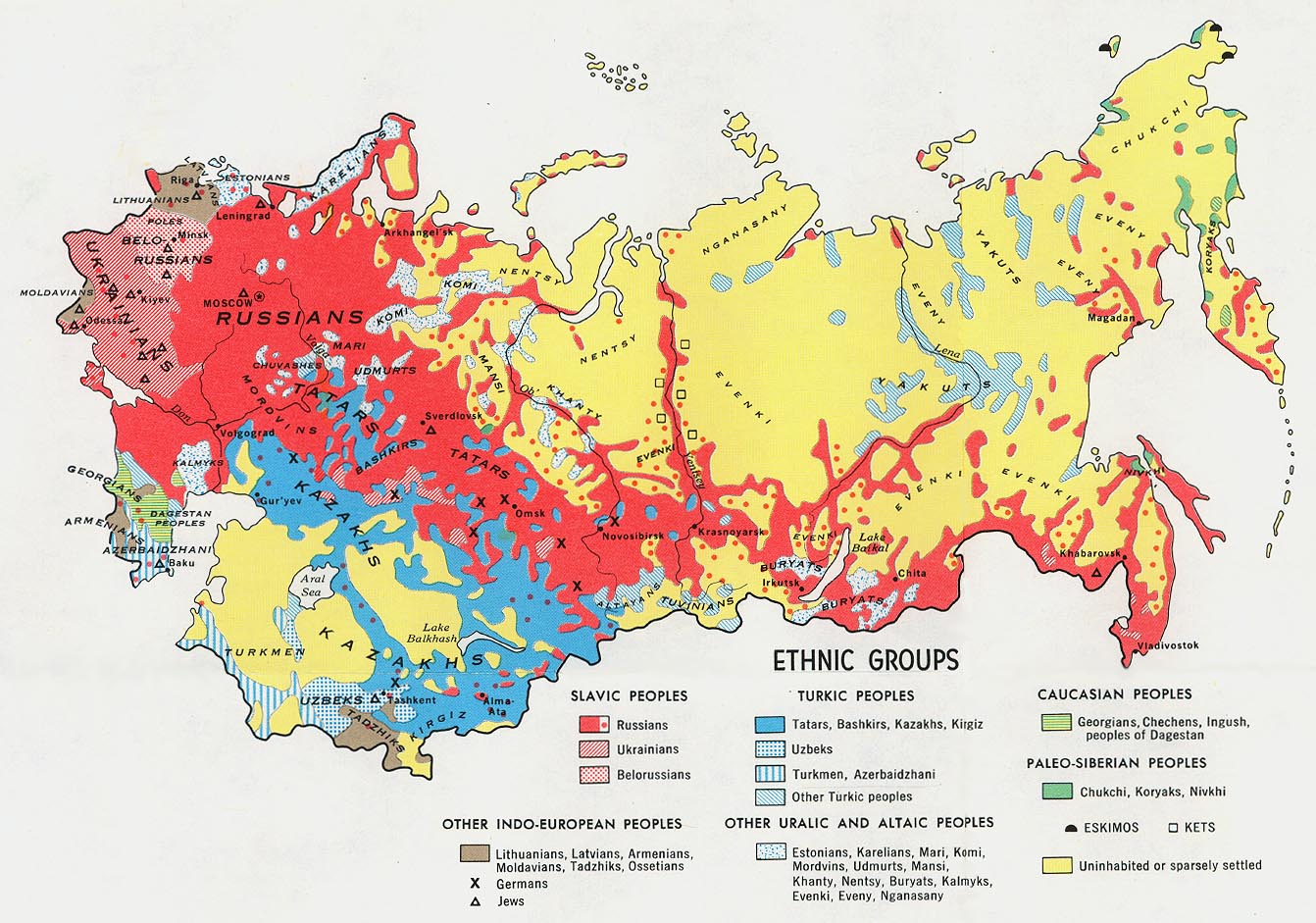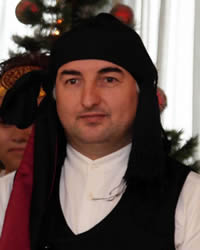

The Pontic Greeks are an ethnolinguistic subgroup originally from the region of Pontus on the southern coast of the Black Sea, in what is now northeastern Turkey. The Pontic Greeks trace their lineage back to ancient times, when Greek colonies were established along the Black Sea coast. However, during and after World War I, they faced severe persecution, resulting in atrocities known as the Greek Genocide, which led to mass killings and forced relocations. As violence and socio-political turmoil escalated, many Pontic Greeks sought refuge in Russia, especially in the Krasnodar Krai region and other parts of Southern Russia.
The plight of the Pontic Greeks continued during the Soviet era, when large numbers experienced persecution and forced deportations in the 1940s, resulting in thousands being resettled in Central Asia and other regions of the USSR.
After the collapse of the Soviet Union, many Pontic Greeks emigrated to Greece, but a significant community remains in Russia today. Their language, Pontic Greek, is rooted in ancient Ionic Greek. The Pontic Greek language, a distinct dialect of Modern Greek, retains many archaic elements from ancient Greek while incorporating influences from neighboring languages such as Turkish and Persian.
Family life for the Pontic Greeks in Russia reflects a blend of traditional customs, cultural values, and the challenges of adapting to contemporary societal changes. Pontic Greek families often emphasize extended relationships with relatives living close by. Traditional gender roles are common, with men serving as providers and women managing the household. Cultural practices such as celebrating religious festivals and family gatherings reinforce community bonds and preserve their rich heritage.
Families primarily communicate in Pontic Greek, helping maintain their cultural identity and passing down traditional stories, songs, and customs that connect children to their heritage. Despite this, the Pontic Greeks face pressures from broader cultural influences that can dilute traditional practices and the use of their language. Economic challenges compel younger generations to migrate to urban areas for better opportunities, potentially distancing them from their roots.
The community actively engages in revitalization efforts aimed at preserving their cultural identity, including cultural festivals and educational programs. Historically, Pontic Greeks combined agriculture, viticulture, fishing, and trade in their local economies, contributing to life in the Caucasus and Black Sea regions. Today there is a blending of traditional Greek customs, rituals, and dialects with local Russian and Caucasian influences.
The predominant religion among the Pontic Greeks is Greek Orthodox Christianity, which is central to their identity and fosters a sense of community and shared values. This faith serves as a core marker of their communal identity, with historical ties that deepen connections to the wider Orthodox world and other Greek communities. The local Orthodox Church often functions as a community hub, hosting worship services, social gatherings, and cultural events that reinforce bonds within the community.
Pontic Greeks celebrate various religious holidays, including Christmas and Easter, with traditional customs and rituals that may feature unique regional variations reflecting their cultural heritage. In addition to formal religious practices, traditional folk beliefs often intertwine with these observances, incorporating customs related to nature, ancestors, and local spirits. This syncretic approach enriches their spiritual life, blending Orthodox Christianity with cultural traditions.
The Pontic Greek community in Russia faces significant challenges in maintaining their religious practices amid modernization and integration with broader Russian culture, which has led to declining participation among younger generations. In response, the community is actively working to preserve their religious heritage through cultural festivals, language courses, and traditional celebrations that engage youth and reinforce their connections to identity.
Pontic Greeks encounter various cultural and spiritual challenges, including the need for language and identity preservation, cultural documentation, and deeper spiritual engagement. The Pontic Greek dialect is considered endangered, with Russian dominating daily life and formal education. Therefore, maintaining the dialect among younger generations is essential for cultural continuity. Additionally, migration, urbanization, and assimilation pressures have dispersed older Greek enclaves, highlighting the importance of networks and communal institutions in sustaining their identity. While Orthodox Christianity remains central to their lives, many community members exhibit a more cultural than personal faith, indicating a significant need for deeper gospel understanding and discipleship beyond mere affiliation with traditional religious practices.
Pray for the Holy Spirit to move powerfully in Orthodox churches, bringing Jesus Christ to the center of their devotion.
Pray that the Pontic Greeks in Russia will experience a deep, personal relationship with Jesus Christ.
As the Pontic Greeks seek to preserve their heritage, pray that they will be drawn to deepen their faith in Jesus Christ as their Savior for all areas of their lives.
Pray that soon Pontic Greek Christian believers will become Christ's ambassadors to those without hope.
Scripture Prayers for the Pontic Greek in Russia.
https://en.wikipedia.org/wiki/Pontic_Greeks
| Profile Source: Joshua Project |