


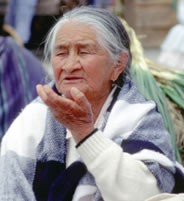

The North Bolivian Quechua are part of the larger Quechua ethnolinguistic family that stretches across the Andes of South America. In Bolivia, they primarily live in highland and inter-Andean valleys, especially in departments such as Cochabamba, Potosí, and parts of Oruro. Their language belongs to the Quechuan language family, historically associated with the Inca Empire, although Quechua-speaking peoples predated and outlasted Inca political control.
Before Spanish colonization in the 16th century, Quechua societies were agriculturally sophisticated, cultivating potatoes, maize, and quinoa in high-altitude environments. Under colonial rule, many Quechuas were subjected to forced labor systems such as the mita, particularly in mining centers like Potosí. Despite centuries of exploitation and marginalization, Quechua communities preserved their language, agricultural practices, communal land systems (ayllu), and strong kinship networks.
Today, Quechua is one of Bolivia's official languages, and the North Bolivian Quechua continue to form one of the largest Indigenous groups in the country. Their identity remains deeply tied to the Andean landscape, communal traditions, and ancestral heritage.
Most North Bolivian Quechua live in rural highland communities where agriculture and livestock raising are central to daily life. Potatoes, corn, wheat, and barley are staple crops, and many families also raise sheep, llamas, or cattle. Life in the Andes requires resilience due to high altitudes, harsh climates, and limited infrastructure.
Economic opportunities are often restricted, leading some community members—especially younger generations—to migrate temporarily or permanently to urban centers like Cochabamba or La Paz in search of employment. While Bolivia has made efforts to recognize Indigenous rights and languages, poverty rates in rural Quechua regions remain high compared to national averages.
Culturally, traditional dress, music, dance, and festivals continue to shape community life. Women often wear distinctive polleras (layered skirts) and bowler hats, and Quechua remains widely spoken in homes and local markets. Community decision-making is frequently organized around extended families and traditional structures that emphasize cooperation and reciprocity.
Traditionally, Quechua spirituality emphasizes harmony with nature and reverence for spiritual beings connected to mountains (apus) and Pachamama (Mother Earth). Ritual offerings and agricultural ceremonies have long played a role in ensuring fertility of land and livestock.
Since the colonial era, the Roman Catholic Church has had a strong presence among Quechua communities. Many identify as Catholic, yet traditional Andean cosmology often blends with Christian symbolism in syncretistic forms. Festivals honoring saints may also incorporate Indigenous ritual elements.
Evangelical and Protestant churches have grown in parts of Bolivia over the past several decades. Most of the Quechua in Bolivia identify as Christian, though levels of evangelical belief and discipleship vary significantly. From an evangelical perspective, there remains a need for clear biblical teaching, contextualized discipleship, and leadership development rooted in Scripture and expressed through Quechua culture.
Rural poverty continues to affect many North Bolivian Quechua communities. Limited market access, dependence on subsistence agriculture, and vulnerability to climate conditions create economic instability. Agricultural development programs, fair trade initiatives, and vocational training could help strengthen long-term sustainability.
Access to quality education, healthcare, and infrastructure remains uneven in highland areas. Bilingual education that respects both Quechua and Spanish can empower younger generations while preserving cultural identity. Reducing migration pressures through local opportunity development is also an important social goal.
Although Christian identity is common, many communities would benefit from deeper discipleship and the training of Indigenous pastors and church leaders. Evangelical ministries often focus on Bible translation, theological education in the Quechua language, and equipping local believers to share their faith with neighboring groups who have less access to the gospel.
Pray for strong, biblically grounded Quechua Christian leaders to be raised up within their own communities.
Pray that believers would grow in a deep understanding of scripture and a personal relationship with Jesus Christ.
Pray for the gospel to be clearly communicated in the Quechua language in ways that speak to the heart of Andean culture.
Pray that North Bolivian Quechua Christians would become Christian workers who bring the hope of Christ to other Indigenous groups in Bolivia and beyond.
Scripture Prayers for the Quechua, North Bolivian in Bolivia.
https://en.wikipedia.org/wiki/Quechua_people
https://www.ethnologue.com/language/quh
https://minorityrights.org/country/bolivia/
| Profile Source: Joshua Project |



