


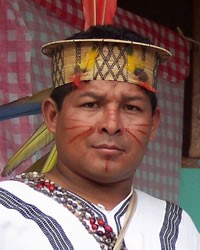

The Nomatsiguenga are an indigenous people of central Peru who live primarily in the eastern slopes of the Andes where the mountains descend into the Amazon Basin. Their communities are concentrated in the regions of Junín and Pasco, especially along rivers and forested valleys that provide transportation routes and fertile land. The environment is tropical, marked by dense rainforest, heavy rainfall, and abundant biodiversity.
The people speak Nomatsiguenga, an Arawakan language that remains central to their identity and daily life. Spanish is used in trade, education, and government interaction, but Nomatsiguenga continues to be spoken in homes and villages. Mission efforts and Bible translation work over the past century have made scripture available in their own language, strengthening literacy and Christian teaching.
Historically, the Nomatsiguenga lived in semi-nomadic forest communities sustained by hunting, fishing, and horticulture. Contact with outside society increased through missionary activity, rubber extraction, logging, and government expansion into the Amazon. While these encounters brought new opportunities, they also introduced disease, economic pressure, and cultural change. Today the Nomatsiguenga maintain a distinct ethnic identity while engaging more directly with Peruvian national life.
Most Nomatsiguenga families live in small rural settlements along rivers or accessible forest clearings. Agriculture is central to daily life. Men and women cultivate gardens of cassava, plantains, corn, sweet potatoes, and various fruits. Coffee and cacao may be grown as cash crops when transportation to markets is possible. Fishing in rivers and hunting small game continue to supplement the diet.
Meals are simple and based largely on cassava, plantains, and fish. Food is often boiled or roasted over open fires. Sharing meals strengthens family bonds and expresses hospitality toward visitors.
Family life is organized around extended kin networks. Households may include several generations, and cooperation in gardening, building, and childcare is essential. Elders are respected for their wisdom and experience. Marriage joins families together and reinforces community stability.
Community life includes school activities, church gatherings, and local celebrations. National holidays are observed, and Christian events such as baptisms, weddings, and Christmas services are important occasions. Music and singing are valued expressions of joy and faith. Although some young people pursue education in larger towns, many remain closely tied to their villages and ancestral lands.
Modern influences such as cell phones and outboard motors are increasingly visible, yet daily rhythms still reflect the demands of farming, river travel, and communal cooperation.
The Nomatsiguenga are predominantly Christian, with a strong evangelical presence resulting from decades of missionary work and Bible translation. Churches are active in many communities, and worship services in the Nomatsiguenga language are common. The Bible is accessible in their mother tongue, enabling personal reading and teaching.
Christian belief has significantly shaped moral values and community life. Prayer, singing, and Bible study are integral to many households. Pastors and local leaders provide spiritual guidance and organize congregational activities.
Elements of earlier animistic beliefs once centered on spirits associated with the forest and rivers. While such beliefs have declined in many areas, traces of traditional worldview may still influence attitudes toward illness, misfortune, or the unseen world. For many Nomatsiguenga believers, however, faith in Jesus Christ is sincere and grounded in Scripture.
The presence of established churches means the Nomatsiguenga are not only recipients of past mission efforts but also potential participants in reaching other Amazonian peoples who have little or no gospel witness.
Improved healthcare access would reduce preventable diseases that affect remote forest communities. Sustainable economic opportunities would help families navigate pressures from logging, land disputes, and market fluctuations. Educational resources that respect both Spanish and Nomatsiguenga language development would equip the next generation for leadership.
Deeper biblical training for pastors and church leaders would strengthen discipleship and theological understanding. Ongoing encouragement is important so that churches remain rooted in Scripture and resistant to syncretism or outside pressures. A broader missionary vision could mobilize Nomatsiguenga believers to carry the gospel to neighboring indigenous groups who remain spiritually unreached.
As cultural and economic changes accelerate, wisdom and unity will be essential. The grace of Jesus Christ remains the only lasting answer to both material hardship and the deeper need for reconciliation with God.
Pray for accessible healthcare and sustainable livelihoods in Nomatsiguenga communities.
Pray for strong biblical teaching and mature discipleship in their churches.
Pray for protection from outside pressures that threaten land, unity, and faith.
Pray that Nomatsiguenga believers will send workers to Amazonian peoples without a gospel witness.
Scripture Prayers for the Nomatsiguenga in Peru.
https://www.peoplegroups.org
https://www.ethnologue.com
https://www.britannica.com/place/Peru
| Profile Source: Joshua Project |



