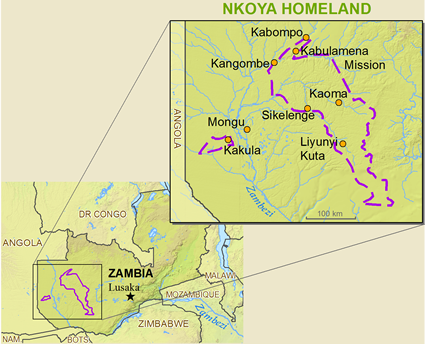

The Nkoya people live primarily in the western and central regions of Zambia, in areas marked by woodlands, river systems, and long-established rural settlements. Their language, Nkoya, is spoken within families, at community gatherings, and in traditional ceremonies, helping maintain cultural continuity across generations.
Historically, Nkoya communities organized themselves around chieftaincies and extended family groups, with each generation passing down responsibilities tied to the land, farming practices, and local customs. Their history includes periods of movement, interaction with neighboring groups, and the development of distinctive musical and oral traditions. Over time, Christian teaching became part of Nkoya life, shaping aspects of worship and community identity while older customs continued to influence local practices.
Most Nkoya families rely on farming as their primary livelihood. Fields of maize, millet, groundnuts, and vegetables are cultivated through shared labor among family members. Fishing, hunting, and gathering supplements what is grown, especially in communities located near rivers or forested areas. Livestock such as goats and chickens are also kept for food, trade, or use during ceremonies.
Family life is built on close relationships and cooperation. Several generations often live near one another, working together during planting and harvest seasons, building homes, and caring for children. Elders play a respected role in guiding decisions, preserving traditional knowledge, and leading community discussions.
Community life includes storytelling, praise singing, and drumming traditions that remain important during celebrations and major life events. Festivals, marriages, and naming ceremonies may draw extended families together, providing opportunities for shared meals, song, and dance. Churches also play a significant role in community rhythms, offering spaces for worship, fellowship, and instruction in scripture.
Christianity is the primary religious identity among many Nkoya communities, and church life influences the moral and spiritual direction of families. Worship, preaching, and prayer are regular parts of weekly life, and believers often rely on church leaders for pastoral guidance.
At the same time, some Nkoya individuals may still acknowledge older beliefs involving the spirit world—understandings rooted in the conviction that unseen forces can affect health, relationships, and daily circumstances. These beliefs reflect earnest expressions of trust in spiritual powers rather than simple cultural custom.
Access to reliable healthcare remains an important concern for Nkoya families, especially for those living far from established clinics. Opportunities for education—both for children and young adults—can help strengthen prospects and improve local leadership capacity. Economic stability is influenced by factors such as transportation, reliable markets for crops, and access to tools and resources that support farming.
Spiritually, continued growth in biblical understanding is vital. Strong local church leadership, discipleship opportunities, and engagement with Scripture can help believers mature in their faith. As the church grows, there is increasing potential for Nkoya Christians to encourage one another and to participate in sharing Christ with communities in Zambia that have fewer opportunities to hear the gospel.
Pray for Nkoya families to grow in their understanding of Scripture and deepen their walk with Christ.
Pray for strong and wise church leaders who live with integrity and guide their communities well.
Pray that those who struggle with fear of spiritual forces will find confidence and peace in the power of Jesus.
Pray for healthy families, stable crops, and access to medical care in rural villages.
Pray that Nkoya believers will gain a vision to participate in taking the gospel to other peoples in Africa.
Scripture Prayers for the Nkoya, Lambya in Zambia.
| Profile Source: Joshua Project |