


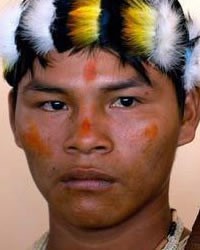

The Mocoví (Moqoit) are an Indigenous people of the Gran Chaco region, historically occupying areas between the lower Bermejo and Salado Rivers in what is now Argentina. They belong to the Guaicuruan linguistic family and were originally nomadic hunters and gatherers who relied on fishing, hunting deer and rhea, and gathering wild plants.
Their early contact with Europeans included encounters with Spanish expeditions and, later, significant influence from Jesuit and Franciscan missionaries beginning in the 1700s. These missions introduced cattle raising and agriculture, shifting many Mocoví communities from equestrian mobility to more settled patterns of life.
The 20th century brought severe hardship, including the 1924 Napalpí massacre, in which hundreds of Indigenous people—including Mocoví—were killed. This event was later acknowledged as a crime against humanity.
Today the Mocoví live primarily in the provinces of Chaco and Santa Fe. Many work as farmers, ranch workers, migrant harvesters, lumber laborers, or in other forms of rural employment.
Traditional subsistence once depended heavily on hunting—using bows, lances, and traps—and on fishing and collecting fruits and roots. While these practices shaped their identity for centuries, many now live in settlements closer to urban areas where they balance traditional knowledge with contemporary economic realities.
Family life remains communal, with extended networks providing mutual support. Celebrations often include traditional music, storytelling, and ceremonies tied to ancestral memory. Cultural revival efforts—especially language revitalization and community festivals—have strengthened pride and restored practices once threatened by assimilation.
Daily meals may include locally available grains, meats, and foraged foods, though modern Argentine cuisine is now widely integrated into Mocoví households.
Before missionary contact, the Mocoví practiced an Indigenous spiritual worldview tied closely to nature, ancestral stories, and communal rituals. Jesuit missions later introduced Christian teachings and church structures, shifting religious expression in many communities.
Christian influence is strong today, though traditional elements remain present in cultural memory and identity. Where followers of Christ exist among the Mocoví, they can be encouraged to grow in spiritual maturity and become part of the mission force reaching peoples without the hope of Christ.
Mocoví communities benefit from strengthened educational opportunities, particularly in bilingual and cultural instruction, as the Mocoví language is endangered and younger generations are increasingly losing fluency.
Families face ongoing challenges related to economic marginalization, land access, and cultural preservation. Consistent fellowship, sound biblical teaching, and local leadership development can support spiritual growth. Continued affirmation of cultural identity and dignity helps sustain resilience in the face of historical and present pressures.
Pray for Mocoví believers to grow strong in Christ and live out their faith with clarity and boldness before their own people and others.
Pray for revitalization of the Mocoví language and cultural practices that support community identity.
Pray for emerging leaders who will guide their communities spiritually and become part of the mission force among the less-reached.
Scripture Prayers for the Mocovi in Argentina.
https://www.everyculture.com/South-America/Mocov.html
https://en.wikipedia.org/wiki/Mocov%C3%AD
https://icmagazine.org/indigenous-peoples/mocovi/
| Profile Source: Joshua Project |



