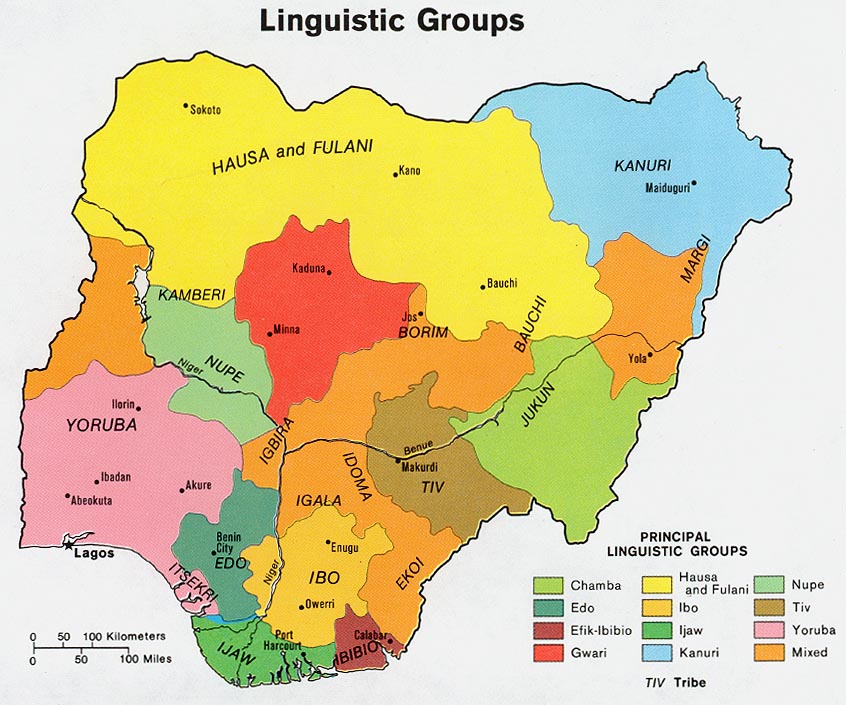
The Lubila are a small and relatively little-documented ethnic group living in northeastern Nigeria, most commonly associated with areas near the borders of Borno and Adamawa states. They are part of the complex ethnic landscape of the region, where many smaller groups have maintained distinct identities despite centuries of interaction with larger neighboring peoples.
Historically, the Lubila have lived in a region shaped by trade routes, regional empires, and waves of migration. The influence of the Kanem-Bornu Empire and later Islamic expansion across northern Nigeria brought cultural and religious change to many communities in the area. Even so, smaller groups like the Lubila often retained elements of their own language and traditions while adapting to broader regional influences.
The Lubila speak their own local language, though many are also familiar with Hausa, which serves as a major trade language across northern Nigeria. In some cases, younger generations may also learn English through limited educational opportunities. Much of their history is preserved through oral tradition rather than written records.
Unlike many of the surrounding groups in northeastern Nigeria, the Lubila are largely Christian. Churches play a significant role in community life, and many individuals identify with various Christian traditions. Worship services, prayer, and church gatherings are important expressions of faith and provide both spiritual and social support.
This strong Christian presence sets the Lubila apart within a predominantly Muslim region. As a result, their faith can sometimes place them in a minority position, requiring perseverance and unity among believers.
While many Lubila identify as Christians, there can still be varying levels of understanding and commitment. Some may participate in church life as part of community tradition without a deep personal relationship with Jesus Christ. Others demonstrate a growing and active faith, seeking to follow him more closely.
There may also be lingering elements of traditional belief among individuals, including trust in spiritual forces or protective practices. These reflect a worldview in which unseen powers are believed to influence daily life. Even so, the presence of the church offers an opportunity for continued teaching, discipleship, and spiritual growth centered on the truth of the gospel.
Because of their location, Lubila believers also have a unique opportunity to serve as a witness to neighboring groups who may have little or no exposure to the message of Jesus Christ.
The Lubila are generally associated with Islam, which has spread widely throughout northern Nigeria. Islamic practices such as daily prayers, fasting during Ramadan, and participation in religious festivals are part of community life for many.
At the same time, some Lubila also hold to traditional beliefs that involve trust in spiritual forces, ancestors, or unseen powers that influence daily events. These beliefs may include the use of charms, rituals for protection, or consultation with spiritual leaders. Such practices demonstrate a worldview in which spiritual realities are deeply intertwined with everyday life.
While Islam provides a strong sense of identity and structure, many Lubila have not heard a clear presentation of the gospel of Jesus Christ. Their understanding of God is shaped by Islamic teaching, which differs from the biblical message of salvation through Christ alone.
Those who might consider following Jesus often face social and familial pressure, as religious identity is closely tied to community belonging. This can make open faith in Christ difficult and sometimes costly.
Physically, the Lubila face significant challenges related to poverty and limited infrastructure. Access to clean water is often inadequate, and healthcare services may be distant or unavailable. Preventable diseases and malnutrition can affect both children and adults.
Education is another pressing need. Schools are limited in rural areas, and insecurity in northeastern Nigeria has further disrupted access to learning. This lack of education restricts future opportunities and contributes to ongoing economic hardship.
The instability in the region has also led to displacement for some families, increasing their vulnerability. Farming and trade have been affected, making it harder for communities to sustain themselves.
Spiritually, the Lubila need access to the gospel in their own language and in ways that are understandable within their cultural context. Few have had the opportunity to hear about Jesus Christ clearly. There is a need for workers who are willing to serve among them, building relationships and sharing biblical truth.
Those who come to faith in Christ need discipleship and encouragement to grow, especially in an environment where opposition may arise.
Pray for peace and stability in northeastern Nigeria, especially in areas affected by conflict.
Ask God to provide access to clean water, healthcare, and education for Lubila communities.
Pray that the Lubila will hear and understand the gospel of Jesus Christ.
Ask the Lord to raise up faithful workers and strengthen any believers among them.
Scripture Prayers for the Lubila, Kabila in Nigeria.
https://www.britannica.com/place/Nigeria
https://www.cia.gov/the-world-factbook/countries/nigeria/
https://www.worldbank.org/en/country/nigeria
https://www.unicef.org/nigeria/
| Profile Source: Joshua Project |