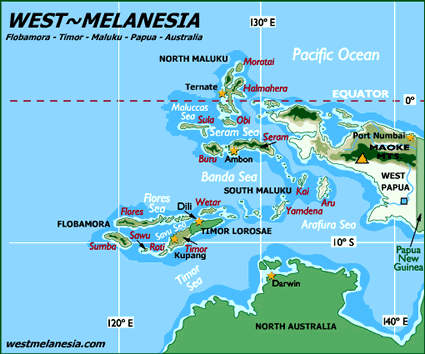
The Lisabata-Nuniali are a people group living on Seram Island in the Maluku archipelago of Indonesia. Their name comes from two dialects of the Lisabata language, Lisabata and Nuniali, which are part of the Austronesian family. Historically, the Lisabata-Nuniali have lived in small coastal and inland villages, shaped by centuries of trade and cultural exchange in the Maluku region.
The islands were once central to the spice trade, and this history brought both economic opportunity and outside influence, including Islam and later Christianity. Despite these influences, the Lisabata-Nuniali have retained their distinct language and cultural identity.
The Lisabata-Nuniali live in rural communities where subsistence farming and fishing are the main occupations. Families cultivate sago, cassava, and rice, while fishing provides protein and trade goods. Coconut and clove trees are also important cash crops. Family life is communal, with extended families often living close together and sharing responsibilities.
Celebrations revolve around harvests, weddings, and religious holidays, often marked by traditional dances and feasts. Food is simple but hearty, with sago porridge, grilled fish, and coconut-based dishes forming staples. Hospitality is highly valued, and guests are welcomed with generosity.
The Lisabata-Nuniali are primarily Muslim, though a significant minority identify as Christian. Islam shapes much of their daily rhythm, with prayers, fasting during Ramadan, and community gatherings at the mosque. Christianity, introduced through missionary efforts and regional church growth, has taken root among some families, though evangelical presence remains small.
Traditional beliefs may also persist, including respect for ancestral spirits and nature, woven into cultural practices. The spiritual landscape is therefore mixed, with Islam dominant but Christianity present and growing.
The Lisabata-Nuniali face both spiritual and physical challenges. Spiritually, many have not yet heard or embraced the gospel in a way that transforms their communities. Those who are Christians often lack discipleship resources in their own language, limiting their ability to grow strong in faith and become part of the mission force.
Physically, rural isolation means limited access to healthcare, education, and economic opportunities. Infrastructure such as roads and clean water systems are often underdeveloped, making daily life difficult. These needs create opportunities for holistic ministry that addresses both body and soul.
Pray that the Lisabata-Nuniali will encounter Jesus Christ as the one who provides answers to life's deepest issues.
Pray that the small Christian presence among them will be strengthened, equipped with Scripture and discipleship materials in their heart language.
Pray for the Muslim majority, that they will experience the love of Christ through relationships and witness.
Pray for physical needs: improved healthcare, education, and sustainable livelihoods.
Pray that believers among the Lisabata-Nuniali will rise as part of the mission force, carrying the gospel to neighboring groups and beyond.
Pray for the faithful translation and wide distribution of the Bible, outreach materials, and evangelism resources.
Scripture Prayers for the Lisabata-Nuniali in Indonesia.
Linguistic classification and information about the Lisabata-Nuniali language.
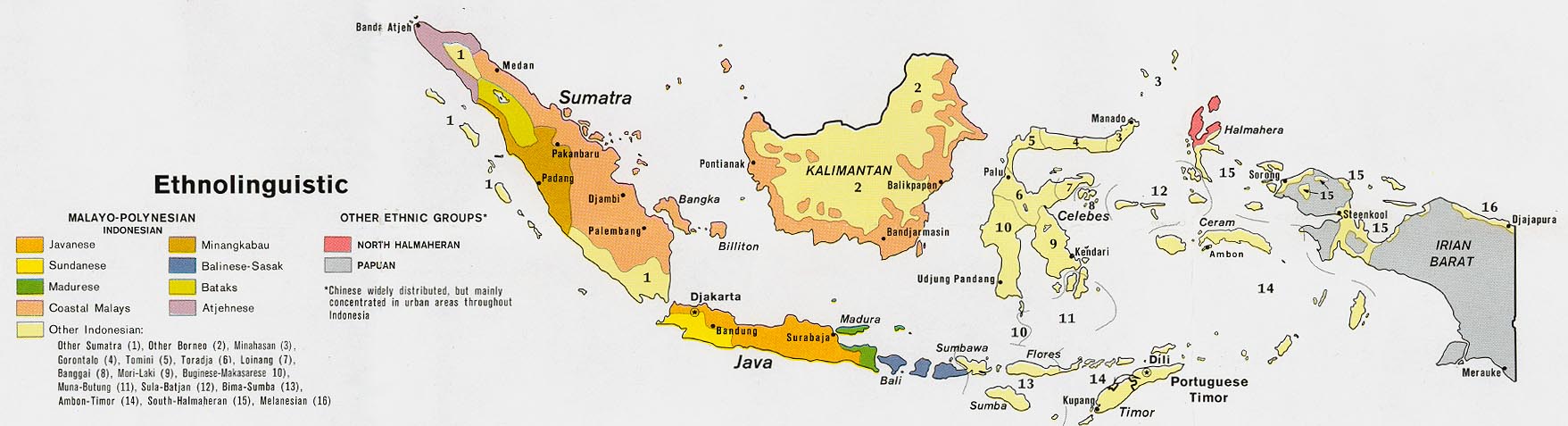
Ethno-linguistic and religious context of Seram Island, including the mix of Islam, Christianity, and traditional animistic beliefs among Central Maluku peoples.
Rece
| Profile Source: Joshua Project |