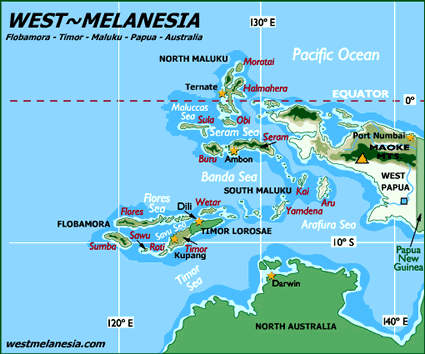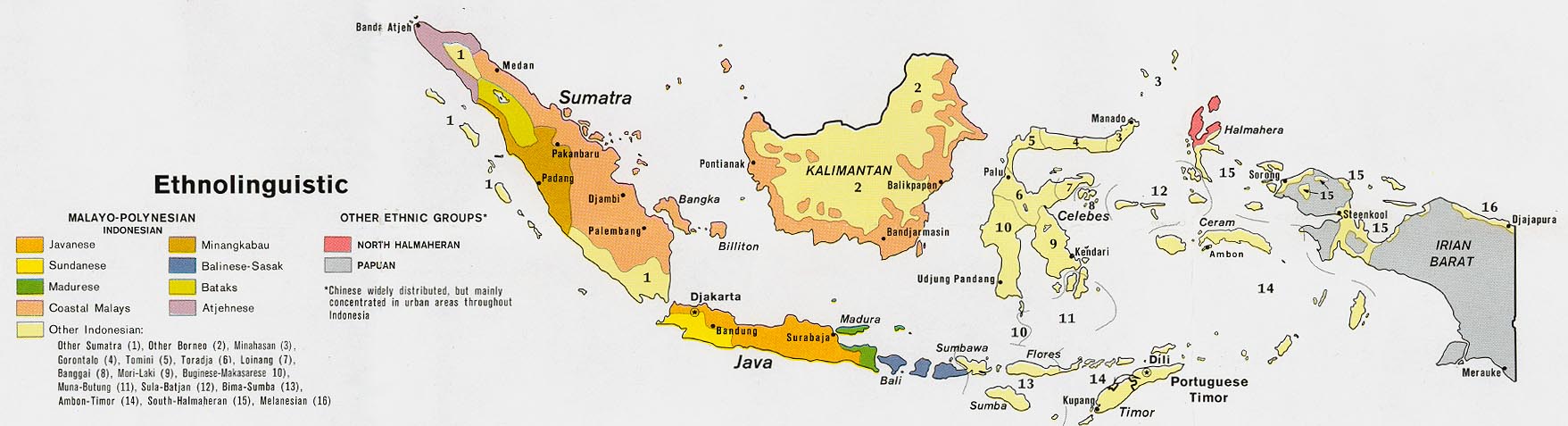
The Kola people live in remote areas of eastern Indonesia, where mountains, rivers, and forests have shaped their communities for generations. They speak a language belonging to the Papuan family, which is closely tied to their cultural identity. Oral history tells of ancestors who settled in river valleys and highland terraces, establishing clans that continue to define social life. The Kola have had limited contact with outsiders, allowing many traditional customs, kinship structures, and village governance systems to remain intact. Recent decades have brought gradual exposure to schooling, trade, and outside religious influences, but much of the Kola's heritage continues to shape daily life.
Kola families live largely by subsistence farming, cultivating crops such as sweet potatoes, taro, bananas, and leafy vegetables. Men often hunt wild pigs or fish in local streams, while women manage gardens, cook, and care for children and elders. Villages consist of clusters of related households, fostering strong cooperation in both work and family responsibilities.
Community life revolves around family, clan ties, and seasonal celebrations. Feasts mark major life events such as births, marriages, and harvests, and include music, traditional dancing, and sharing of food. Common dishes include roasted meat, boiled greens, roots, and sago-based foods. While some young adults travel to nearby towns for schooling or work, most return home for important gatherings that reinforce their identity and social bonds.
Kolas follow a mixture of traditional beliefs and influences from major world religions. Ancestral spirits, sacred sites, and ritual practices remain important in guiding daily life, while some households have encountered Christian teaching. The gospel is still not fully understood by many, and spiritual life often blends older customs with new religious ideas. Discipleship and consistent biblical teaching could help Kola families experience the hope, guidance, and transformation that Jesus offers.
Healthcare access is limited, and preventable illnesses and complications during childbirth continue to affect the community. Children face challenges in reaching schools, and education resources remain sparse in remote villages. Economic opportunities are scarce, and seasonal travel difficulties make trade and emergency access to goods and services challenging. Reliable sources of clean water are not always available, increasing the risk of sickness.
Spiritually, the Kola benefit from workers who can live among them, learn their language, and communicate the gospel in culturally meaningful ways. Strengthening existing believers is vital for growing local discipleship and enabling families to share God's love with others. Encouragement and guidance can help the Kola become an active part of the global mission force.
Prayer is offered for improved healthcare, safe childbirth, clean water, and access to nutritious food for Kola families.
Prayer is lifted for the Kola to hear and understand the message of Jesus in ways that bring lasting hope and transformation.
Prayer is made that believers among the Kola will grow in faith, become strong disciples, and share Christ's love with their families and neighboring communities.
Prayer is given for workers who are willing to live alongside the Kola, build trusting relationships, and faithfully communicate God's truth.
Scripture Prayers for the Kola in Indonesia.
Ethnographic research on highland and river valley communities in eastern Indonesia.
General knowledge of subsistence life, clan systems, and traditional cultural practices in remote Indonesian regions.
| Profile Source: Joshua Project |