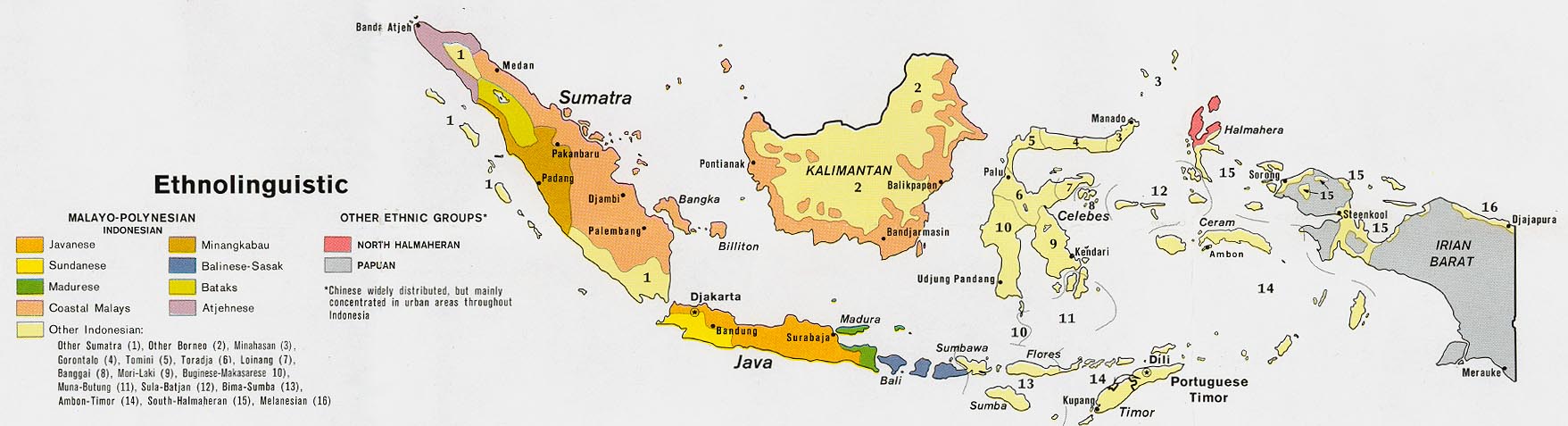
The Wahau-Kayan are a small indigenous ethnic group in the Borneo-Kalimantan people cluster of the Malay Peoples affinity bloc, residing primarily in East Kalimantan Province north of Muarawhau town. They are part of the Kayanic people group that originated in northwest Borneo around the lower Baram River in what is now Sarawak and Brunei Bay, according to oral traditions and 19th century records. Their ancestors began migrating south in the late 16th and early 17th centuries until they reached the Bahau River. Their movements were often aimed at expanding trade networks, forming economic alliances, and giving military advantages. They speak the Kayan Wahau language.
They practiced headhunting. Taking enemy heads was essential for their complex rituals involving life-cycle ceremonies, particularly the Festival of the Dead. Heads were believed to contain vital forces necessary for the well-being of the group. The practice ended in the late 19th century due to colonial intervention and internal exhaustion.
Other groups later migrated to the area, resulting in the formation of multicultural villages. They learned metallurgy skills through trade with other centers and produced weapons, statues and ritual objects. Their economy revolved around slash-and-burn agriculture centered on rice production, supplemented by hunting, fishing, and gathering. Agriculture involving paid labor and cash crops increased as trade brought more access to the outside.
The old practice of women having elongated earlobes has largely faded.
The entrance of Christianity through Catholic missionaries in the 19th century and Protestant missionaries in the early 20th century has greatly improved education and health services.
Although many have moved to cities in search of work, those who remain grow rice and corn, raise domesticated animals, hunt and fish. Hunting with blowguns tipped with poison is a male practice, while women weave colorful cotton cloth. Their language is unwritten, so they use oral methods like storytelling and songs to pass on their history. They make music with drums and bamboo mouth organs, and dance is an important part of their culture. They also make intricate, durable baskets.
Marriage is seen as a union between families. The groom's parents must ask the family of the bride for permission to marry. Marriage partners must be related, first cousins being preferred.
Social structure is based on three classes: aristocrats, called paren; commoners, called panyen; and slaves, called lipen. Communities live in longhouse villages at the confluence of rivers. These longhouses can be up to a kilometer long and can provide shelter for up to 50 families.
Villages are governed by a council of elders. The dead are buried in elevated huts.
They are primarily animists, believing in numerous spirits that control daily life. Each village has a shaman who mediates between villagers, the spirit world, and the ancestors. There is a small Christian minority, many of whom are Roman Catholics. There are also some Buddhists. The longhouse tradition, symbolizing communal life, is upheld by most Christians. The idea of "kiau" or community responsibility and helping one another is valued.
Youth migration to cities for education and jobs poses a problem for continuation of agriculture and for economic development. The spread of Christianity is made more difficult because of the remoteness of the area, difficult terrain, and limited infrastructure.
Pray that those still worshiping spirits may come to Christ.
Pray that nominal Christians my experience the new birth, and that the Wahau Kayan may take their place in world evangelism.
Pray for the Lord to bless the work of their hands, and for them to respond with heartfelt gratitude.
Scripture Prayers for the Kayan, Wahau in Indonesia.
Wahau Kayan of Indonesia (PGID: PG022620) - PeopleGroups.org
Artoftheancestors.com
The Journey and Acculturation of Christianity in Kayan Mendalam, West Kalimantan: History, Challenges, and Development - theolingua.id
| Profile Source: Joshua Project |