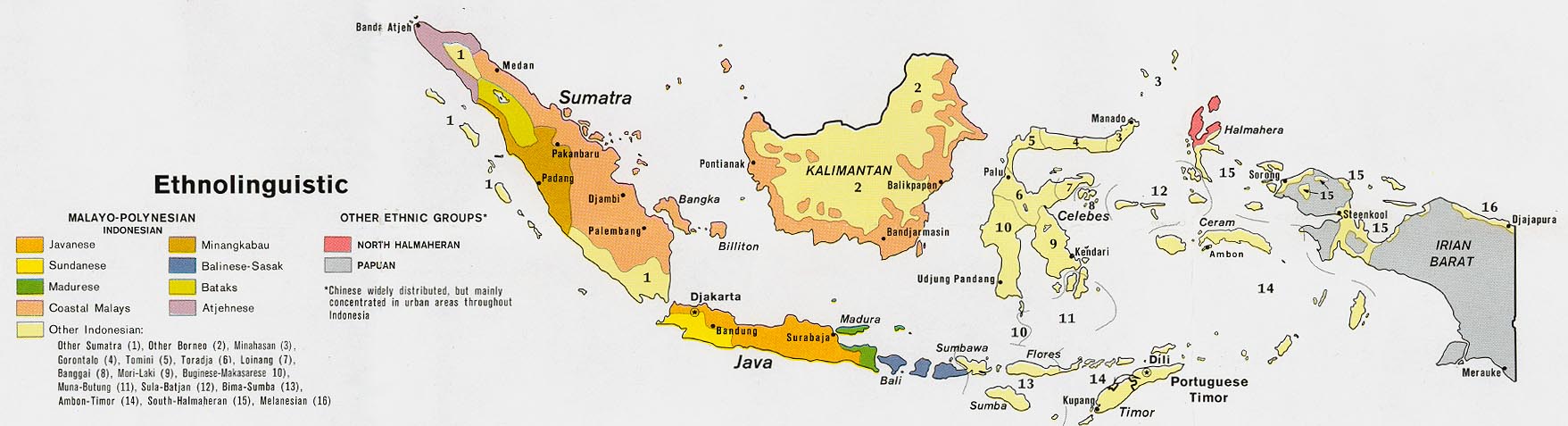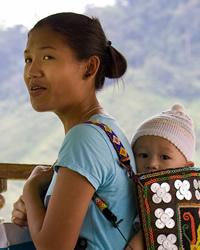

The Busang Kayan are part of the wider Kayanic peoples of Borneo, known for their deep river-valley settlements, strong kinship systems, and rich artistic traditions. Most live in Indonesia, but a smaller number are in Brunei. Historical accounts describe Kayanic communities as long-established inhabitants of the interior regions of Borneo, often living along major rivers where travel, trade, and communication have traditionally taken place. Many Busang Kayan families trace their identity through clan lines and stories handed down through generations. Their longhouses once served as central places for community life, cooperation, and shared responsibilities.
Over time, the Busang Kayan have interacted with neighboring Dayak groups, migrant communities, and the wider influences of national education and infrastructure. Movement for work, schooling, and trade has connected them more closely with towns and administrative centers, yet many families still maintain strong ties to their ancestral areas.
Daily life for the Busang Kayan often centers around rivers, forests, and small agricultural plots. Many families practice mixed livelihoods that may include farming, fishing, gathering forest products, and wage labor. The forests of Borneo have long shaped their knowledge of plants, materials, and seasonal rhythms.
Traditional arts, such as weaving, carving, and music, remain valued as expressions of identity, though the degree of practice varies by community. Social life emphasizes respect for elders, cooperation among households, and maintaining harmony within the family. Some communities continue to use longhouses or communal structures, while others have shifted to individually built homes influenced by modern materials and designs.
Children increasingly attend government schools, and mobility for work has grown. Even so, many Busang Kayan retain affection for their homeland rivers and the cultural knowledge passed down through their ancestors.
Using the internal baseline, the Busang Kayan have exposure to Christianity, though practice and understanding vary widely. Some communities identify with Christian traditions introduced through churches and workers over the years. Others may retain aspects of long-standing cultural customs, often tied to community identity, respect for ancestors, and the natural world. These elements should not be overstated, as beliefs differ from one household or village to another.
Where Christian teaching is present, it can be seen in worship gatherings, prayer, and engagement with Scripture when available. As in many regions, a mixture of older customs and newer influences requires careful, patient discipleship so that believers can grow in a clear understanding of the gospel.
Sustained, relational ministry is valuable among the Busang Kayan. Many communities appreciate those who come alongside them with humility, honoring their culture while pointing them to the hope found in Christ. Opportunities for discipleship, biblical teaching, and leadership development can help believers grow strong in faith.
Support for family life, encouragement for young people, and resources that deepen engagement with Scripture are important. Clear teaching that builds understanding of Christ and strengthens new believers is greatly needed.
Pray for Busang Kayan believers to grow in maturity, grounded in Scripture and guided by the Holy Spirit.
Pray for strong local leaders who can teach faithfully, serve with humility, and model Christlike character.
Pray for families to experience unity, healing, and a deepening desire to follow Jesus together.
Pray for increased engagement with Scripture in heart languages and in forms that encourage regular study and application.
Pray that Busang Kayan believers will share the hope of Christ with neighboring peoples across Borneo.
Scripture Prayers for the Kayan, Busang in Indonesia.
https://www.ethnologue.com/language/bfg
https://www.cia.gov/the-world-factbook/countries/indonesia/
https://www.cia.gov/the-world-factbook/countries/brunei/
https://www.borneocultures.org/
https://www.diccionariodayak.org/
| Profile Source: Joshua Project |