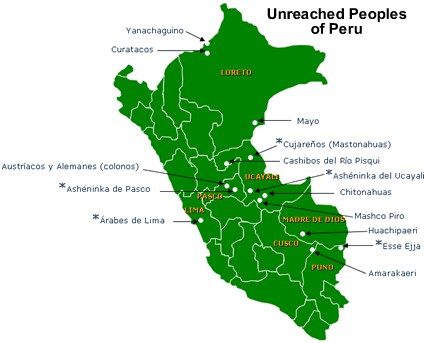
The Wacipaire—also known as Huachipaire or Wachiperi—are an Indigenous people of Peru's southern Amazon, living along the Keros and upper Madre de Dios rivers in the Cusco region. Their traditional language is Huachipaeri, part of the Harakmbut language family, closely related to Amarakaeri and other Harakmbut subgroups.
Historically, the Wacipaire occupied forest territories between the Andes and Amazon basin. Their identity is closely connected to the Harakmbut cultural world, which includes several related subgroups. Oral traditions emphasize ancestral origins tied to the forest and river environment, and their history includes contact with missionaries, traders, and more recently conservation institutions associated with the Manu region. Ritual expressions such as Eshuva (sung prayers) reflect centuries of cultural inheritance.
The Wacipaire live in tropical forest ecosystems where daily life revolves around subsistence activities. Many families practice swidden horticulture, cultivating manioc, plantains, maize, and small crops. Hunting, gathering, and fishing support their diets, while forest products supplement household needs.
Family structures are built around extended kin networks. Houses are often arranged in small clusters near rivers, and community life emphasizes cooperation in food production, forest tasks, and communal rituals. Manioc-based beverages such as masato play a role in hospitality and ceremonial gatherings.
Celebrations make up an important part of Wacipaire social life. The Eshuva sung prayers—performed without instruments—are central to healing ceremonies, initiation of new singers, and community gatherings connected to wellbeing. These songs are considered spiritually powerful and are traditionally learned through oral apprenticeship.
In recent decades, cultural transmission has faced difficulty due to youth migration, assimilation pressures, and reduced participation in traditional practices. Nonetheless, elders remain key cultural guardians, striving to pass on language, song, and communal knowledge.
Most Wacipaire primarily follow Indigenous spiritual beliefs, including the use of Eshuva sung prayers that call on nature spirits for healing and wellbeing. Some individuals identify with Christianity, and local churches provide opportunities for learning about Jesus Christ and participating in Christian community. While ancestral beliefs remain important culturally, Christian faith offers hope, moral guidance, and spiritual grounding for many families. These systems coexist, though younger generations often navigate between traditional practices and Christian teaching.
Improved access to healthcare and safe transportation is needed, as many Wacipaire live in remote forest areas far from medical facilities. Environmental pressures, including cultural loss and reduced transmission of language and ritual knowledge, affect community stability. Economic opportunities are limited, and sustainable livelihoods require careful balancing of forest stewardship and participation in local markets.
Spiritual needs include access to Scripture and discipleship opportunities in both Spanish and the Huachipaeri language. Support for local believers and church leaders would strengthen Christian growth and encourage families seeking Christ-centered guidance amid cultural change.
Pray for spiritual growth among Wacipaire believers and for Christ-centered encouragement within their communities.
Pray for protection of their health, land, and resources as they live in remote and environmentally fragile areas.
Pray for the preservation of the Huachipaeri language and for continued cultural transmission led by wise elders.
Pray that Wacipaire Christians will join the wider gospel movement, serving neighboring groups still without a clear witness.
Scripture Prayers for the Huachipaire, Wacipaire in Peru.
https://ich.unesco.org/en/USL/eshuva-harakmbut-sung-prayers-of-perus-huachipaire-people-00531
https://www.native-languages.org/huachipaeri.htm
https://lenguasyliteraturasnativas.caroycuervo.gov.co/muinane/ (Harakmbut language family context)
https://www.iperu.org/etnia-huachipaeri
| Profile Source: Joshua Project |