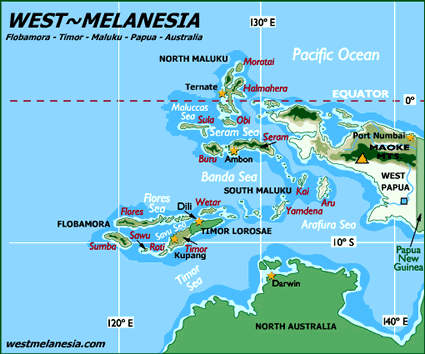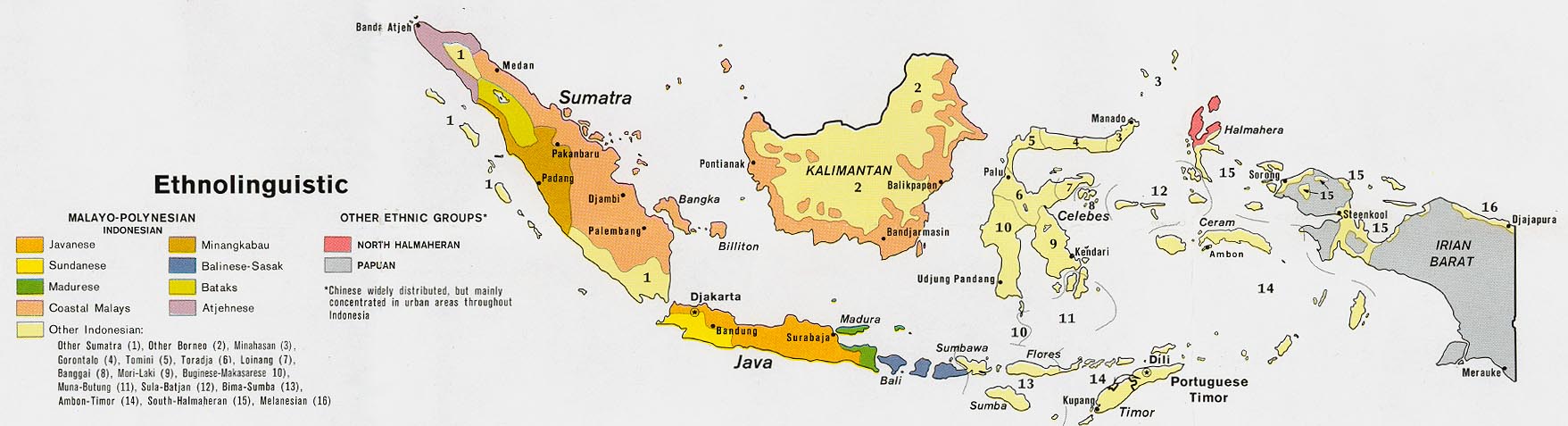
The Iliun Hahutan are a small ethnic group living in the interior regions of Seram Island in the Maluku archipelago of Indonesia. They are closely tied to forest environments and are part of the broader network of indigenous Seram peoples whose identities are rooted in clan ancestry, land, and customary law (adat). Historically, the Iliun Hahutan lived in relative isolation, with limited contact beyond neighboring villages. Their history is preserved through oral tradition, ritual narratives, and ancestral boundaries that define land use and social responsibility. Government administration, migration, and outside religious influence have increased contact in recent decades, but traditional structures remain influential.
Life among the Iliun Hahutan is shaped by cooperation, subsistence, and deep knowledge of the forest. Most families rely on subsistence agriculture, cultivating cassava, sago, bananas, and vegetables. Hunting, fishing in nearby rivers, and gathering forest products are essential for food security. Cash income is limited and may come from occasional trade or seasonal labor.
Extended families form the core of social life. Elders are respected as decision-makers and guardians of tradition. Children are raised within the wider clan and learn skills, values, and beliefs through daily participation in work and rituals.
Community life includes ceremonies connected to agricultural cycles, rites of passage, and reconciliation between families. These events often involve ritual speech, traditional music or dance, and shared meals that strengthen social unity.
The daily diet centers on sago, root crops, fruits, and fish or wild game when available. Food is shared communally, reflecting values of cooperation and mutual dependence.
The Iliun Hahutan worldview is traditionally animistic. Many believe that spirits inhabit forests, rivers, and ancestral lands and that these spiritual forces influence health, harvests, and harmony within the community. Ritual practices and taboos are observed to maintain balance with the unseen world and to avoid misfortune. While some exposure to Christianity has occurred through nearby communities and limited outreach, traditional beliefs continue to play a central role in shaping daily life, moral understanding, and worldview.
Many Hahutan, Iliun villages lack consistent access to healthcare, clean water, education, and transportation. Geographic isolation increases vulnerability to preventable disease and limits economic opportunity.
Spiritually, many have little or no access to Scripture or Christian teaching in their own language and cultural framework. All they have are gospel recordings. There is a need for long-term, relational gospel witness, discipleship, and the development of local believers who can share biblical truth in ways that are clear, respectful, and culturally meaningful.
Pray for improved access to healthcare, clean water, and education for Iliun Hahutan families.
Pray that the message of Jesus Christ would be communicated clearly in ways that speak to the Iliun Hahutan worldview and daily life.
Pray for workers who are willing to serve patiently among the Iliun Hahutan, learning their language and culture with humility.
Pray for the raising up of local believers who can lead their communities spiritually and pass on faith to future generations.
Scripture Prayers for the Hahutan, Iliun in Indonesia.
https://www.ethnologue.com/country/ID
https://www.undp.org/indonesia
https://www.worldbank.org/en/country/indonesia/overview
| Profile Source: Joshua Project |