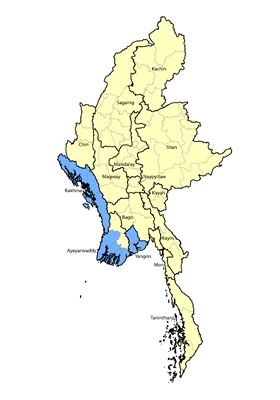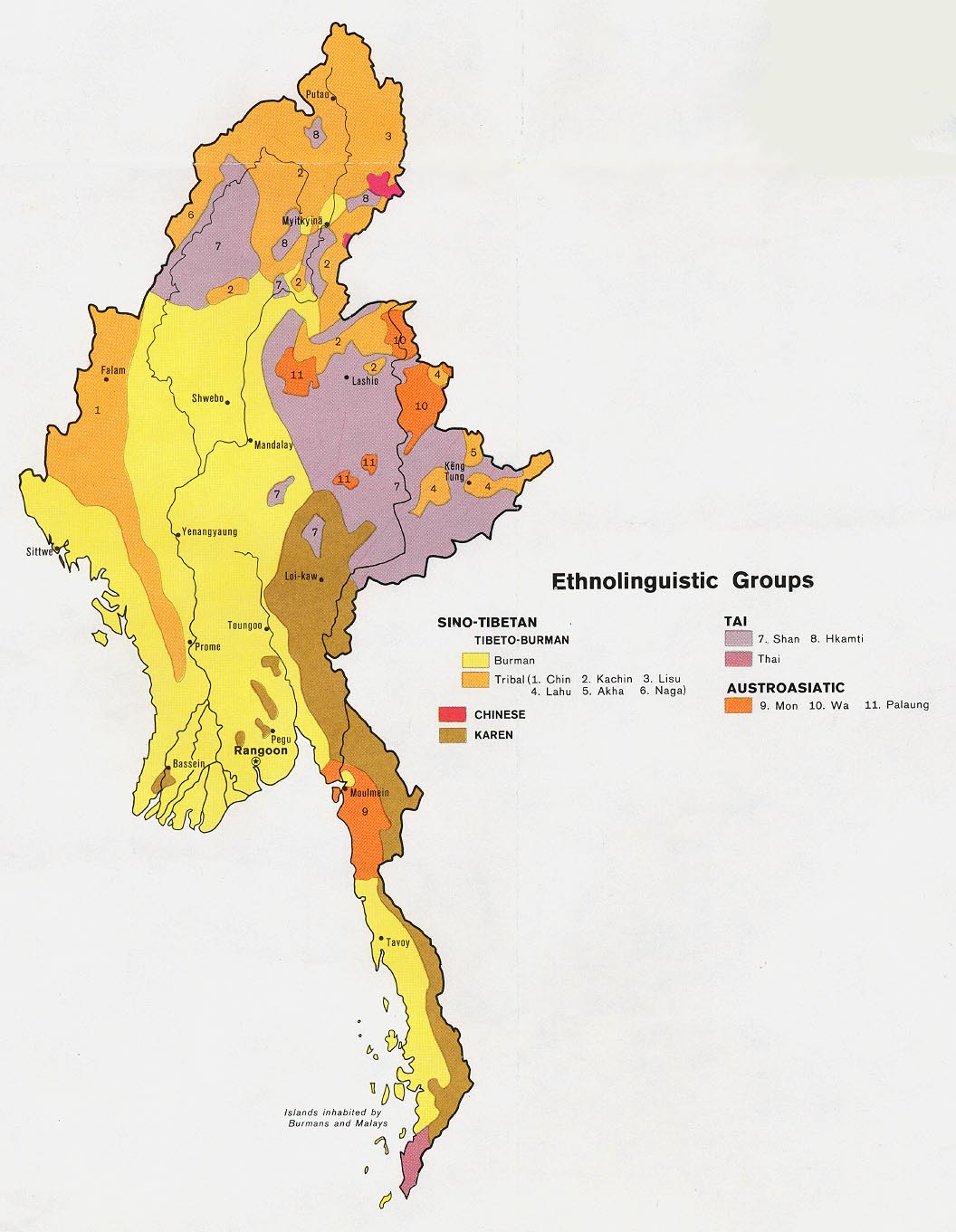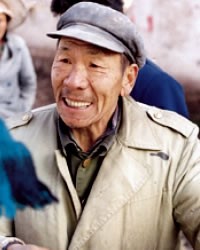

Hokkien-speaking Chinese people live along the southern Myanmar coast today, predominantly in the Yangon and Ayeyarwady?regions and in Rakhine State. They first began arriving in Myanmar in the 18th century, and the 1931 census of Burma returned a total of 49,948 "Fukianese." Being a sea-faring people, the Hokkien have spread around the world, and today approximately 45 million Hokkien people live in dozens of countries, with the largest populations found in China (22.7 million), Taiwan (13. million), Malaysia (3. million), and with more than a million each in Singapore, Thailand, Philippines, and Indonesia.
To differentiate them from other Chinese communities, the Burmese nicknamed the Hokkien "Eingyi shay" ("long-sleeved jackets") according to the clothing worn by early settlers. In China, the name "Hokkien" is the name for Fujian in the Hokkien language. Some linguists have divided the Chinese languages in Fujian into "nine inherently unintelligible varieties" and have grouped the Hokkien by their home locations. For example, the largest group is also called the Min Nan (meaning south of the Min River), with the Min Bei (north of the river), Min Dong (east of the river) and so on. This profile covers all Fujian migrant communities in Myanmar today, regardless of their language or dialect.
In the past, other Chinese people nicknamed Fujian "the province of 100 dialects." One visitor observed: "People separated by a blade of grass cannot understand each other." The linguistic complexity of Fujian has long frustrated the efforts of missionaries. Joseph Walker wrote this colorful commentary after a trip across the region in 1878: "What a Babel of brogues and dialects there is among those wild mountains! A native can hardly pass the limits of his own village before his speech will betray him. The tones are the most unstable element…. They seem utterly lawless. They shoot up to the sky, then plunge into the bowels of the earth, then stiffen straight out. They double up and twist about; they sing, cry, whine, groan, scold, and plead. Here, they are musically plaintive; there, are gruff and overbearing."
The East China homeland of the Hokkien people developed separately from the rest of China, with a historian noting: "The territory has functioned in Chinese history almost as if it were an island, with the Min Valley late to come under Sinitic political control. Access by sea has been the key to its trade and contact with the outside world." Hokkien people are believed to have begun arriving in Myanmar by sea from China about 300 years ago, and they still inhabit southern coastal areas to the present day.
A 1911 missionary book detailed the challenges of reaching many Chinese in Myanmar at the time: "The Christian Chinese are for the most part drawn from the class of petty traders and rice merchants whose business makes it necessary for them to travel up and down the country. One Sunday there might be a good congregation, while the next there may be none at all, because church members have scattered all over the country in pursuit of their business."
Most Hokkien people in Myanmar are nominally Buddhist. Their forefathers arrived from China as Mahayana Buddhists, but many subsequently adopted the Theravada Buddhism of the Burmese. Ancestors and a host of other deities are worshipped, including veneration of the goddess Mazu ("the queen of heaven") whom they have prayed to for centuries as the protector of fishermen.
The 1931 census of Burma recorded 478 Hokkien Christians (less than one percent of the population at the time). Since that time the number of Hokkien believers in Myanmar has remained relatively small, with many people yet to hear a clear presentation of the gospel. Although the Hokkien Bible was published in 1884, it soon fell into disuse and has become obsolete in both China and Myanmar.
Pray for workers to go to the Hokkien people, and for their hearts to be ready to receive their savior.
Pray for networks of believing families and fellowships that will throw the doors open for others to follow Jesus.
Pray for the Lord to bless the families among the Hokkien people with his presence and mercy.
Pray for believers among this people group to disciple others who will disciple still others.
Pray for Bible-believing fellowships and churches among the Hokkien people.
Scripture Prayers for the Han Chinese, Min Nan in Myanmar (Burma).
Asia Harvest, Copyrighted 2026 © Used with permission
| Profile Source: Joshua Project |
| Other PDF Profile |