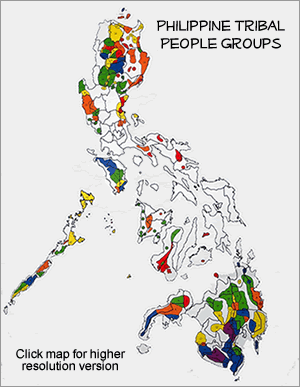
The Babuyan Island Ibatan in Philippines are a small but distinct island people of the Babuyan Islands, specifically associated with Babuyan Claro Island in the far north of Cagayan Province. The editor-provided name contained a comma, so it is correctly rendered here as Babuyan Island Ibatan. This distinction matters. Reliable outside sources make clear that the Ibatan of Babuyan Claro are often confused with the Ivatan of Batanes, but they are not simply the same group under a different label. A recent Philippine Information Agency feature explicitly states that the Ibatans are the exclusive dwellers of Babuyan Claro Island and that they have their own island home, distinct culture, and their own language. That is especially useful here because it directly supports treating them as a separate people-group identity rather than collapsing them into the larger Ivatan category.
Their history is closely tied to the movement of Batanic-speaking peoples across the northern island chain between Luzon and Taiwan. Linguistic and ethnographic sources indicate that Ibatan and Ivatan separated relatively recently, which helps explain why the two groups are closely related yet still distinct. Historical sources also note that Babuyan Island was depopulated during the Spanish period and later repopulated, especially by families from Batan Island, which helps explain the close linguistic relationship between Babuyan Island Ibatan and the Ivatan of Batanes. A University of the Philippines feature on Babuyan Claro also notes that the island's present community traces its beginnings to a small group trying to return northward, eventually establishing a permanent settlement there. Together, these sources show a people whose identity is deeply rooted in Babuyan Claro, yet shaped by migration, resettlement, and long-standing ties to the wider Batanic world.
The Babuyan Island Ibatan in Philippines live in a small, remote island environment in the Babuyan group of islands in the Luzon Strait, north of mainland Luzon and south of Taiwan. This is a setting marked by rough seas, seasonal storms, isolation, and limited transport, all of which shape daily life. Even broad ethnographic sources on the wider Batanes-Babuyan cultural world emphasize that these northern islands lie in the typhoon belt, with rugged terrain and a need for self-sufficiency. That is important because the Babuyan Island Ibatan should not be imagined as a typical lowland Philippine town population; they are an island people whose geography naturally encourages resilience, local interdependence, and strong family ties.
Their language is Ibatan, often also called Babuyan in linguistic classification. Reliable sources distinguish it from standard Ivatan even while acknowledging the close relationship. The ELDP language documentation archive specifically identifies Ibatan as an Austronesian language spoken in Babuyan Claro, while broader linguistic sources classify Ibatan (Babuyan) as part of the Batanic / Bashiic language group alongside Ivatan, Itbayat, and the Tao language of Orchid Island. This matters because it confirms that the Babuyan Island Ibatan are a real language community, not merely a geographic branch of a larger people with no meaningful distinction. In wider life, many likely also use Ilocano, Tagalog, or English in broader contact, but their language remains central to family life and community identity.
Public sources focused on the Babuyan Island Ibatan are limited, so it is important not to overclaim details such as exact house forms, crops, or fishing patterns unless directly documented. Still, given the island setting and the strong parallels within the Batanic world, it is reasonable to say their lives are shaped by maritime conditions, inter-island travel, subsistence resilience, and close-knit community life. In a small island population, relationships, kinship memory, and local continuity often matter greatly. The existence of a full ethnographic and genealogical work on the people of Babuyan Claro Island also reinforces that this is a long-standing, recognizable community rather than a loose or recently invented label.
The Babuyan Island Ibatan in Philippines are traditionally identified as Christian. In a northern Philippine island setting like this, Christianity is likely familiar in family life, local gatherings, and community memory. For a Bible-believing audience, however, the key issue is not whether Christian identity exists outwardly, but whether there is true repentance, personal faith in Jesus Christ, and a life submitted to the authority of Scripture.
Because the Babuyan Island Ibatan are closely related to the wider Batanic peoples, it is also wise to recognize that in such communities, inherited Christian identity can sometimes exist alongside older assumptions about family tradition, spiritual protection, or religious familiarity without deep biblical discipleship. Where that happens, the need is not for more religious familiarity, but for clear gospel teaching, genuine conversion, and steady growth in holiness so that faith in Christ is personal, obedient, and enduring. Scripture is available in their language.
The Babuyan Island Ibatan in Philippines need strong biblical discipleship in a setting where Christian language may already be familiar, but where spiritual depth can still vary greatly. Their greatest need is often not first exposure to the name of Jesus, but the transforming power of the true gospel: repentance, faith in Christ, confidence in the authority of Scripture, and steady growth in holiness. They need pastors, elders, evangelists, and faithful believers who can clearly teach the Word of God and help people move beyond inherited religion or shallow familiarity into genuine, enduring faith.
They also need churches and ministries that take their language and their island context seriously. Because Ibatan is a real and distinct language community on a small, remote island, faithful ministry should not assume that broader Philippine languages alone are enough for deep understanding. Clear teaching in ways people fully understand matters greatly, especially in small communities where church life can easily become familiar without always becoming deeply rooted.
Practical realities matter as well. In a remote island setting, transportation, medical access, education, supply access, and economic stability can all affect family life and the consistency of church fellowship. Rough seas and isolation can make travel difficult and can limit regular outside contact. That means strong local leadership is especially important, so that gospel witness is not dependent only on occasional visitors but grows from within the community through faithful local believers.
Pray that the Babuyan Island Ibatan in Philippines would move beyond inherited or outward Christian identity and come to true repentance, living faith, and joyful obedience to Jesus Christ.
Pray for pastors, elders, and faithful disciplers to teach God's Word clearly among Babuyan Island Ibatan communities with humility, biblical conviction, and deep respect for their language.
Pray for believers among the Babuyan Island Ibatan in Philippines to stand firmly on Scripture and reject shallow religion, spiritual confusion, and every mixture that weakens true faith in Christ
Pray for fathers, mothers, grandparents, and young people to be strengthened in family life, so that homes become places where Christ is honored and truth is passed on faithfully.
Pray for practical help where needed in transportation, education, medical care, and daily provision, and pray that strong local churches would grow in maturity and faithfulness in the challenges of remote island life.
Scripture Prayers for the Ibatan, Babuyan Island in Philippines.
https://eldp.access.preservica.com/dk0604/
https://mirror.pia.gov.ph/features/2023/10/11/ibatan-the-sentinels-of-the-balintang-channel
https://en.wikipedia.org/wiki/Babuyan_Island
https://en.wikipedia.org/wiki/Ivatan_language
https://en.wikipedia.org/wiki/Batanic_languages
https://upd.edu.ph/stories-from-babuyan-claro/
| Profile Source: Joshua Project |