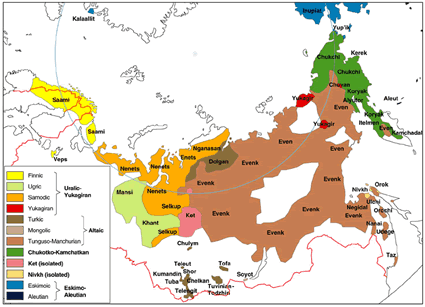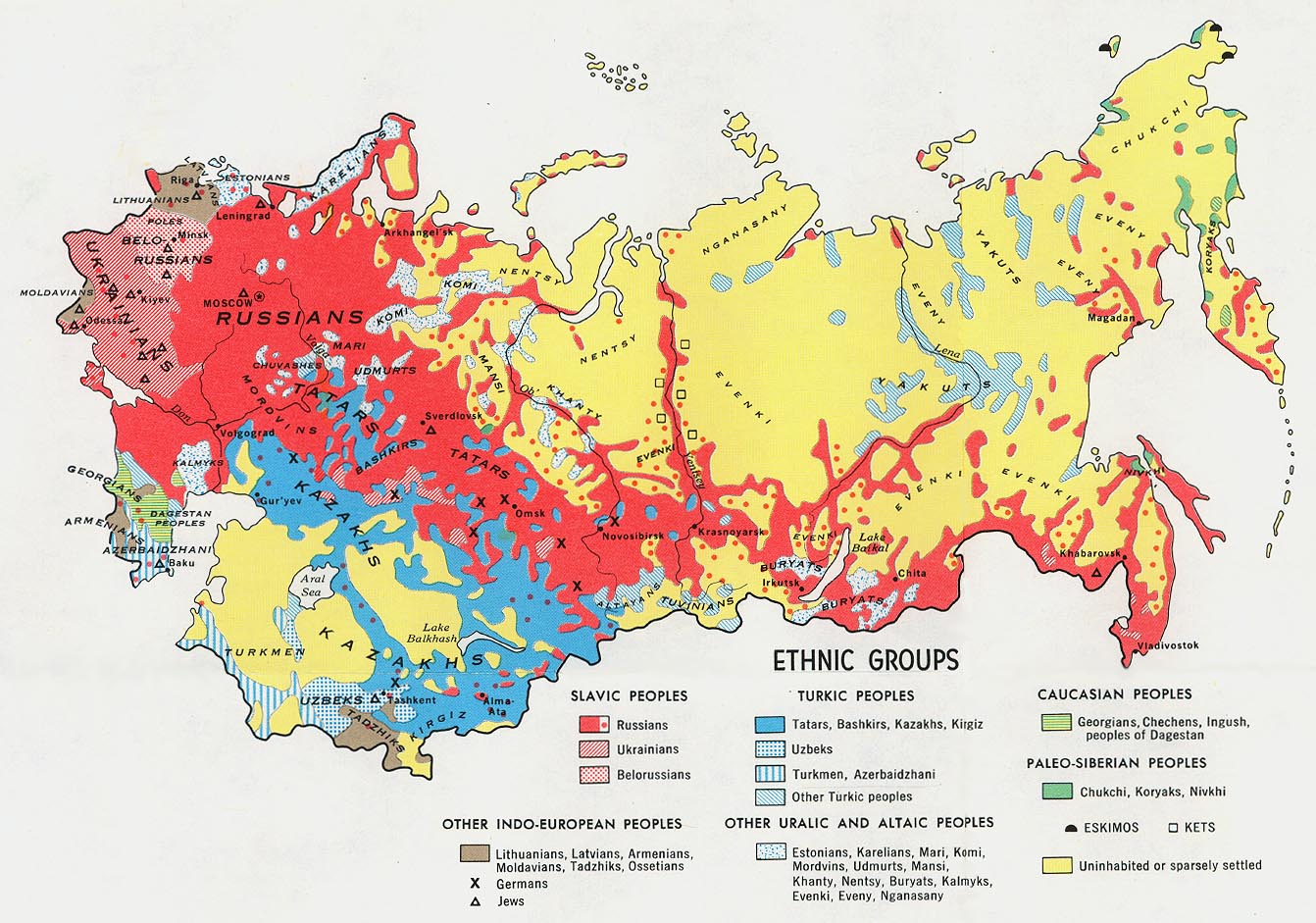

The Ter Saami people, an indigenous group of Russia, have their own history and a unique linguistic heritage that reflects their adaptation to the northern environment and their interactions with neighboring cultures. Believed to be descendants of the Finno-Ugric tribes that settled in the region thousands of years ago, the Ter Saami primarily inhabit the Kola Peninsula and parts of northern Russia, particularly around the White Sea, in river valleys and surrounding tundra and taiga landscapes.
They are ethnically part of the broader Sámi, an indigenous Finno-Ugric people with a traditional homeland known as Sápmi, spanning northern Norway, Sweden, Finland, and Russia. The distinct identity of the Ter Saami people is underscored by their unique language, Ter Saami. Ter Saami part of the Finno-Ugric branch of the Uralic language family, reflects their close ties to other Sámi languages spoken in northern Scandinavia.
Historically, various pressures, including Russian settlement, Soviet collectivization, forced relocations, and assimilation policies, have severely disrupted traditional community life and language use. By the early 21st century, only a handful of native speakers remained, placing the Ter Saami language and cultural practices at significant risk.
Family life among the Ter Saami people is defined by strong communal bonds and a commitment to cultural preservation. Parents and elders play an active role in teaching traditional knowledge, language, and practices to the younger generation, fostering a deep connection to their cultural heritage. Families typically consist of extended units, where multiple generations live together or in proximity, promoting community support and familial ties. Responsibilities are often divided along traditional lines, with elders respected for their wisdom and leadership in cultural practices and decision-making.
Historically, the Ter Saami lived in small, mobile communities that relied on Arctic and sub-Arctic subsistence patterns, including reindeer herding, fishing, hunting, and gathering. Their profound knowledge of seasonal cycles and adaptation to the harsh northern environment shaped their daily lives.
However, modern Soviet policies led to significant disruptions, including village consolidation and pressures to adopt the Russian language and lifestyle. As a result, most Ter Saami are now bilingual in Russian and have integrated into the wider regional economy, working in sectors such as fishing, local trades, or public services, while striving to maintain elements of their heritage wherever possible.
Historically, the Ter Saami practiced animism, believing that natural elements such as rivers, mountains, and animals possess spirits. This belief system emphasized maintaining harmony with the natural world, which was essential for survival in their harsh environment. Traditional Sámi spirituality, including that of the Ter Saami, revolved around animistic and shamanistic practices, with ritual specialists (shamans) serving as mediators between the visible and unseen realms. Ceremonies often involved offerings to appease the spirits of nature and ancestors, reinforcing community ties and a spiritual connection to the land.
The arrival of Christianity, particularly from the Russian Orthodox Church in the 17th century, led many Ter Saami to gradually adopt this faith. As a result, there emerged a blend of Christian practices with enduring cultural customs, resulting in a unique syncretic faith. Many traditional rituals were incorporated into Christian celebrations, creating a hybrid belief system that reflects both historical shamanic influences and later Christian adoption. Today, the spiritual practices of the Ter Saami highlight this fusion, highlighting their resilience and adaptability amid changing cultural landscapes.
As modernization progresses, traditional beliefs among the Ter Saami people are increasingly challenged by the dominant Russian culture and religious practices, leading to decreased engagement with their spiritual heritage in younger generations. The community faces various needs essential for preserving their cultural identity, improving living standards, and ensuring sustainable development. These needs span cultural, social, economic, and political dimensions.
Many Ter Saami individuals have migrated to urban areas in search of better employment, making local economic development crucial for creating sustainable job opportunities and helping families stay connected to their roots. Enhancing access to healthcare services, particularly in remote regions, is a priority, along with culturally sensitive health campaigns to foster community trust and participation.
The Ter Saami are one of Europe's most critically endangered indigenous peoples, facing extreme language loss and cultural assimilation. Their language—key to ethnic identity—has seen a dramatic decline, leaving only a few elderly speakers. Revitalization efforts are urgent, including language documentation, cultural preservation projects, and support for community self-determination.
Pray for the Ter Saamis to put their identity and hope in the blood of Christ.
Pray that community members will develop a deep, trusting relationship with Jesus, embracing him as their guide in all aspects of life.
Pray that the Ter Saami people will wholeheartedly believe in Jesus Christ as their Savior.
Pray for the Lord's intervention in creating sustainable job opportunities for the Ter Saami people.
Pray that the Ter Saami people will trust in Jesus for provision and that local initiatives flourish through his grace.
Scripture Prayers for the Saami, Ter in Russia.
References
| Profile Source: Joshua Project |