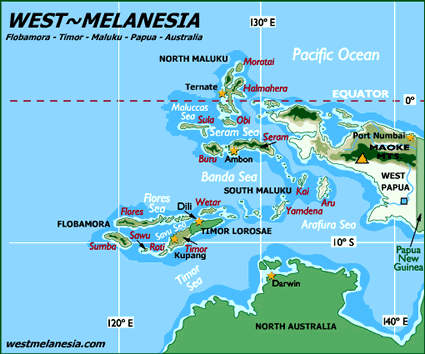
The Fordat people live primarily on the Tanimbar Islands in eastern Indonesia. Their language, Fordata, is part of the Austronesian family and connects them to other island peoples of the region. Historically, the Fordat have been seafaring and village-based, relying on fishing and small-scale agriculture.
Their communities developed through kinship ties and clan structures, with oral traditions preserving stories of migration and ancestral heritage. Colonial influences and later Indonesian governance introduced new systems of education and trade, but the Fordat have retained much of their cultural identity through language, dance, and ritual practices.
Daily life among the Fordat revolves around subsistence farming, fishing, and small-scale trade. Men often fish or work in carpentry and masonry, while women manage household responsibilities and contribute to farming or weaving. Seaweed cultivation has become an important source of income in recent years. Families are close-knit, with extended relatives living nearby and sharing responsibilities for raising children and maintaining communal harmony.
Celebrations often include traditional dances, music, and feasts, which strengthen community bonds. Food staples include rice, sago, fish, and locally grown vegetables, with coconut and spices adding flavor to meals. Hospitality is highly valued, and guests are welcomed with generosity.
The Fordat people are primarily Muslim, though a minority identify as Christian. Islam shapes much of their daily rhythm, including prayer times, festivals, and moral values. Christian presence exists but remains small, with limited evangelical influence. Access to Scripture in the Fordata language is still developing, and many believers rely on translations in other languages, which can hinder deep understanding of biblical truths. Traditional beliefs and practices may also persist alongside Islam, reflecting the syncretism common in island cultures.
The Fordat people face both spiritual and physical challenges. Many lack access to Scripture in their heart language, which makes discipleship difficult and limits the spread of the gospel. Economic opportunities are constrained by geographic isolation, and families often struggle with limited healthcare and education resources. Social cohesion remains strong, but younger generations are increasingly drawn to urban centers, creating tension between traditional life and modern aspirations. For Christians among the Fordat, there is a pressing need for spiritual renewal and commitment to biblical faith, so that they can become part of the mission force reaching their own people and neighboring groups.
Pray that Fordat believers will grow in faith and become bold witnesses to their neighbors.
Pray asking God to raise up leaders who can disciple others and strengthen the small Christian presence.
Pray for translation projects that will bring the word of God into the Fordata language, so that hearts may be touched by Scripture in a way that speaks deeply to them.
Pray for the physical needs of the community, including better access to healthcare, education, and sustainable economic opportunities.
Pray that the Fordat will experience the blessing of Jesus Christ, who provides answers to life's issues and desires to bring hope to all people.
Scripture Prayers for the Fordat in Indonesia.
Mission Infobank: Fordata (Joshua Project - frd)
Wycliffe Bible Translators: Iyaru Cluster Profile (Fordata translation project)
| Profile Source: Joshua Project |