Jewish, Hasidic in Belgium
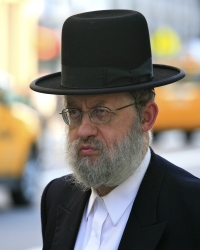
Photo Source:
Alex Proimos - Wikimedia
Creative Commons
|
Send Joshua Project a map of this people group.
|

| People Name: | Jewish, Hasidic |
| Country: | Belgium |
| 10/40 Window: | No |
| Population: | 22,000 |
| World Population: | 1,095,500 |
| Primary Language: | Yiddish, Eastern |
| Primary Religion: | Judaism |
| Christian Adherents: | 0.00 % |
| Evangelicals: | 0.00 % |
| Scripture: | Complete Bible |
| Ministry Resources: | Yes |
| Jesus Film: | Yes |
| Audio Recordings: | Yes |
| People Cluster: | Jewish, Ashkenazi |
| Affinity Bloc: | Jewish |
| Progress Level: |

|
Introduction / History
Hasidism began in eighteenth-century Eastern Europe as a spiritual revival movement that emphasized devotion to God, joy in worship, and life shaped around a rebbe, a revered spiritual leader. Though the movement was devastated in Europe, many Hasidic courts were reestablished and grew again in seven countries, especially Israel and the United States, where they have their greatest populations. There are small populations in six other countries including Belgium. One of the most unique features of the Hasidic community in Belgium is its remarkable geographic concentration, especially in the city of Antwerp.
What Are Their Lives Like?
Antwerp is one of the most visibly Orthodox Jewish cities in Europe, and large numbers of Hasidic Jews live in closely defined neighborhoods where daily life is highly communal and interconnected. In these areas, nearly every aspect of life—education, worship, commerce, and social interaction—takes place within a dense network of Jewish institutions. Family life is central, with homes focused on childrearing, hospitality, religious instruction, and participation in community rhythms. Because of their small population, they sometimes find Hasidic spouse in other countries.
Another defining characteristic is the historical connection to the diamond industry. For many decades, Antwerp has been one of the world's centers of diamond trading, and a significant portion of the Hasidic population has been involved in this trade. This economic specialization has shaped patterns of work and daily routine in ways that are distinct from other countries. The diamond trade allowed many Hasidic men to work within a tightly knit, trust-based environment that aligned well with religious life, enabling flexible schedules for prayer and study.
The Belgian Hasidic community also stands out because of its integration within a broader ultra-Orthodox environment. In Antwerp especially, Hasidic groups live alongside Litvish (Yeshivish) Jews and other Haredi communities, sharing infrastructure such as kosher food systems, schools, and communal services. This proximity creates a uniquely dense and visibly traditional religious environment, where different strands of Orthodox Judaism reinforce one another.
The European cultural and political context plays an important role in shaping behavior. Belgium operates within a secular framework that places limits on certain public religious expressions and requires compliance with national regulations in areas such as education and employment. As a result, Hasidic Jews in Belgium often maintain a careful balance between preserving their distinct way of life and interacting with a highly regulated society.
Education in Belgium reflects similar patterns of balance and adaptation. Hasidic schools are strongly centered on religious instruction while also navigating government expectations regarding curriculum and oversight.
What Are Their Beliefs?
Hasidic Jewish people belong to the ultra-Orthodox Jewish world and practice a traditional form of rabbinic Judaism shaped by strict observance of Jewish law, devotion to communal custom, and submission to recognized spiritual leadership. Unlike non-Hasidic ultra-Orthodox groups, Hasidic life is often organized around a rebbe and the traditions of a particular Hasidic court. Historically, Hasidism placed strong emphasis on fervent prayer, spiritual joy, reverence, and nearness to God within the framework of rabbinic Judaism. They are much more mystical in their approach to God than similar Orthodox communities. Different Hasidic dynasties vary in style and practice, but all remain within traditional Orthodox Jewish belief and observance.
They remain within rabbinic Judaism and interpret the Hebrew Scriptures through Jewish tradition rather than through the New Testament.
What Are Their Needs?
Many in Hasidic Jewish people in Belgium are deeply serious about God, prayer, and religious discipline, yet they remain without the saving knowledge of Jesus Christ as the promised Messiah. They need faithful gospel witness from believers who know the Old Testament well, who understand the weight of Jewish tradition, and who can open the Scriptures with humility, patience, and clarity. Having their own separate communities and institutions isolates them from those who might otherwise share the good news of the messiah.
Because many Hasidic communities are tightly bound through family, schools, synagogues, marriage networks, and rabbinic authority, the cost of following Christ can be severe. Those who begin to question inherited traditions may face intense family strain, social isolation, and the loss of standing within the community. For those who come to faith in Christ, the need is not only for truth but also for careful discipleship, wise pastoral care, and a faithful body of believers who can walk with them through practical and spiritual hardship.
In insulated communities, where schooling, work, and social life may be closely tied to communal structures, those who turn to Christ may also need help navigating housing, employment changes, education decisions, and trustworthy relationships outside former support systems. In some communities that maintain stronger separation from state institutions or wider society, access to broader opportunities and practical support can become especially important for those who leave the community.
Prayer Points
Pray that Hasidic Jewish people in Belgium would come to see in the Law, the Prophets, and the Writings that Jesus Christ is the promised Messiah.
Pray for biblically grounded believers in Belgium who can engage Hasidic communities with love, courage, patience, and deep respect for the scriptures.
Pray for rebbes, rabbis, teachers, fathers, and mothers, that the Lord would stir questions that lead them to the full truth about the Messiah.
Pray for men and women who privately wrestle with questions about Jesus, that God would give them courage to follow truth even when the personal cost is high.
Pray for those who come to faith in Christ from Hasidic communities, that they would be strengthened in trials, protected from despair, and established in sound doctrine, faithful fellowship, and mature discipleship.
Pray for practical provision where needed, especially for those facing family separation, housing instability, work transitions, or educational disruption because of their faith in Christ.