Jewish, Litvish (Yeshivish) in South Africa
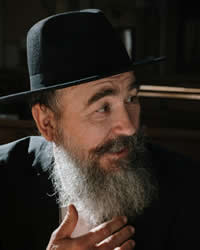
Photo Source:
Cottonbro Studios
|
Send Joshua Project a map of this people group.
|
| People Name: | Jewish, Litvish (Yeshivish) |
| Country: | South Africa |
| 10/40 Window: | No |
| Population: | 3,500 |
| World Population: | 802,500 |
| Primary Language: | English |
| Primary Religion: | Judaism |
| Christian Adherents: | 0.00 % |
| Evangelicals: | 0.00 % |
| Scripture: | Complete Bible |
| Ministry Resources: | Yes |
| Jesus Film: | Yes |
| Audio Recordings: | Yes |
| People Cluster: | Jewish, Ashkenazi |
| Affinity Bloc: | Jewish |
| Progress Level: |

|
Introduction / History
Litvish (Yeshivish) Jewish people are sometimes mistaken for the better-known Hassidic Jewish community. There is a major difference: the Litvish (Yeshivish) Jewish people approach God as scholars, spending much of their time in studying religious literature, especially the Torah. By contrast, the Hassidic community is much more mystical in their approach to the Lord. This will affect how outsiders should approach them. They are also more cut off from secular society than other Jewish communities.
Litvish (Yeshivish) Jewish people are the non-Hasidic ultra-Orthodox stream often called the Lithuanian or "Litvish" world within Haredi Judaism. This tradition grew out of the great yeshiva culture of Lithuania and Eastern Europe, where disciplined Torah and Talmud study, rabbinic scholarship, and strict communal order were central. In Israel, that legacy was rebuilt through major yeshivas and rabbinic leadership after the destruction of European Jewish centers. Though the vast majority are in Israel and the United States, they have small populations in seven other countries including South Africa.
One of the most striking differences is the historical composition of South African Jewry itself. The Jewish population in South Africa has been predominantly influenced by Lithuanian origins, which has given the Litvish tradition a particularly strong and foundational role in shaping the broader Orthodox community. In South Africa they have historically been closer to the mainstream of Jewish life. This has allowed Litvish patterns of worship, education, and leadership to exert a wider influence beyond their immediate subcommunity.
Most Litvish (Yeshivish) Jews in South Africa live in major urban centers such as Johannesburg and, to a lesser extent, Cape Town. These communities are relatively small on a global scale but highly interconnected.
What Are Their Lives Like?
Litvish men are typically known for conservative black-and-white dress, long hours in study, and close involvement with yeshiva life. Especially in their younger adult years, full-time Torah study is often regarded as a man's highest calling. Many spend extended periods studying in yeshivas or kollels, supported in part by community funds, charitable giving. This period of study is viewed not simply as education, but as a lifelong spiritual pursuit that benefits their entire community. Compared to more isolated enclaves in parts of Europe, Litvish Jews in South Africa have often participated actively in business and professional sectors, while still maintaining strong internal communal structures. In South Africa there has historically been a greater expectation that Litvish men will enter the workforce and establish stable livelihoods.
Women in the Litvish community typically play a significant role in supporting the household financially, especially during the years when their husbands are engaged in full-time study. Many women pursue professional training in fields considered compatible with modesty and religious commitments, such as teaching, administration, accounting, or healthcare-related services. At the same time, they carry primary responsibility for managing the home and raising children, maintaining a balance between employment and family life that reflects the community's emphasis on stability and spiritual nurturing.
Marriage is central to Litvish life and is approached with seriousness, prayer, and community involvement. Matches are often arranged through a structured system of introductions, commonly known as shidduchim. Families, rabbis, and matchmakers play an active role in identifying suitable partners. In countries with a small Litvish population, they are more likely to look for a partner outside the nation. The dating process itself is typically brief and purposeful, focused on determining compatibility for marriage rather than prolonged courtship.
Once married, couples establish homes centered on Torah observance, hospitality, and the raising of children in the faith. Families tend to be large, reflecting a strong belief in the blessing of children and the importance of building the next generation. The home is regarded as a primary place of spiritual formation, where daily routines, Sabbath observance, and adherence to Jewish law are taught and modeled. Gender roles are generally clearly defined, with husbands taking primary responsibility for spiritual leadership and continued study, and wives overseeing the practical and emotional life of the household.
Family life within the Litvish community is marked by close ties not only within the nuclear family but also within the broader community. Extended family, neighbors, and synagogue members form an interconnected support network that reinforces shared values and provides assistance in times of need. Education is a major priority, with children enrolled in religious schools from an early age, ensuring continuity of belief and practice across generations. They must balance their own educational goals with those of the nation, which has other expectations.
What Are Their Beliefs?
Litvish (Yeshivish) Jewish people in South Africa belong to the ultra-Orthodox Jewish world and follow a traditional form of rabbinic Judaism marked by strict observance of Jewish law, strong submission to rabbinic authority, and a deep emphasis on Torah and Talmud study. Their spiritual life is ordered around prayer, Sabbath observance, kosher practice, modesty, and rigorous commitment to long-established religious tradition. Unlike Hasidic groups, they are not organized around a rebbe and dynastic court, but around prominent rabbis, yeshiva heads, and institutions of learning.
They remain within rabbinic Judaism and interpret the Hebrew Scriptures through Jewish tradition rather than through the New Testament.
What Are Their Needs?
Many in Litvish (Yeshivish) Jewish people in South Africa are deeply serious about God, prayer, and Scripture, yet they remain without the saving knowledge of Jesus Christ as the promised Messiah. They need careful, compassionate gospel witness from believers who know the Old Testament well, who understand Jewish questions and objections, and who can open the Scriptures with humility and clarity. It is very difficult for outsiders to speak into their lives since they have separated themselves socially.
Because these communities are closely bound through family, schools, yeshivas, marriage networks, and rabbinic authority, the cost of following Christ can be extremely high. A person who begins to believe in Jesus may face intense pressure, broken relationships, and deep isolation. Those who come to faith need wise discipleship, patient pastoral care, and strong fellowship with mature believers who can help them walk faithfully through spiritual and practical hardship. In communities where daily life is deeply tied to religious institutions, those who turn to Christ may also need help with housing, employment transitions, education decisions, and trusted relationships outside former community structures.
Prayer Points
Pray that Litvish (Yeshivish) Jewish people in Israel would come to see in the Law, the Prophets, and the Writings that Jesus Christ is the promised Messiah.
Pray for biblically grounded believers in South Africa who can lovingly and wisely engage these communities with truth, patience, and reverence for the Scriptures.
Pray for yeshiva students and married men immersed in religious study, that the Lord would stir deep questions that lead them to the full truth about the Messiah.
Pray for women, mothers, and families in these communities, that God would reveal himself in ways that bring conviction, peace, and genuine faith in Christ.
Pray for those who secretly wrestle with questions about Jesus, that the Lord would give them courage to follow truth even when the personal cost is severe.