Yangno in Myanmar (Burma)
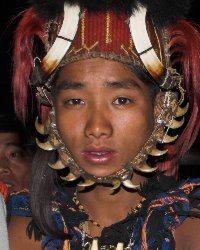
Photo Source:
Asia Harvest-Operation Myanmar
|
Send Joshua Project a map of this people group.
|
| People Name: | Yangno |
| Country: | Myanmar (Burma) |
| 10/40 Window: | Yes |
| Population: | 400 |
| World Population: | 400 |
| Primary Language: | Language unknown |
| Primary Religion: | Christianity |
| Christian Adherents: | 88.00 % |
| Evangelicals: | 44.00 % |
| Scripture: | Unspecified |
| Ministry Resources: | No |
| Jesus Film: | No |
| Audio Recordings: | No |
| People Cluster: | South Asia Tribal - Naga |
| Affinity Bloc: | South Asian Peoples |
| Progress Level: |

|
Introduction / History
The Yangno live in and around the Pangsau area near the main mountain pass that leads toward India, and their main language is Yangno, one of several Tangshang varieties in the region. Linguistic surveys group Yangno with a small set of related varieties and note that it is distinct from neighboring Tangshang dialects. The Yangno form part of the wider Naga cultural sphere that extends across the border into Nagaland and other parts of northeast India, yet their speech is not always mutually intelligible with other Naga or Tangshang varieties. Historical information about the Yangno is limited in part because of a lack of long written records. Field linguists and local researchers have documented migration histories, intergroup contacts, and episodes of conflict and movement that shaped the community's settlement patterns. The borderland setting and restricted access to the area have contributed to the Yangno's relative isolation and to the limited availability of published material about their history.
What Are Their Lives Like?
Yangno communities live in small village clusters where subsistence agriculture is a primary livelihood, supplemented by local trade, seasonal labor, and forest product gathering. Social life is organized around village institutions and kin networks, and the Yangno share many cultural traits with neighboring Tangshang groups while maintaining a distinct sense of identity. Cross border ties and movement shape family connections and economic exchange in the borderland landscape. Access to services and infrastructure is constrained by remoteness and by administrative restrictions on travel in the sensitive border area.
What Are Their Beliefs?
Religious life among the Yangno reflects a strong Christian presence alongside residual traditional practices. Missionary activity and local revival movements in the broader Lahe area contributed to widespread conversion among Tangshang communities, and many Yangno now identify as Christians. At the same time, customary ritual forms and local cosmologies continue to influence cultural life, and some community leaders and pastors have sought ways to adapt or modify traditional festivals and practices so they can be observed in ways that align with Christian convictions.
What Are Their Needs?
Yangno communities need language centered support that respects local preferences and literacy practices. Because Yangno is distinct from some neighboring Tangshang varieties, community members require access to scripture and literacy materials in a closely related variety or in Yangno itself to ensure comprehension. Educational and literacy programs should be culturally appropriate and sensitive to local script preferences. Health services, improved access to basic infrastructure, and livelihood support that builds on local ecological knowledge are also priorities. Given the borderland context and the sensitivity of travel in the area, development and translation work should be planned in close consultation with local leaders and with up-to-date field verification.
Prayer Points
Pray for believers from among the Yangno to grow as faithful workers, for the Holy Spirit to guide them and their families, and for them to be accurate and loving witnesses of Christ to their neighbors.
Pray for improved access to healthcare and for practical support for families facing medical and wellbeing challenges.
Pray for expanded educational and vocational opportunities for children and youth, and for local and regional leaders to make wise and just decisions that benefit the community.