Palliwilli in Sri Lanka

Send Joshua Project a photo
of this people group. |
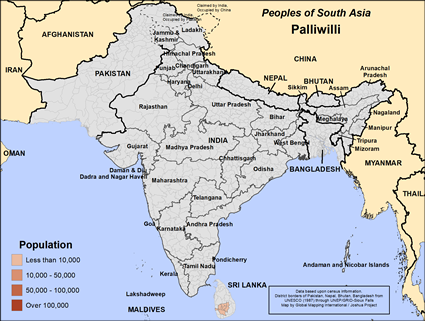
Map Source:
People Group data: Omid. Map geography: UNESCO / GMI. Map Design: Joshua Project
|
| People Name: | Palliwilli |
| Country: | Sri Lanka |
| 10/40 Window: | Yes |
| Population: | 2,400 |
| World Population: | 2,400 |
| Primary Language: | Tamil |
| Primary Religion: | Hinduism |
| Christian Adherents: | 15.08 % |
| Evangelicals: | 0.00 % |
| Scripture: | Complete Bible |
| Ministry Resources: | Yes |
| Jesus Film: | Yes |
| Audio Recordings: | Yes |
| People Cluster: | South Asia Hindu - other |
| Affinity Bloc: | South Asian Peoples |
| Progress Level: |

|
Introduction / History
The Palliwilli are a Tamil-speaking community in Sri Lanka, historically associated with service and agricultural labor. Their identity has been shaped by centuries of participation in village economies, often working in fields and supporting local households. Like many caste-based groups in Sri Lanka, the Palliwilli have experienced marginalization, yet they have maintained resilience through strong family and community bonds. Their history reflects both hardship and perseverance, as they adapted to changing social and economic conditions while preserving aspects of their cultural heritage.
What Are Their Lives Like?
The Palliwilli live primarily in rural areas, where agriculture remains central to their livelihood. Many families work in rice cultivation, tea plantations, or as wage laborers. Family life is typically extended, with grandparents, parents, and children living together and sharing responsibilities.
Celebrations revolve around Hindu festivals such as Pongal, which honors the harvest, and Deepavali, which celebrates light overcoming darkness. Food is central to their culture, with rice, lentils, curries, and coconut-based dishes forming the staple diet. Hospitality is highly valued, and meals are often shared communally during festivals and family gatherings. While modernization has brought education and urban migration, rural Palliwilli communities still rely heavily on traditional rhythms of work and family life.
What Are Their Beliefs?
The Palliwilli are predominantly Hindu. Their religious life centers on temple worship, rituals, and devotion to deities such as Shiva, Vishnu, and local village gods. Hinduism shapes their worldview, moral values, and community practices, with festivals serving as both spiritual and social gatherings.
Christianity has made limited inroads among the Palliwilli, and the gospel presence remains minimal. For most, religious identity is deeply tied to cultural traditions, and they need to see the Christian life lived out by Tamil-speaking believers.
What Are Their Needs?
The Palliwilli face challenges in overcoming social marginalization and economic insecurity. Many families struggle with poverty, limited access to education, and restricted employment opportunities. Rural communities often lack infrastructure and healthcare, making daily life difficult.
Spiritually, the Palliwilli need opportunities to encounter the message of Christ in ways that acknowledge their cultural identity and values. Socially, they require encouragement to see dignity in their heritage while also embracing new opportunities for sustainable livelihoods and community development.
Prayer Points
Pray that the Palliwilli will encounter the love of Christ through relationships with nearby believers.
Pray asking God to raise up local Christians who will see themselves as part of the mission force, reaching out with compassion and respect.
Pray for economic stability and opportunities for younger generations, so that families can thrive without abandoning their heritage.
Pray for the communities that continue agricultural work, that their labor may be valued and sustained.
Pray for openness to the gospel, for hearts to be softened, and for communities to experience transformation both spiritually and physically.