Naga, Olla in Myanmar (Burma)
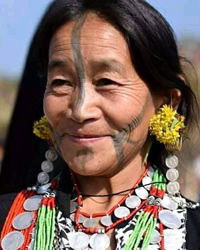
Photo Source:
Asia Harvest-Operation Myanmar
|
Send Joshua Project a map of this people group.
|
| People Name: | Naga, Olla |
| Country: | Myanmar (Burma) |
| 10/40 Window: | Yes |
| Population: | 500 |
| World Population: | 2,300 |
| Primary Language: | Naga, Nocte |
| Primary Religion: | Christianity |
| Christian Adherents: | 80.00 % |
| Evangelicals: | 40.00 % |
| Scripture: | New Testament |
| Ministry Resources: | Yes |
| Jesus Film: | No |
| Audio Recordings: | Yes |
| People Cluster: | South Asia Tribal - Naga |
| Affinity Bloc: | South Asian Peoples |
| Progress Level: |

|
Introduction / History
Members of the little-known Ollo Naga tribe inhabit several villages within Nanyun and Lahe townships in western Myanmar's Sagaing Region. Most Ollo Naga people dwell just across the border in the northeast Indian state of Arunachal Pradesh.1 In India the Ollo Naga are commonly known as the Laju tribe after the name of one of their principal villages.
The battle for Ollo Naga identity offers a fascinating insight into the challenges faced by many groups. The Naga and Tangshang tribal collectives pressurized the Ollo to come under their banners, but they decided to remain distinct from both. In India, the Ollo were long considered a subgroup of the Nocte tribe, but they opposed that classification and, in 2013, were one of five groups granted status as a Scheduled Tribe in their own right.2 A linguist remarked: "Ethnic identities can be quite political. The larger the population the more political power, so there is often pressure from politicians to combine ethnic identities (and even enforce the use of languages people don't understand). On both sides of the border there are many distinct languages being subsumed under larger ethnic identities."3
Language: The Ollo say their language is distinct from all other varieties in the area, although some consider it a mere dialect of Nocte. In 2011, only 26% of Ollo people in India were literate, including just 10% of women. A breakthrough both spiritually and in relation to preserving their language occurred when the Ollo Nagas partnered with the Evangel Bible Translators, a small agency in Nagaland. The subsequent publication of their Bible has given a sense of pride to many Ollo people and motivated them to learn to read.
What Are Their Lives Like?
Most Ollo Naga families live in rural villages where agriculture remains the primary source of livelihood. Rice serves as the staple food and is commonly accompanied by vegetables, legumes, and meat when available. Farming occupies much of the annual cycle, while livestock raising, small-scale trade, and wage labor provide additional income for some households.
Education is becoming increasingly important to younger generations, and many seek opportunities that will benefit both their families and communities while maintaining connections to their cultural roots.
For many generations the Ollo have used large log drums that are open on both ends. The drums "produce intricate rhythms but were never used purely for making music. Rather, the drum was the arbiter of village life. It was beaten to warn those working in the fields of the approach of raiders, to alert villagers if fire broke out, to announce a death, to call council members together, and for certain ceremonies connected to headhunting. Each occasion had its own rhythm, known to the villagers, and its sound carried far into the hills."6
What Are Their Beliefs?
Bound by the desire to appease demons, for centuries the Ollo on both sides of the border practiced headhunting and made human sacrifices to the spirits that controlled their lives. An ethnographer wrote in 2017: "Victims purchased for sacrifice were kept in the house of the owner, well cared for and fed, but kept in stocks to prohibit escape. On the appointed day, victims were drugged with opium or drink or beaten into insensibility, led to the front of the verandah of the house, and decapitated…. Bodies were divided up and the bones, flesh, and entrails sold as charms or divided among clansmen."8
Although most Ollo Naga families in Myanmar are now professing Christians, tribes with strong animistic backgrounds often produce nominal believers who struggle to break free from the darkness of the past. Although their New Testament was published in India in 2010 using the Roman script, and the full Bible is now available, low literacy rates among the Ollo Nagas and border tensions make it unavailable in Myanmar for all practical purposes.
What Are Their Needs?
Many Ollo Naga communities face challenges related to transportation, healthcare, education, and economic development because of their remote location. Improved infrastructure and access to essential services would contribute to healthier and more stable communities. Educational opportunities that prepare young people for future responsibilities while preserving cultural identity would benefit families and villages. Churches would be strengthened through leadership development, biblical training, and discipleship resources that equip believers for ministry. Opportunities exist for Christians to deepen their understanding of Scripture and apply biblical principles to daily life. Because a Christian witness is already present among the Ollo Naga, there is significant potential for believers to participate in bringing the gospel to neighboring ethnic groups that have less access to biblical teaching.
Prayer Points
Pray that God will provide improved healthcare, education, and economic opportunities for Ollo Naga communities.
Pray that pastors and church leaders will be equipped to teach Scripture faithfully and disciple future generations.
Pray that Ollo Naga believers will grow in spiritual maturity and reflect the character of Christ in their homes and villages.
Pray that the church among the Ollo Naga will become an effective force for making disciples among neighboring peoples who have limited access to the gospel.