Chamling in Nepal
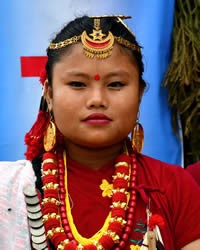
Photo Source:
Christopher J. Fynn - Wikimedia
Creative Commons
|
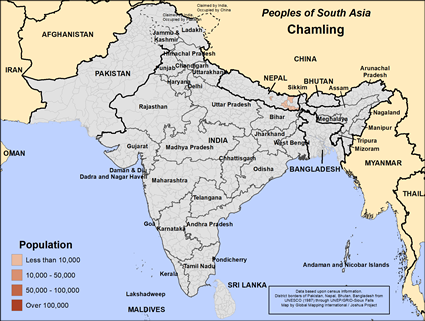
Map Source:
People Group data: Omid. Map geography: UNESCO / GMI. Map Design: Joshua Project
|

| People Name: | Chamling |
| Country: | Nepal |
| 10/40 Window: | Yes |
| Population: | 7,100 |
| World Population: | 7,100 |
| Primary Language: | Chamling |
| Primary Religion: | Other / Small |
| Christian Adherents: | 0.00 % |
| Evangelicals: | 0.00 % |
| Scripture: | New Testament |
| Ministry Resources: | No |
| Jesus Film: | Yes |
| Audio Recordings: | Yes |
| People Cluster: | South Asia - other |
| Affinity Bloc: | South Asian Peoples |
| Progress Level: |

|
Introduction / History
The Chamling are one of the Kirati ethnic groups of eastern Nepal and are closely related to the larger Rai peoples of the Himalayan foothills. They are found primarily in the hilly regions of eastern Nepal, especially in areas of Koshi Province. The Chamling have their own distinct language, Chamling Rai, which belongs to the Tibeto-Burman language family.
Historically, the Chamling lived in scattered hill communities where agriculture, clan relationships, and local traditions shaped daily life. Like other Kirati peoples, they preserve a strong ethnic identity connected to ancestral customs, oral traditions, and regional heritage. Over generations, many Chamling communities interacted with both Hindu and Buddhist cultural influences while still maintaining older indigenous religious practices.
Migration, education, and economic pressures have led some Chamling families to move toward cities or abroad for work. Even so, many still maintain close ties to their ancestral villages and cultural traditions in eastern Nepal.
What Are Their Lives Like?
Many Chamling families live in hill villages where farming, livestock raising, labor, trade, and seasonal employment support daily life. Terraced agriculture is common in the mountainous terrain of eastern Nepal, and families often grow crops such as rice, maize, millet, and vegetables.
Meals commonly include rice, lentils, vegetables, fermented foods, and locally produced grains. Tea is widely consumed, and family gatherings remain an important part of social life. Hospitality toward guests and cooperation between relatives are strongly valued within Chamling communities.
Extended family relationships and clan identity continue to influence marriage, social responsibilities, and community interaction. Traditional songs, dances, and festivals remain important expressions of cultural identity among many Chamling families.
Remote geography can create challenges involving transportation, healthcare access, educational opportunity, and economic development. Younger generations sometimes leave rural villages in search of employment or schooling in larger towns and cities.
What Are Their Beliefs?
The Chamling traditionally follow a mixture of Kirati religious traditions, animistic beliefs, ancestor practices, and influences from Hinduism and Buddhism. Religious life is often connected to rituals involving ancestral spirits, nature spirits, sacred places, and ceremonial observances performed by traditional spiritual leaders.
Among many Chamling, spiritual practices may include offerings, ritual ceremonies, festivals honoring ancestors, and customs intended to seek protection, blessing, healing, or guidance from spiritual forces. Hindu influence has also shaped aspects of religious identity and community practice.
This syncretistic mixture of beliefs can strongly influence spiritual understanding and daily life. Many Chamling still have limited access to clear biblical teaching about salvation through Jesus Christ alone. While some Christian presence exists among Rai peoples in Nepal, many Chamling communities remain unreached or only lightly reached with the gospel.
What Are Their Needs?
The Chamling need greater access to faithful Christian witness communicated clearly within their cultural and linguistic setting. Many still have limited opportunity to study Scripture or interact personally with mature followers of Christ.
There is a need for believers who are willing to build long-term relationships, learn local languages and customs, and disciple those who may face family or community pressure for following Jesus Christ. Access to Scripture, Christian teaching materials, and healthy local fellowships is important for lasting spiritual growth.
Practical needs also remain significant in many Chamling communities, including healthcare access, educational opportunity, infrastructure development, and stable economic opportunities for families living in remote hill regions. Compassionate Christian ministry can help demonstrate the love of Christ while opening doors for meaningful gospel conversations.
The Chamling would benefit from strong local churches capable of discipling believers, strengthening families, and continuing to share the gospel throughout eastern Nepal.
Prayer Points
Pray that the Chamling people will hear a clear presentation of the gospel and come to understand salvation through Jesus Christ alone.
Pray that God will raise up faithful Christian workers who are willing to serve among the Chamling with wisdom, humility, endurance, and compassion.
Pray that the Chamling people will be adopted through the People Group Adoption program so that sustained prayer, outreach, discipleship, and future gospel engagement will continue among them.
Pray that existing believers among the Rai and other Himalayan peoples will grow strong in biblical faith and boldly share the truth of Christ with neighboring communities.