Seto, Voro in Estonia
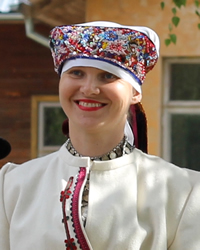
Photo Source:
Visit Estonia - Flickr
Creative Commons
|
Send Joshua Project a map of this people group.
|
| People Name: | Seto, Voro |
| Country: | Estonia |
| 10/40 Window: | No |
| Population: | 50,000 |
| World Population: | 50,000 |
| Primary Language: | Voro |
| Primary Religion: | Christianity |
| Christian Adherents: | 85.00 % |
| Evangelicals: | 1.00 % |
| Scripture: | New Testament |
| Ministry Resources: | No |
| Jesus Film: | No |
| Audio Recordings: | Yes |
| People Cluster: | Finno-Ugric |
| Affinity Bloc: | Eurasian Peoples |
| Progress Level: |

|
Introduction / History
The Seto are an indigenous Finnic ethnic group speaking the Seto language, which is closely related to Estonian and Voro, a member of the Uralic language family. Their culture has been influenced by Estonian and Russian traditions. The Voro are a closely related sub-group. In the early 13th century, when most Estonians in coastal regions were converted to Catholicism, most Setos remained followers of their native Finnic religion. Then over about 200 years, they were converted to Orthodox Christianity due to the influence of nearby Slavic states, but incorporated elements of their original Finnic religion, which was polytheistic. Their chief deity was Ukko, god of thunder and the sky. Other prominent deities were Ahti, god of sea, waters, and fish, Tapio, god of the forest and hunting, and Akras, the god of fertility. Other gods were folk heroes believed to have once been human. Their religion included worship of the dead and shamanism, as well as local deities. Wetlands were considered sacred, and unwanted children were disposed of there. Bears were considered sacred animals, and elk were also very important, as well as many water birds. Cremation was practiced rather than burial. Chanted incantations bringing altered states of consciousness were used in rituals and efforts at healing. Most of the folk magic traditions became extinct by the 20th century.
Hunting was very important in the early years of the Seto.
The closely related Voro people share the same pre-Christian beliefs, but they are now mostly Lutheran. However, there are very few if any evangelicals in the modern sense of the word amongst them.
What Are Their Lives Like?
The Seto gain a livelihood through small-scale agriculture, handicrafts, and tourism. Their lives revolve around family, community, seasonal rhythms, and Orthodox religious holidays. Crafts include handmaking silver jewelry and embroidering textiles.
They are known for polyphonic (using overtones) 'Leelo' singing and colorful textiles. A major celebration is Seto Kingdom Day, when a king or queen symbolizing their cultural heritage is chosen. Other celebrations are music and harvest festivals.
What Are Their Beliefs?
The Seto are predominantly Eastern Orthodox, in contrast to most Estonians, who are mostly Lutheran. Local folk religions are also influential. They use the name Jamala for God. There is also a contemporary pagan movement called Suomenusko, meaning 'Belief of Finland', which is trying to reconstruct the old religion. There are no significant evangelical presence amongst the Seto, although evangelicals have a small presence in Estonia overall.
What Are Their Needs?
The Seto live on the borderland with Russia. Since 2018, Russia has imposed increasingly strict visa policies, causing difficulty for families that have members on both sides. They also face depopulation of their homeland as youth move to other areas. This leads to an aging population and strained social services. Job opportunities are limited.
Prayer Points
Pray that the Seto may understand the gospel and come to truly know Christ so that they may be able to share him with others.
Pray that evangelicals in the wider Estonian culture, though a minority, may be able to influence the Seto and the Voro so that they may be able to take their place in the world-wide mission.
Pray that the Seto may turn entirely to Christ.
There is no significant part of the Bible in Seto, and only recordings of passages in Voro. The Seto and Voro languages are declining in use, although some revitalization efforts are ongoing in Voro.
Pray that linguists and translating agencies will have wisdom in whether these translations are needed.