Pherera (Hindu traditions) in India
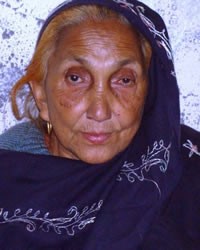
Photo Source:
Anonymous
|
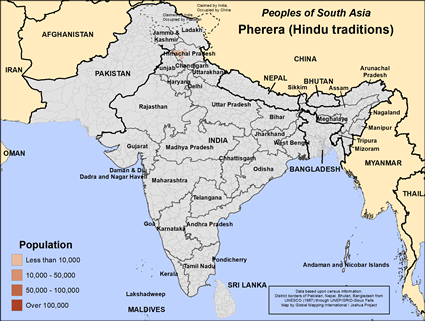
Map Source:
People Group data: Omid. Map geography: UNESCO / GMI. Map Design: Joshua Project
|
| People Name: | Pherera (Hindu traditions) |
| Country: | India |
| 10/40 Window: | Yes |
| Population: | 2,000 |
| World Population: | 2,000 |
| Primary Language: | Hindi |
| Primary Religion: | Hinduism |
| Christian Adherents: | 0.00 % |
| Evangelicals: | 0.00 % |
| Scripture: | Complete Bible |
| Ministry Resources: | Yes |
| Jesus Film: | Yes |
| Audio Recordings: | Yes |
| People Cluster: | South Asia Dalit - other |
| Affinity Bloc: | South Asian Peoples |
| Progress Level: |

|
Introduction / History
The Pherera are a small Hindu community living primarily in the northern Indian state of Himachal Pradesh. Traditionally, the Pherera were known for the occupation of cloth dyeing, a trade that connected them to local textile and artisan work within village and regional economies. Over generations, their identity has been shaped by inherited occupations, family lineage, and the social structure common to many caste-based communities in northern India.
Himachal Pradesh, where many Pherera live, is known for its mountain villages, strong Hindu traditions, and numerous pilgrimage centers. Communities in this region have historically remained closely tied to local customs, village relationships, and regional deities. Though modernization has changed employment opportunities for younger generations, many traditional social patterns continue to influence community life.
What Are Their Lives Like?
Historically connected to cloth dyeing and textile-related work, many Pherera families today are involved in tailoring, labor, small business, agriculture, and government service. Some families have adapted to modern economic opportunities while still maintaining strong cultural and family ties within their community.
Life in Himachal Pradesh often centers around family relationships, seasonal work, village gatherings, and religious observances. Extended families commonly remain close, and respect for elders is highly valued. Marriages are often arranged within accepted social boundaries, and preserving family reputation carries significant importance.
Food commonly includes wheat breads, rice, lentils, vegetables, dairy products, and regional mountain dishes. Festivals and religious celebrations are major parts of social life and often involve temple visits, community gatherings, and family ceremonies. Rural communities in mountainous areas may face challenges related to transportation, employment opportunities, and access to specialized healthcare.
Younger generations increasingly pursue education and urban employment, but traditional customs and community expectations often remain influential even among families connected to city life.
What Are Their Beliefs?
The Pherera follow Hindu traditions shaped by both mainstream Hindu worship and local village religious customs. Their religious life includes devotion to regional and village deities alongside broader Hindu practices. Bankhandi Devi is regarded as an important patron deity, and other deities honored within the community include Guga, Balak Nath, Kaleshwar Mahadev, Jawalamukhi, Bajarangbali, Narain, and Shiva.
As with many rural Hindu communities in northern India, religious practice may include offerings, temple rituals, festival observances, vows, pilgrimages, and ceremonies intended to seek blessing, protection, healing, or relief from hardship. Folk beliefs involving local spirits, sacred places, astrology, and ritual practices are often blended with traditional Hindu worship.
Most Pherera have had little or no exposure to a clear biblical presentation of the gospel. Many may know very little about Jesus Christ beyond limited cultural awareness and have never encountered biblical teaching concerning salvation through Him.
What Are Their Needs?
The Pherera need faithful access to the gospel through Scripture, discipleship, and compassionate Christian witness presented with humility and cultural understanding. Because Hindu identity and local tradition are deeply connected to family and community life, those who become interested in Christ may face social pressure or resistance.
Practical needs may include stable employment, educational opportunities, healthcare access, and support for families living in isolated or economically limited mountain regions. Rural communities in Himachal Pradesh can face transportation and infrastructure challenges due to the difficult terrain.
There is also a need for spiritually mature local believers who can establish biblically grounded churches and faithfully share the gospel among neighboring communities throughout northern India.
Prayer Points
Pray that the Pherera people will hear a clear and understandable presentation of the gospel in their own language.
Pray that God will raise up compassionate Christian workers who are willing to serve faithfully among the Pherera community.
Pray that the Pherera people will be adopted through the People Group Adoption program so that ongoing prayer and future gospel engagement will continue among them.
Pray that any believers living near the Pherera community will grow strong in biblical faith and boldly share the truth of Jesus Christ with surrounding peoples.