Nat (Hindu traditions) in India
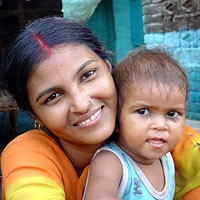
Photo Source:
Copyrighted © 2026
Anonymous All rights reserved. Used with permission |
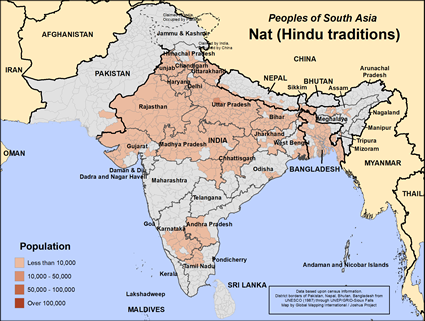
Map Source:
People Group data: Omid. Map geography: UNESCO / GMI. Map Design: Joshua Project.
|
| People Name: | Nat (Hindu traditions) |
| Country: | India |
| 10/40 Window: | Yes |
| Population: | 539,000 |
| World Population: | 557,300 |
| Primary Language: | Hindi |
| Primary Religion: | Hinduism |
| Christian Adherents: | 0.00 % |
| Evangelicals: | 0.00 % |
| Scripture: | Complete Bible |
| Ministry Resources: | Yes |
| Jesus Film: | Yes |
| Audio Recordings: | Yes |
| People Cluster: | South Asia Dalit - other |
| Affinity Bloc: | South Asian Peoples |
| Progress Level: |

|
Introduction / History
The Nat are a traditionally nomadic and semi-nomadic community found throughout northern and central India, especially in Uttar Pradesh, Bihar, Rajasthan, Haryana, Punjab, Madhya Pradesh, and neighboring states. The name "Nat" is derived from the Sanskrit word nata, meaning dancer or performer. Historically, the Nat were known as entertainers, acrobats, singers, dancers, jugglers, rope-walkers, and traveling performers who moved from place to place providing entertainment in villages and towns.
Many Nat communities trace their origins to Rajasthan and maintain traditions linking themselves to Rajput ancestry. Over centuries, various Nat subgroups developed across northern India, often adapting to local languages and customs while retaining their distinctive identity as performers and itinerant workers. Some Nat communities became settled, while others continued a semi-nomadic lifestyle. Social marginalization and economic hardship have affected many Nat families for generations, and in some areas they have experienced discrimination because of their traditional occupations and mobile way of life.
Although modern entertainment and economic changes have reduced demand for traditional performances, the Nat remain known for preserving skills in music, dance, acrobatics, storytelling, and folk entertainment. Their cultural heritage continues to be an important part of their identity even as younger generations pursue new occupations.
What Are Their Lives Like?
The lives of the Nat vary considerably depending on whether families remain mobile or have settled in villages and towns. Traditionally, Nat men and women performed music, dance, acrobatics, juggling, rope-walking, and dramatic presentations at fairs, festivals, and community gatherings. Today, some still participate in these activities, while many others work as agricultural laborers, construction workers, street vendors, transport workers, or daily wage laborers.
Many Nat communities face economic insecurity due to irregular employment, limited education, and social stigma. Land ownership is uncommon among many Nat families, making them dependent on seasonal work or informal occupations. Children may experience interruptions in schooling when families migrate for work. In some regions, government and charitable organizations have sought to improve educational access and living conditions, but significant challenges remain.
Family and clan relationships are important within Nat society. Marriages are generally arranged within accepted community boundaries, while clan exogamy is often practiced. Music, dance, storytelling, and festival celebrations remain important aspects of social life and help preserve community identity. Meals commonly include regional foods such as rice, wheat, lentils, vegetables, and locally available ingredients.
What Are Their Beliefs?
The Nat identified with Hindu traditions primarily follow Hinduism while also maintaining various folk religious practices. Worship commonly includes devotion to Hindu gods and goddesses such as Shiva, Durga, Kali, Hanuman, and regional village deities. Religious life often includes temple worship, festival observances, household rituals, offerings, and ceremonies associated with births, marriages, and deaths.
In many Nat communities, folk beliefs involving ancestral spirits, local deities, astrology, charms, ritual protection, and supernatural forces remain influential alongside mainstream Hindu practices. Fear of evil spirits, curses, and misfortune may shape daily religious behavior and decision-making. Religious identity is often closely connected to family traditions and community customs passed down through generations.
Although some Nat have encountered Christianity, many have never heard a clear presentation of the biblical gospel. Jesus may be viewed as a holy teacher or one spiritual figure among many rather than the crucified and risen Son of God who alone provides forgiveness of sins and reconciliation with God. Biblical discipleship and access to mature Christian teaching remain limited in many Nat communities.
What Are Their Needs?
Many Nat communities need improved access to education, healthcare, sanitation, stable housing, and sustainable employment opportunities. Families living on the margins of society often face poverty, low literacy rates, discrimination, and limited economic mobility. Children especially benefit from consistent educational opportunities that can help break cycles of poverty and social exclusion.
Spiritually, the Nat need faithful gospel witness communicated in their own languages and cultural contexts. Many have never heard a clear explanation of repentance, grace, forgiveness, and eternal life through Jesus Christ. Because oral traditions remain strong among many Nat communities, oral Bible storytelling, audio Scripture resources, and relationship-based discipleship can be particularly effective. Strong local churches, mature believers, and long-term ministry efforts are needed to share the gospel and disciple those who come to faith.
Prayer Points
Pray that the Nat people will hear and understand the gospel clearly in their own languages and place their faith in Jesus Christ.
Pray that God will raise up mature local believers and church leaders who can disciple Nat families and establish biblically faithful churches among them.
Pray that Nat communities facing poverty, limited education, social discrimination, and unstable employment will experience practical help and lasting hope.
Pray that the Nat people will be adopted through the People Group Adoption program so that ongoing prayer, evangelism, discipleship, and church planting efforts will continue among them.