Merat (Hindu traditions) in India
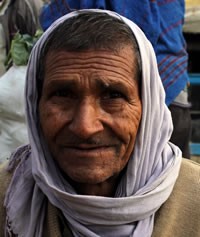
Photo Source:
Copyrighted © 2026
Michael E All rights reserved. Used with permission |
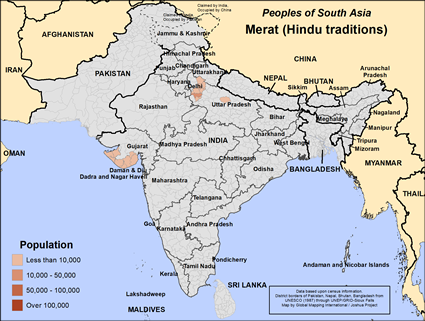
Map Source:
People Group data: Omid. Map geography: UNESCO / GMI. Map Design: Joshua Project.
|
| People Name: | Merat (Hindu traditions) |
| Country: | India |
| 10/40 Window: | Yes |
| Population: | 51,000 |
| World Population: | 51,000 |
| Primary Language: | Hindi |
| Primary Religion: | Hinduism |
| Christian Adherents: | 0.00 % |
| Evangelicals: | 0.00 % |
| Scripture: | Complete Bible |
| Ministry Resources: | Yes |
| Jesus Film: | Yes |
| Audio Recordings: | Yes |
| People Cluster: | South Asia Hindu - other |
| Affinity Bloc: | South Asian Peoples |
| Progress Level: |

|
Introduction / History
The Merat with Hindu traditions are a Rajput-related community found primarily in the Indian state of Rajasthan. They are also known as Merat-Kathat or Cheeta-Merat in some regions. Community traditions trace their ancestry to Rao Meraji Chauhan and other Rajput lineages connected to the historic Merwara region of Rajasthan. Historically, the community developed within a setting shaped by warrior traditions, village life, agriculture, and strong clan identity.
The Merat are especially notable because parts of the broader community have historically blended both Hindu and Muslim influences. Some families identify primarily with Hindu traditions while others follow Islam, and in certain areas customs from both religions have existed side by side for generations. This mixture of traditions has created a complex religious and cultural identity within the community.
What Are Their Lives Like?
The Merat primarily live in villages and smaller rural communities in Rajasthan. Agriculture remains an important occupation, though many families possess only small amounts of land. Others work as laborers, herders, or in local trades to support their households. Village elders often help resolve disputes and maintain community order through traditional systems of leadership.
The community commonly speaks Marwari along with Hindi and sometimes Urdu. Extended family relationships are important, and social identity is strongly connected to clan and village ties. Marriages are traditionally arranged with attention to family reputation and community customs.
Meals commonly include wheat-based foods, lentils, dairy products, vegetables, tea, and festival dishes prepared during special occasions. The Merat are generally non-vegetarian but traditionally avoid beef and pork. In some areas, men may chew betel leaf or consume alcohol during social gatherings and celebrations.
Like many rural communities in India, younger generations are increasingly influenced by urbanization, education, mobile technology, and migration for work. These changes are creating new opportunities while also placing pressure on traditional ways of life.
What Are Their Beliefs?
The Merat with Hindu traditions primarily follow Hindu religious practices, though the wider Merat community has long displayed religious blending between Hinduism and Islam. Some families participate in Hindu festivals, temple worship, and devotion to Hindu deities while also retaining customs historically influenced by Islamic traditions.
Hindu religious life among the Merat may include worship connected to regional gods and goddesses, ritual observances tied to family life, festival celebrations, and reverence for ancestral traditions. In communities with mixed heritage, religious identity can sometimes create confusion within family structures and social relationships.
Although the Merat may value morality, religious devotion, and inherited tradition, they still need the truth of the gospel and reconciliation with God through Jesus Christ alone rather than through ritual observance, family religion, or cultural identity.
What Are Their Needs?
The Merat need greater access to biblical teaching, discipleship, and faithful Christian witness presented with humility and cultural understanding. While Christian materials exist in languages they understand, many still have little meaningful exposure to the gospel through personal relationships and long-term ministry.
Practical needs may include improved education, economic opportunity, healthcare access, and support for families living with financial uncertainty in rural areas. Social tensions connected to religious identity and modernization can also create instability within communities and families.
There is a need for mature believers who can patiently build trust, demonstrate Christ's compassion, and establish strong local fellowships capable of discipling future generations in biblical truth.
Prayer Points
Pray that the Merat people would clearly understand the gospel and place their faith in Jesus Christ alone for salvation.
Pray that God would raise up compassionate and biblically faithful workers who will build lasting relationships among the Merat community.
Pray that the Merat would be adopted through the People Group Adoption program so that sustained prayer, discipleship, and long-term gospel outreach would continue among them.
Pray for strengthened families, improved educational and economic opportunities, and spiritual openness among the Merat people throughout Rajasthan.