Halam in India
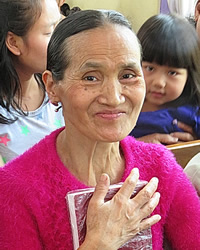
Photo Source:
Asia Harvest-Operation Myanmar
|
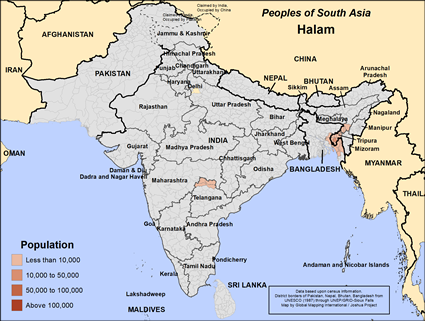
Map Source:
People Group data: Omid. Map geography: UNESCO / GMI. Map Design: Joshua Project
|
| People Name: | Halam |
| Country: | India |
| 10/40 Window: | Yes |
| Population: | 45,000 |
| World Population: | 123,000 |
| Primary Language: | Kok Borok |
| Primary Religion: | Hinduism |
| Christian Adherents: | 46.81 % |
| Evangelicals: | 0.00 % |
| Scripture: | Complete Bible |
| Ministry Resources: | Yes |
| Jesus Film: | Yes |
| Audio Recordings: | Yes |
| People Cluster: | South Asia Tribal - other |
| Affinity Bloc: | South Asian Peoples |
| Progress Level: |

|
Introduction / History
The Halam are an indigenous South Asian people primarily found in the northeastern Indian state of Tripura, with smaller communities in Assam, Mizoram, and parts of Myanmar. They trace their origins to the broader Old Kuki–Chin group, migrating centuries ago from regions believed to be in southern China. Their oral traditions speak of an ancestral homeland called "Khurpuitabum," meaning "big cave," echoing origin stories of related Tibeto-Burman peoples. Once referred to as "Riam" (meaning "human being"), the Hill King of Tripura later designated them as Halam, a name interpreted variously as "earth route" or possibly "killer of humans," reflecting both geographic migration and warrior reputation. They comprise about 12–15 sub-tribes, including Sakachep, Chorei, Molsom, Hrangkhol, Kaipeng, and others.
What Are Their Lives Like?
The Halam predominantly live in hilly, forested terrains characterized by small valleys and ridges. Rice farming—both paddy and shifting "jhum" cultivation—is the backbone of their subsistence lifestyle. They also plant vegetables and manage small livestock, including pigs, poultry, and cattle.
Their diets focus on rice, leafy greens, root crops, and occasional fish or meat from hunting and household rearing. Family structures are extended; households often include multiple generations under one roof. Elders are deeply respected and play key roles in decision-making.
Festivals often coincide with the agricultural calendar. Community-wide ceremonies honor the land and fertility, while Christian holidays have become widely celebrated in areas influenced by mission outreach. Traditional music, dance, and ritual remain significant in expressive worship and social gatherings.
What Are Their Beliefs?
The Halam practice a combination of Christianity, animism, and Hinduism, reflecting spiritual syncretism. Animistic beliefs involve ancestral and nature spirit worship; offerings and protective rituals are common. Many Halam now identify as Christian, often blending scripture and church services with traditional spiritual beliefs. In some areas, Hindu influences are seen in ceremonial practices and deities, reflecting inter-religious exchange.
What Are Their Needs?
Many Halam communities are isolated, with limited access to healthcare, education, clean water, and formal employment opportunities.
There is a need for improved farming methods, soil conservation, and stable market access.
As development and external influences grow, traditional languages, folklore, and dance risk displacement.
Holistic gospel engagement is needed—respecting cultural identity while sharing Christ's transformative message in culturally sensitive ways.
Prayer Points
Pray for accessible healthcare, clean water, and educational resources in remote Halam villages.
Ask that the Lord would provide sustainable agricultural training, tools, and fair marketplaces to enrich their livelihoods.
Pray that the Halam would honor and preserve their ancestral languages, festivals, and arts as they navigate changing times.
Pray for culturally-aware believers and local Christian leaders to arise, sharing the gospel with sensitivity and discipleship rooted in Halam culture.